


Guide to Climate Justice – social and ancestral technologies to combat environmental racism in the Metropolitan Region of Rio de Janeiro
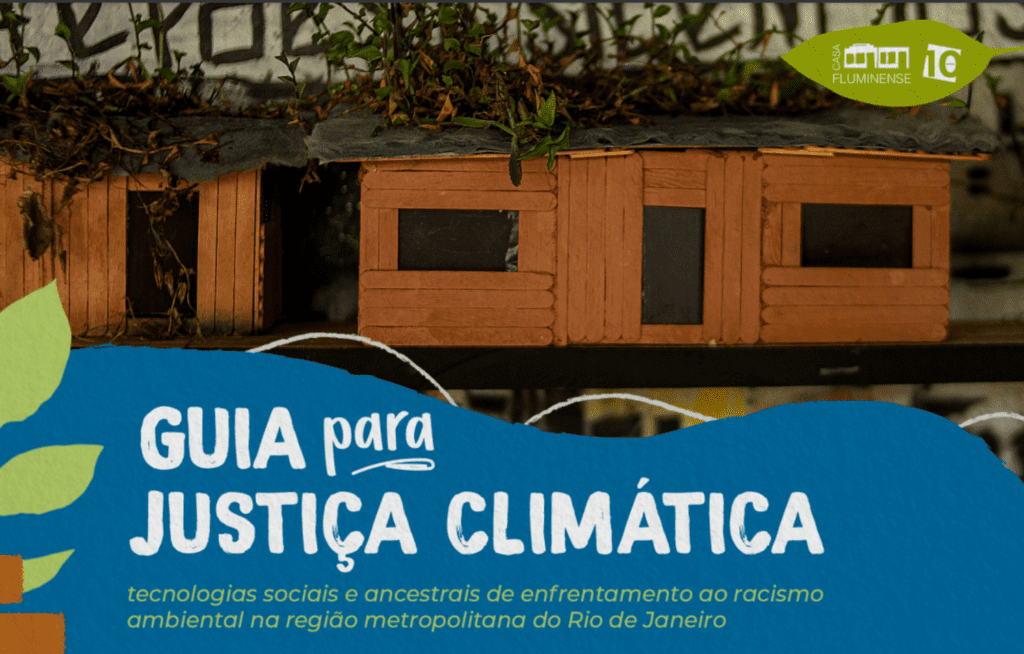
Produced by Casa Fluminense, the first edition of the Guide to Climate Justice seeks to schematically systematize the experiences of social and ancestral practices, solutions and technologies developed in our neighborhoods, favelas and outskirts ignored by public authorities, in confronting climate disasters through adaptation strategies and/or mitigation of environmental impacts suffered by those who contribute least to climate change.
Rede Comuá launches animation about its performance
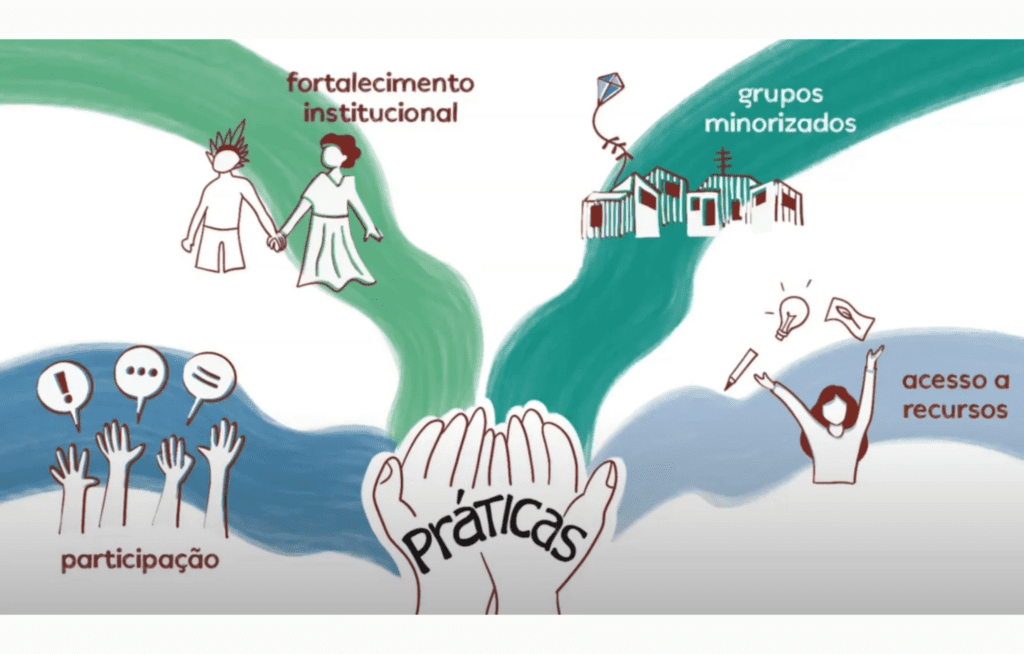
In August, the Network launched the animation “Rede Comuá – philanthropy that transforms”, which seeks to disseminate the practices of community philanthropy and socio-environmental justice, contributing to expanding donated resources and their impact at national and international level, based on the actions of member organizations of the Comuá Network.
Black Philanthropy in Brazil: Sociedade Protetora dos Desvalidos receives donation of R$ 500 thousand from Fundo Baobá
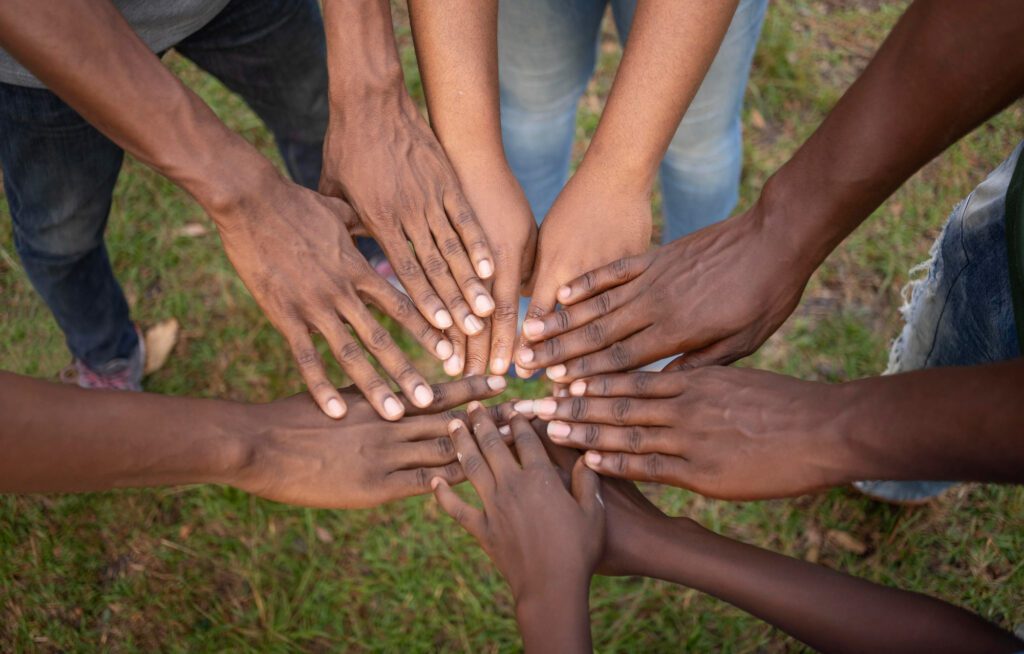
Among the many inspiring stories that illustrate the tradition of black philanthropy in Brazil, one deserves special attention: the foundation of the Sociedade Protetora dos Desvalidos (SPD), in the city of Salvador, Bahia, on September 16, 1832, by Manoel Vitor Serra , a freed black African. The Protector, as it was known, was a historic milestone in the fight against inequality and racial discrimination. Founded by black workers, the organization's main objective was to provide mutual aid and support to the most needy. Through its philanthropic actions, the society supported enslaved people to obtain their manumission, as well as supporting members who became unemployed.
Rede Comuá participates in the EU-Latin America and Caribbean Forum
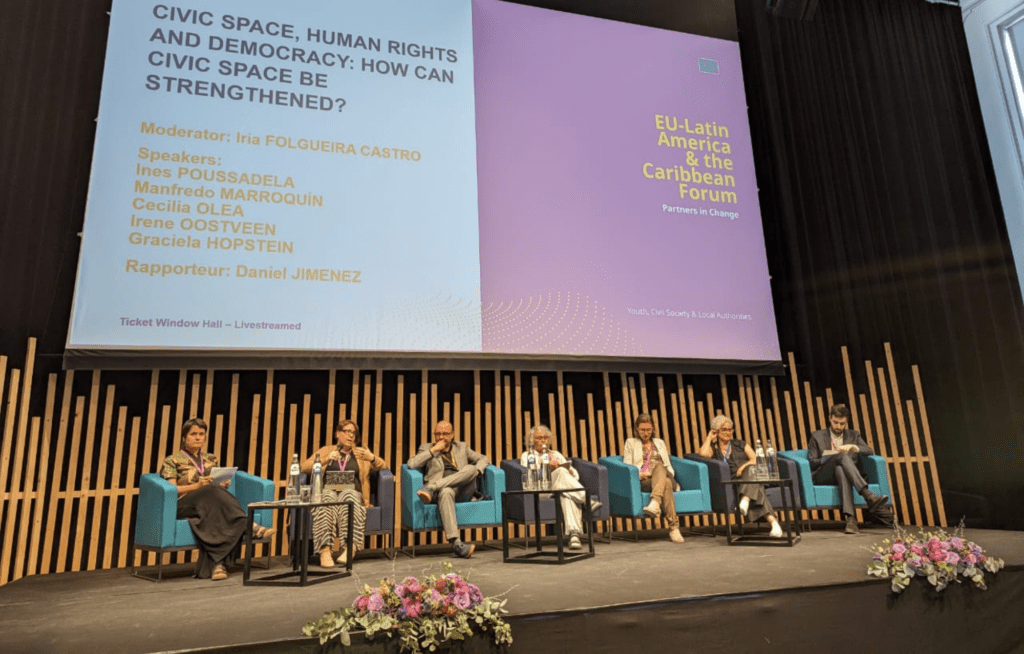
At the invitation of WINGS and the European Union, the executive director of Rede Comuá, Graciela Hopstein, participated in the EU-Latin America and the Caribbean Forum: Partners in Change. on July 13, as a speaker at the thematic panel “Civic space, human rights and democracy: how to strengthen civic spaces?”.
Participating in the debate were Inés Poussadela, from CIVICUS (Uruguay), Cecilia Olea, from the Centro de la Mujer Peruana Flora Tristán (Peru), Manfredo Marroquín, from Acción Ciudadana (Guatemala) and Irene Oostveen, from the Dutch Association of Municipalities (Holland).
Rede Comuá launches podcast
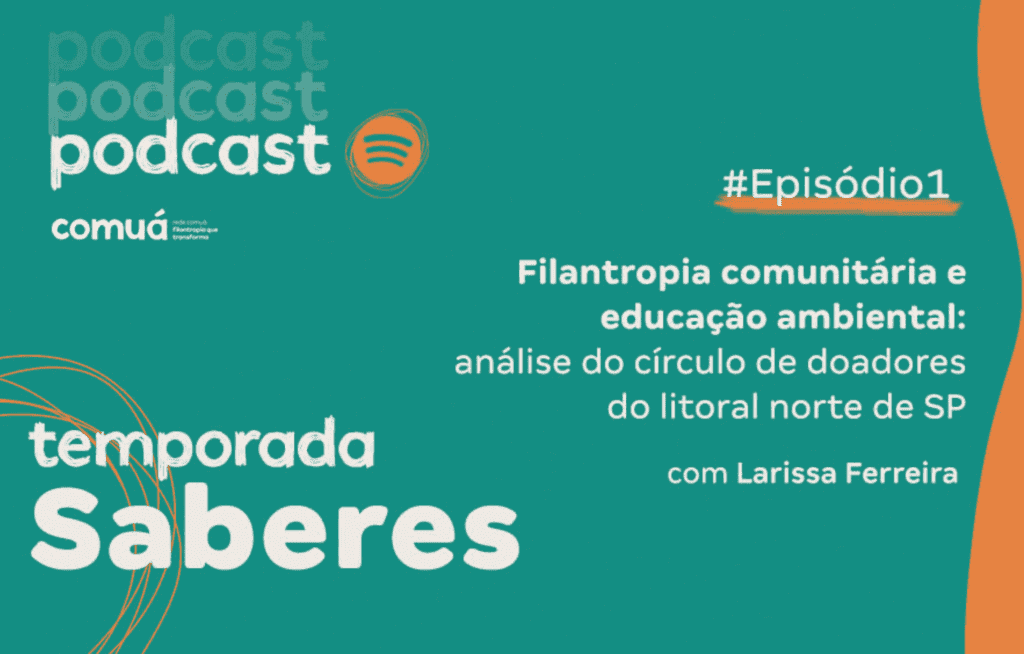
At the end of July, the Network launched the first season of its podcast Comuá – philanthropy that transforms.
The podcast seeks to demonstrate the practices of community philanthropy and socio-environmental justice, contributing to disseminating them and also their potential to support the transformation carried out by civil society organizations operating in the territories.
The first season addresses the Knowledge Program, which offers support for the systematization of knowledge produced by social leaders and experts who work in the fields of community philanthropy and social justice.
Month of philanthropy that transforms: find out about some of the scheduled activities
Rede Comuá, together with its member organizations and partners, promotes, in September, a series of activities aimed at demonstrating the potency and importance of community philanthropy and socio-environmental justice to foster social transformation by supporting civil society organizations and movements in their struggles for rights.
The movement, which started in September 2022 after the ten-year seminar of the Comuá Network, will be part of the Brazilian philanthropy calendar annually as a space dedicated to addressing the practices and strategic performance of this philanthropy in the sense of strengthening civil society and, so does democracy.
Knowledge, Transformation and Ancestry: Closing of the first class of the Saberes Program
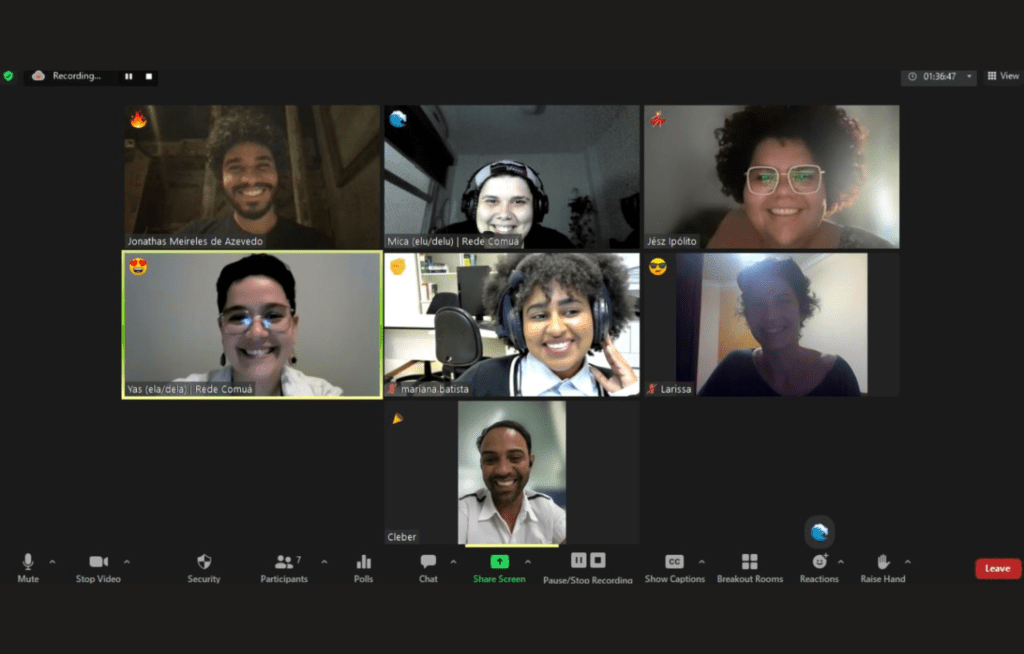
By Jonathas Azevedo and Yasmin Morais
In July, we concluded the first cycle of Rede Comuá's Saberes Program, which seeks to investigate and produce knowledge in the fields of socio-environmental justice and community development, based on the knowledge, experiences and practices of civil society leaders, professionals, researchers and professionals from philanthropic institutions, contributing to decolonizing the production of knowledge about philanthropy.
A festival to call our own: impressions of what happened at the ABCR Festival and potential contributions to community philanthropy
By Semíramis Biasoli – FunBEA – Brazilian Environmental Education Fund
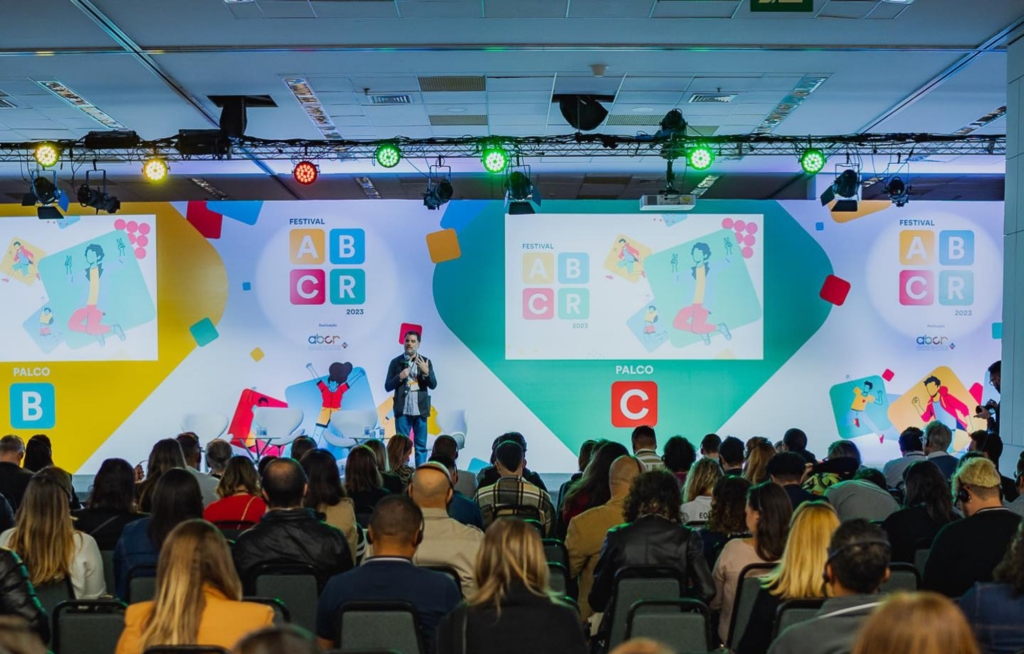
The 15th edition of the ABCR Festival, a fundraising conference by the Brazilian Association of Fundraisers, took place on July 3rd and 4th, 2023 in the city of São Paulo.
The challenge of welcoming and putting together a program that catered to different levels of knowledge, experiences and interests was a key point and it seems to me that this year's Festival managed to provide these answers. The event provided basic information for those new to fundraising challenges, as well as advanced research and practices, providing cutting-edge content for experienced professionals.
Numerically larger, it also presented a greater diversity of professional areas present: not just counting on an audience of recruiters and collectors, but rather, members of the technical and financial areas, in addition to the strong presence of communication professionals.
It is worth highlighting here: could these be signs of changes in the institutional culture of fundraising, not treating it as a closed or specialized area, on the contrary, presenting it as a collective challenge to the entire organization?
For the first time in Latin America, the #ShiftThePower Summit returns in 2023
Representatives of civil society from around the world will meet in Bogotá, Colombia, between December 5th and 7th to show other ways of doing philanthropy
In 2016, in Johannesburg, South Africa, what Jenny Hodgson, Executive Director of the Global Fund for Community Foundations (GFCF), defined as “one of the most inspiring and dynamic movements for change in philanthropy” was born. The Global Conference on Community Philanthropy, organized by the GFCF, brought together more than 400 people from 70 countries. The message we wanted to convey was clear: we need to face and review the logic of power that governs the sector of philanthropy and international humanitarian aid and bring communities to the center of the debate. From this meeting, the hashtag #ShiftThePower (#SubvertaOPoder, in free translation) was born, which soon went viral on social media and has inspired civil society leaders around the world in debates about the sector and its practices.
Reflections on the institution of collective care in systemic change

By Ese Emerhi, GFCF Global Network Weaver
I ended 2022 with a health problem and spent most of 2023 thinking about the concept of collective care and solidarity in movement building. As part of my reflection, I am reading Tricia Hersey's Rest Is Resistance: A Manifesto, in which she argues that rest should be seen as a form of radical political resistance and that “elevating rest from an ethic of community care It involves interrupting the dominant culture and, at the same time, giving power back to the people, which is their rightful place.” Although Hersey's message is directed specifically at black communities in the United States and rejects the culture of relentless work prevalent in society, it resonates with me regarding the need for a cultural mindset shift in the fields of philanthropy and international development, and to the question of why rest is important in the fight for liberation and broader systemic change.