


Reflections on rooting collective care in systems change

I ended 2022 with a health scare and I have spent the majority of 2023 so far preoccupied with the notion of collective care and solidarity in movement building. As part of my exploration, I have been reading Rest Is Resistance: A Manifesto by Tricia Hersey where she argues that rest should be a form of radical political resistance and that “To uplift rest from a community care ethic is to interrupt the dominant culture while giving power back to the people where it belongs.” While Hersey's message is specifically targeted to black communities in the United States and rejects society's hustle-grind culture, it resonates with me on the need for a cultural mindset shift in the philanthropic and international development fields, and why rest is important in the fight for liberation and larger systems-change.
Do you know what microprojects are?
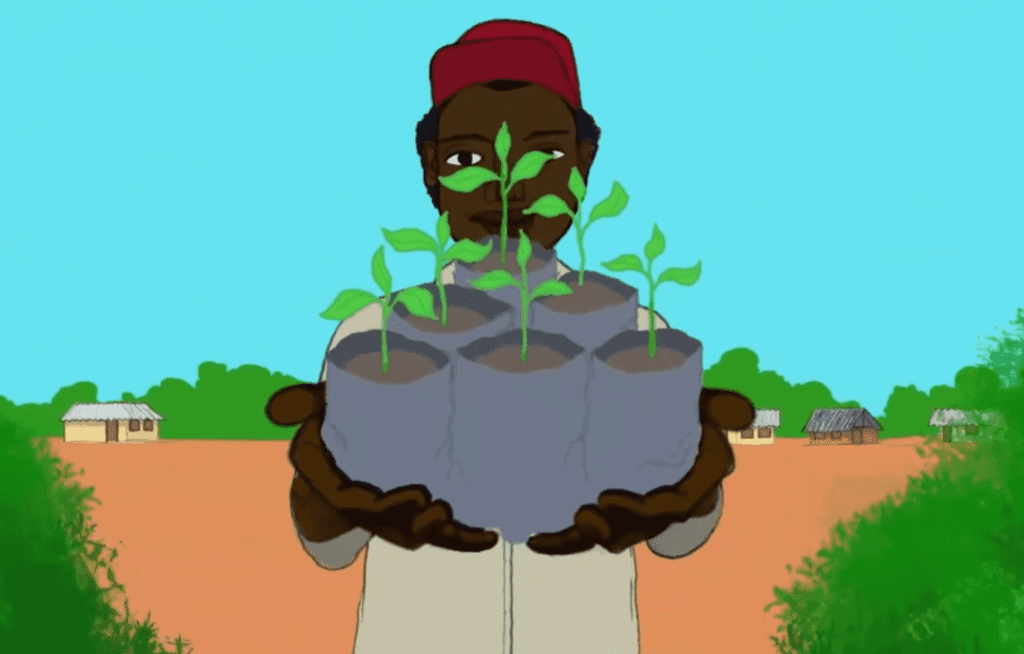
Do you know what microprojects are? And how do you access them? This video presents this ISPN initiative that aims to promote the activities of indigenous groups, peoples and traditional communities in maintaining their cultural practices, their well-being, defending their rights and implementing their environmental management and conservation strategies. Microprojects are a small line of financing with unbureaucratic access to encourage individual or family actions in the areas of traditional agricultural systems and food security; traditional land and natural resource management practices; and cultural manifestations.
Rede Comuá meets in Rio to outline strategies and future paths
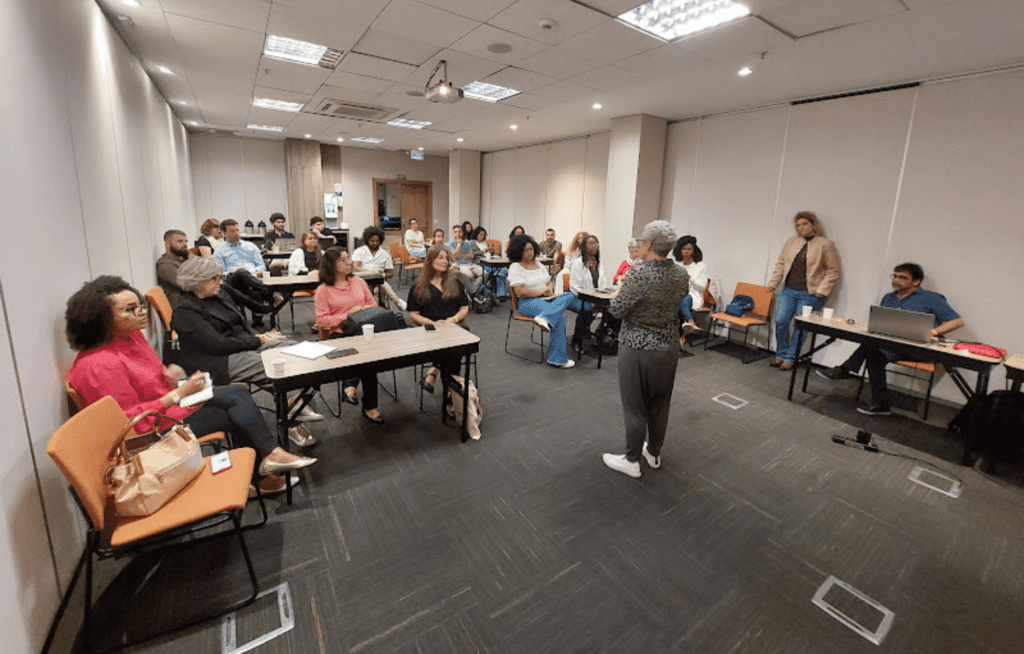
Members of Comuá met in person in the city of Rio de Janeiro, on June 20, to debate and build advocacy strategies and future paths. The meeting is part of the programming of the Philanthropy and Democracy Community of Practices, promoted by the Network within the scope of the Donate to Transform project.
Podcast Transforming Communities
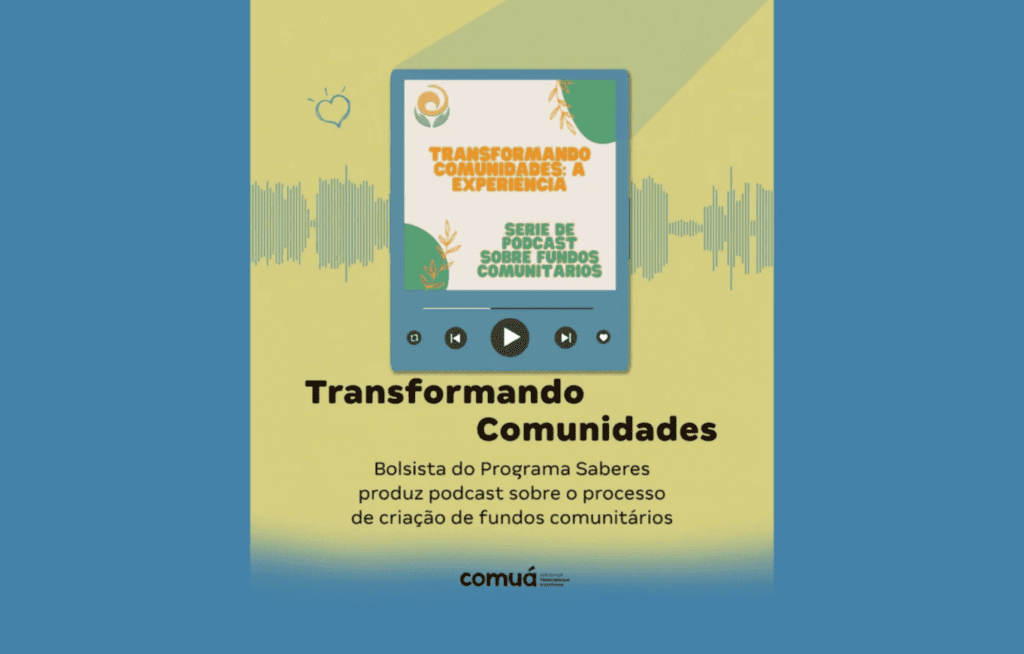
Scholarship holder from the Saberes Program produces podcast about the process of creating community funds
The podcast has 9 episodes and you can listen on Spotify.
Produced by Cléber Rocha, the podcast reveals the secrets, challenges faced and lessons learned on this transformative learning journey.
Rede Comuá is officially founded
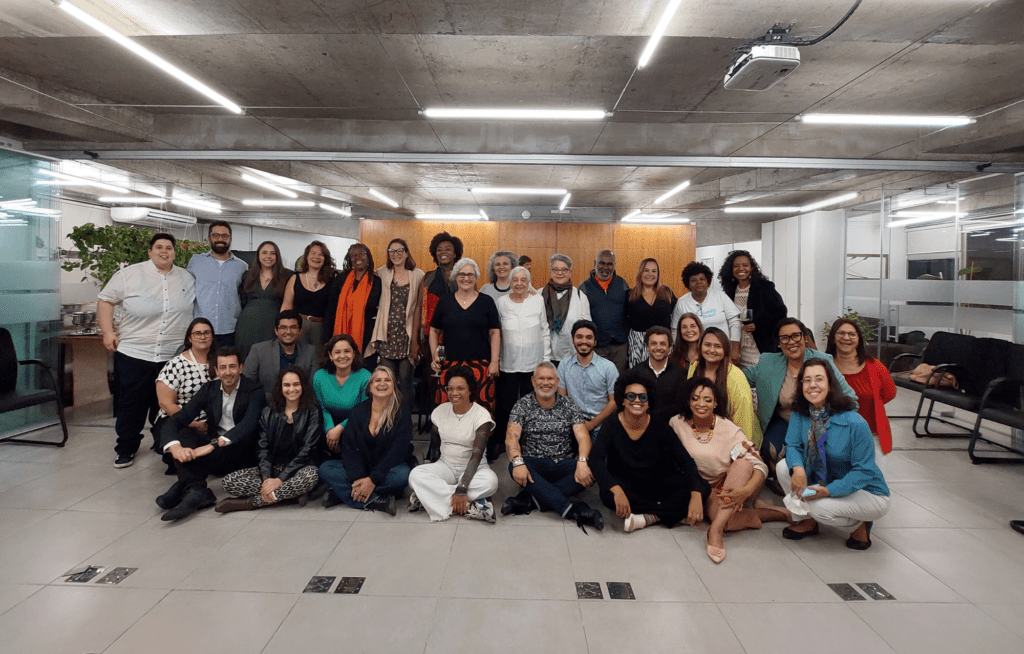
Constitution Assembly brought together representatives of the sixteen member organizations
By Camila Guedes
The first day of June 2023 was a historic moment for Rede Comuá. Bringing together representatives of the 16 member organizations, the Constitution Assembly was held. A great achievement, from now on the Network is officially founded.
There was approval, during the meeting, of the Bylaws – previously validated at a Members' Assembly held in May 2022 - by the Governance Council – composed of Valéria Araújo, Superintendent of the Brazil Human Rights Fund, Giovanni Harvey, Executive Director of the Fund Baobá for Racial Equity, Roberto Vilela, Executive Director of Tabôa Fortalecimento Comunitário and Larissa Amorim, Executive Director of Casa Fluminense -, and the Fiscal Council – composed of Gislene Aniceto, general manager of the Brazilian Human Rights Fund, and Hebe da Silva, coordinator administration of the Baobá Fund.
September: Transforming Philanthropy Month
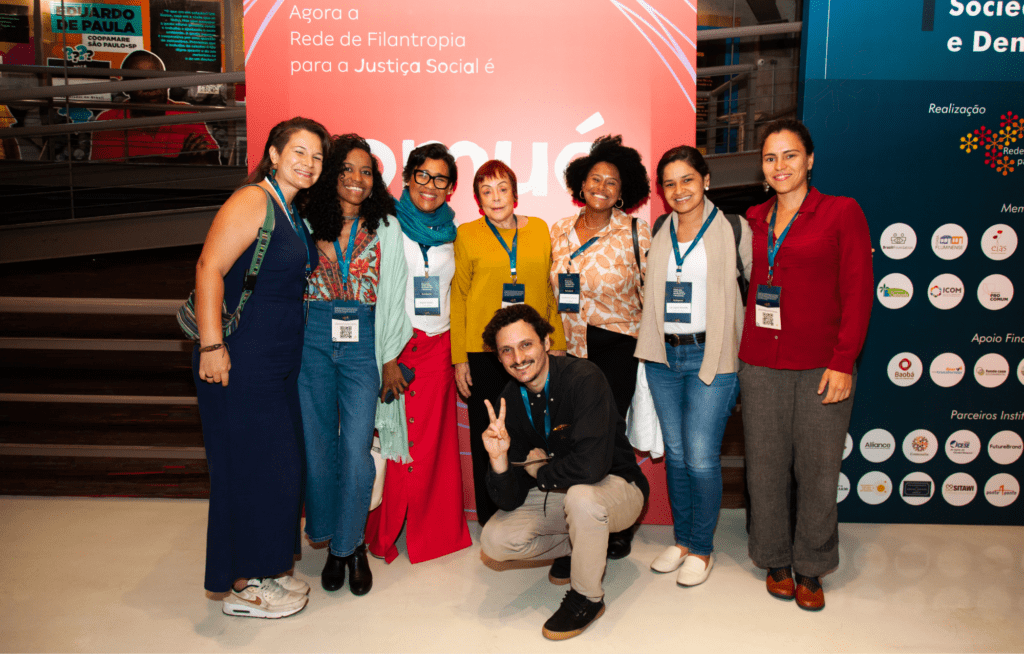
A diverse, multifaceted movement aiming to promote greater visibility to the agendas and practices of community and social justice philanthropy in Brazil
By Graciela Hopstein
In September 2022, the Comuá Network organized the Philanthropy, Social Justice, Civil Society and Democracy Seminar to celebrate its 10th anniversary. Around it, the Network managed to mobilize 220 participants, who attended the seminar in São Paulo during the two days of debates, 360 people online, 110 organizations, 50 speakers, in addition to 35 institutional supporters and 6 funders who sponsored the event directly.
During those 21 hours of activities, Comuá, its members and partners debated and reflected on a variety of topics, such as decolonizing philanthropy, building trust and creating new arrangements, to reach new horizons that ultimately change the existing power dynamics and foster initiatives to build a less inequitable society (in terms of access to rights) and recognize political minorities.
September: Philanthropy that Transforms Month
A diverse and multiple movement that seeks to give visibility to the agendas and practices of community philanthropy and social justice in Brazil
By Graciela Hopstein
In September 2022, Rede Comuá organized the Philanthropy, Social Justice, Civil Society and Democracy Seminar to commemorate the 10th anniversary of its activities. In this context, the Network was able to mobilize 220 participants, who were present in São Paulo over the two days of debates, 360 people online, 110 organizations, 50 speakers, in addition to 35 institutional supporters and 6 funders who directly supported the event.
In 21 hours of activities, Comuá, its associates and partners were able to debate and reflect on a variety of topics such as decolonial philanthropy, trust and new arrangements, aiming at horizons that translate into changing power relations and fostering initiatives aimed at building a less unequal society (with regard to access to rights) and recognition of political minorities.
Community Philanthropy as a means to promote socio-environmental justice for LGBTQIA+ people

Celebrating World Environment Day and LGBTQIA+ Pride Month, a reflection on how community philanthropy for socio-environmental justice supports LGBTQIA+ people facing climate change.
By Yasmin Morais and Mica Peres
An estimated 12% of all Brazilians, or about 19 million people, identify themselves as LGBTQIA+, however, contrary to what we might assume when presented with the demographic data of a population, this is not official data produced by a Brazilian government agency such as the IBGE (in English, Brazilian Institute of Geography and Statistics). This estimate is the result of a study developed by Unesp and USP, published in Nature Scientific Reports, since the IBGE only began collecting data on sexual orientation in Brazil in 2019, and even so, in a highly experimental manner, excluding any aspect of gender identity or sexualities beyond homosexuality and bisexuality.
So, how can we know how many we are, where we are, our level of education? How can we know what affects us, what we need, what rights to claim?
Community Philanthropy as a path to promoting socio-environmental justice with LGBTQIA+ people

A partir de uma visão interseccional, a filantropia comunitária olha para como as mudanças climáticas afetam diferentes grupos sociais, como pessoas LGBTQIA+ que também são pretas, indígenas, com deficiência, etc, e que afeta de maneiras distintas cada território, cada condição socioeconômica.
Why talk about Safety and Security in the field of community philanthropy and social justice

By Jonathas Azevedo
In 2023, Rede Comuá carried out a review and systematization of its Protection and Security Program [1], which brought a set of learnings for the technical team and its members. In this article, my objective is to share with you, the reader, some of the reflections that this process provoked in us. But first, it is worth a brief presentation of the Program.
About the Safety and Security Program
Created in 2019, the Rede Comuá Protection and Security Program arose from the interest of member organizations in jointly thinking about strategies to resist a context marked by the resurgence of attacks against civil society and the restriction of civic space promoted by the government far-right party then elected and openly against civil society.