Per Ese Emerhi, GFCF Global Network Weaver
I ended 2022 with a health problem and spent most of 2023 thinking about the concept of collective care and solidarity in movement building. As part of my reflection, I am reading Rest Is Resistance: A Manifesto, by Tricia Hersey, in which she argues that rest must be seen as a form of radical political resistance and that “elevating rest from an ethic of community care implies disrupting dominant culture and, at the same time, devolving power to people, which is their rightful place.” Although Hersey's message is directed specifically at black communities in the United States and rejects the culture of relentless work prevalent in society, it resonates with me regarding the need for a cultural mindset shift in the fields of philanthropy and international development, and to the question of why rest is important in the fight for liberation and broader systemic change.
Like Hersey, I believe that promoting collective care for activists – who drive much-needed change – is essential to the sustainability and success of the solidarity movement. In my work at the Global Fund for Community Foundations (GFCF), with partners from Palestine to Brazil, Uganda to Burkina Faso, the notion of care – understanding people as the most important asset – is fundamental to driving change. The work of rethinking and conceiving a new development system requires resources and energy that go beyond money and mere professional commitment. Activists who suffer from burnout and exhaustion will be less effective in developing innovative solutions capable of sustaining social movements.
Over the last few months, I have been talking to colleagues in Africa about the concept of self-care and solidarity in the context of rethinking the current care system. In these conversations, there is a general consensus that “Yes, self-care is important,” as well as a silent confirmation that “We don’t practice self-care very well as an industry.” On a blog 2022 (available in English), the scholarship holder of the #ShiftThePower movement, Eme Iniekung, from GivingTuesday, and Elizaphan Ogechi, from Nguzo Africa Community Foundation, succinctly summarized the matter by stating: “We [the philanthropic sector] are always wanting to do so many things at the same time that we end up forgetting about ourselves.” Participants of a meeting recently organized by GFCF with partners [1] about the #ShiftThePower movement and community philanthropy, which I participated in in Kathmandu, Nepal, in June 2023, echoed the same impressions.
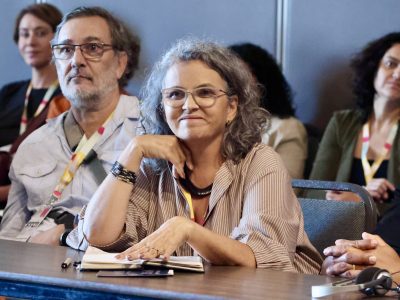
 Participants of the regional meeting of the #ShiftThePower movement held in Kathmandu on June 1, 2023
So what to do from now on?
At the meeting in Nepal, Hari Sharma, Executive Director of Purak Asia and former political advisor to Nepal's first president, suggested that one way to begin centering collective care as a political concept is to promote more intergenerational dialogues among social movement activists. He explains:
“What happens when we, who have been part of the system for decades – who started social movements based on personal convictions as volunteers and ended up “professionalizing” ourselves along the way, who were founders of small and large organizations – become so tired that we don’t Can we come up with new ideas anymore? A kind of death occurs on many levels, and no one is talking about it. To me, self-care is effectively self-regeneration and what happens to these organizations when leaders leave. In general, when leaders leave organizations, they feel somewhat abandoned, as all those years of hard work simply end. Where should they go to reconnect with themselves after giving everything they had? We need to think not only about bringing and supporting new activists into community work, but also how to care for those who need to leave”.
Another possible path is to think about how to apply the lessons from the work of feminist funds and movements, which have been reflecting deeply on the concept of care – self-care, collective care and movement solidarity – and how it can be placed more effectively in the center of an agenda for systems change.
To provide care truly effectively, we also need dedicated support networks. Having the ability to resource, resupply, and nourish our movements should, in my opinion, be a pillar of support for reassessing an effective system for the future.
Without a doubt, there is much more to explore on this subject. Reflecting on how we can continue to have these conversations more broadly and strategically, and how we can create spaces for learning and experimenting with new ideas about collective care, I invite others to further explore these questions (among many others) with the GFCF during the preparation of the Global Summit of the #ShiftThePower movement and during its holding, in Bogotá, in December.
[1] Accountability Lab Nepal, NEAR Network, PeaceDirect, Purak Asia and Tewa.
Article originally published in English on the Global Fund for Community Foundations blog