Uncategorized

Cafés e GTCom: a comunicação da Comuá pulsa cada vez mais forte
Saiba como a Rede Comuá está fortalecendo sua comunicação em rede com a criação de um Grupo de Trabalho e o fortalecimento do espaço Café com Pessoas Comunicadoras.



Saiba como a Rede Comuá está fortalecendo sua comunicação em rede com a criação de um Grupo de Trabalho e o fortalecimento do espaço Café com Pessoas Comunicadoras.


A iniciativa Comuá pelo Clima lançou, no último dia 12, o mapeamento “Comuá pelo Clima: financiamento de soluções climáticas locais e cenários da filantropia”, com participação de representantes das organizações que compõem a rede. O estudo inédito aponta que, entre 2022 e 2023, foram doados quase R$400 milhões para soluções climáticas locais.

Starting a conversation, or rather, continuing an old conversation that started when I chose the Pedagogy course. This happened in 2006 and during my undergraduate studies what enchanted me most was popular education, which I call human education.
Communication is a fundamental human right. The movement for its recognition as such took place throughout the 20th century, as the flow of information began to become greater and greater. International organizations such as Unesco, with the so-called MacBride Report (also known as One world and many voices) began to recognize this right, which means guaranteeing that people should be able and able to express themselves freely, produce and circulate information.
In guaranteeing this right, there are economic, social and political issues that impose inequality in this place as well, limiting the conditions for all, all and all, to be producers and disseminators of information by concentrating the means of communication and economic resources.
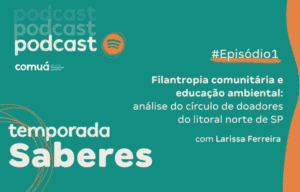
At the end of July, the Network launched the first season of its podcast Comuá – philanthropy that transforms.
The podcast seeks to demonstrate the practices of community philanthropy and socio-environmental justice, contributing to disseminating them and also their potential to support the transformation carried out by civil society organizations operating in the territories.
The first season addresses the Knowledge Program, which offers support for the systematization of knowledge produced by social leaders and experts who work in the fields of community philanthropy and social justice.
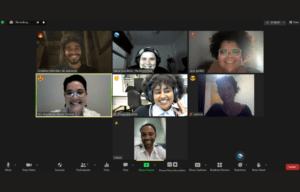
By Jonathas Azevedo and Yasmin Morais
In July, we concluded the first cycle of Rede Comuá's Saberes Program, which seeks to investigate and produce knowledge in the fields of socio-environmental justice and community development, based on the knowledge, experiences and practices of civil society leaders, professionals, researchers and professionals from philanthropic institutions, contributing to decolonizing the production of knowledge about philanthropy.
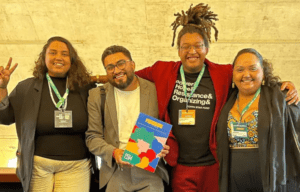
By Mônica Ribeiro
A Iniciativa PIPA lançou, em março deste ano, a pesquisa Periferias e Filantropia – as barreiras de acesso aos recursos no Brasil. Realizado com apoio do Instituto Nu, o trabalho tem por objetivo analisar a descentralização dos recursos privados para viabilizar ações e projetos daqueles que estão na ponta.
The material is also part of the project developed by Marcelle Decothé, co-founder and advisor of the PIPA Initiative, as a fellow of the Saberes Program, from Rede Comuá.
The data is representative of a universe of 607 responses from managers who work on the front lines in Brazilian outskirts to guarantee basic rights, quality of life and opportunities in communities.
The research reveals that almost half of the initiatives surveyed, 46%, did not obtain resources to carry out their activities in the last two years. And 31% of them worked for less than R$ 5 thousand a year.
Mapping identifies independent organizations working with donations to civil society groups and movements that focus on the fields of social justice and community development in the country
By Mônica C. Ribeiro
Produced by the Comuá Network in association with PonteAponte, the mapping of thematic, community funds and independent community foundations working with donations to civil society organizations, in the fields of social justice and community development, identified 31 of them in different regions, with different priorities agendas.
Mapping identifies independent organizations that work with donations to civil society groups and movements that work in the areas of social justice and community development in the country
By Monica C. Ribeiro
Carried out by Rede Comuá in partnership with PonteAponte, the mapping of thematic, community funds and independent community foundations that work with donations to civil society organizations in the areas of social justice and community development identified 31 of them in different regions and priority agendas.
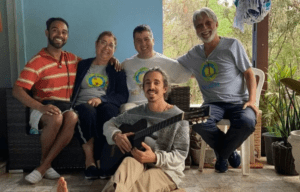
By Cléber Rodrigues
I was walking home the other day and a neighbor walking down the street waved at me and said:
— Hey my dear, good morning. I saw some photos of you on Instagram. You were just like the boss, huh! But I didn't understand anything that was written in the caption.
I gave him a smile, joked with the kid who was attentively listening to his father, and spoke.
— Hey my friend, that was the Philanthropy Network for Social Justice seminar…
He interrupted my sentence and with a questioning face said:
— Filamp… What?