


LGBTQIA+ Fund: When support and support are political acts of (re)existence for the diversity of life

Author: Elida Miranda, Emilly Mel and Harley Henriques
We begin this text by saying that affirming the right to life is necessary, that initiatives to support and support existences are also necessary, initiatives that leave the paper and go beyond a speech. In a country marked by inequality and prejudice, who are the people who can live the right to life fully and integrally? When you are LGBTQIA+ in Brazil, the chances of you being killed or dying by suicide are greater than for the general population, just because you are who you are or express your sexuality. This is the result of necropolitics over LGBTQIA+ bodies, materialized through LGBTIQphobia, which selects who can live, but, in the same way, who should and can die.
The Network ends 2021 with many advances and is heading towards 10 years of existence

The year 2021 was very significant for the Philanthropy Network for Social Justice (RFJS) in terms of collective learning with its member Funds and also in the construction of programmatic strategies, partnerships and in the field of knowledge production in order to promote its mission to strengthen and expand the field of community philanthropy and social justice.
The Network has made great strides in developing collective advocacy strategies to position the community philanthropy and social justice agenda in the Brazilian philanthropic ecosystem.
For the RFJS team, 2021 was marked by the growth of the Network, the consolidation of new partnerships and the development of different programs, which points to an even more powerful performance in 2022.
Network donates R$ 1 million in support of projects developed by member organizations

Initiatives contribute to the development of collective actions with the capacity to strengthen the culture of donation, grantmaking and protection and security actions
At the end of 2021, the Philanthropy Network for Social Justice (RFJS) once again opened the possibility of supporting projects presented and developed by member Funds in two lines of action: (1) development of strategies, actions and products to strengthen the RFJS advocacy program; (2) development of actions and products in the area of protection and security (digital, legal, self-care, etc.).
Direct allocation to CSOs to encourage a culture of donation

Authored by Cristiane Ramos
If, on the one hand, the COVID-19 pandemic crisis contributed to further aggravating existing social problems, exposing Brazilian inequalities, on the other hand, we saw a society of solidarity, which mobilized unbridledly to help combat the crisis and collaborate with its fellow citizens. The COVID-19 Donation Monitor, structured by the Brazilian Association of Fundraisers (ABCR) with the support of the Movement for a Culture of Donation, surpassed the mark of R$ 7 billion donated. In this context, it is important to highlight three points:
Procomum joins the Philanthropy Network for Social Justice
By Camila Guedes
About to complete 10 years of operation, the Network has another reason to celebrate: the inclusion of a new member, Instituto Procomum. The institution, which has been operating for over 5 (five) years, works to strengthen people and organizations, articulate communities and weave networks, promoting, through collaboration, the transition to a common world among those who are different. Procomum's activities take place in Baixada Santista (SP), where its headquarters and other Labs are located.
Philanthropy for social justice in defending the rights of trans people
By Mica Peres
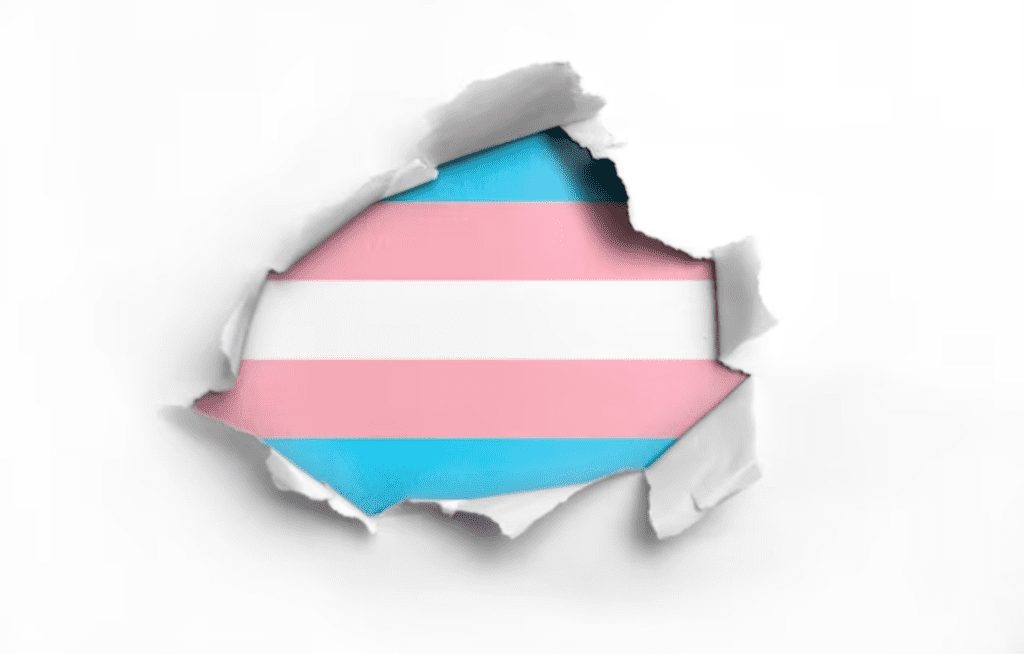
According to the dossier Murder and violence against Brazilian transvestites and transsexuals in 2021, released today, January 29, 2022, by the National Association of Transvestites and Transsexuals (ANTRA), at least 140 trans people were murdered in Brazil in 2021. This number is above the average of the last 13 years, which is 123.8 murders per year, since 2008.
Philanthropy Network turns 10

In 2022, the Philanthropy Network for Social Justice (RFJS) completes ten years of operation and plans to hold a series of commemorative activities throughout the year.
RFJS will promote a set of activities – events, campaigns, debates, etc. – on the themes of community philanthropy and social justice and will carry out a mapping of independent thematic and community funds in Brazil that donate to civil society through diversified grantmaking strategies , with the intention of having a diagnosis of this ecosystem and possibly expanding the number of member organizations.
Executive coordinator of the Network participates in an episode of the podcast Aqui se faz, AQUI SE DOA!, by MOL
By Camila Guedes
This Tuesday, February 1st, the 53rd episode of the podcast Aqui se faz, AQUI SE DOA was released! from the MOL Institute. Starting the celebration of World Social Justice Day, celebrated on February 20, the program addressed the topic in the Brazilian context and featured the participation of Graciela Hopstein, executive coordinator of the Network. The date was established by the United Nations (UN) in 2015 and aims to reflect and remember the topic.
Knowledge production, pandemic and the direction of Brazilian philanthropy

By Erika Sanchez Saez
We will spend years, perhaps centuries, studying and analyzing what we, as humanity, have been experiencing since the beginning of 2020.
There are those who say that the pandemic marks the transition and the true beginning of the 21st century, just as the First World War established and materialized what it meant to be in the 20th century. There are optimistic analyzes that see this period as a possibility for transition to make the changes we so desperately need. There are also pessimists, who point to this as the first of many pandemics to come and the worsening of all our common challenges from it, starting with the deepening of inequalities on a global scale and in a frightening way in the Brazilian context.
Covid-19 is a matter of social justice: the response of a Brazilian community foundation
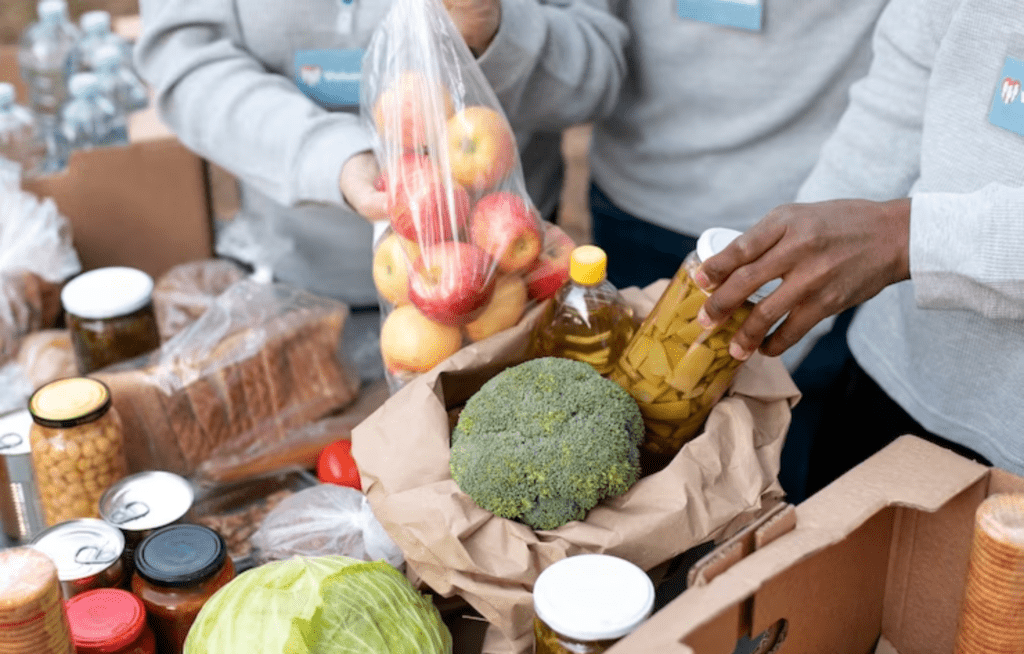
On March 18, our government ordered the closure of public schools, non-profit organizations and other public services that provide essential services to the most vulnerable families in the Greater Florianópolis region, Brazil. Socially vulnerable children, in particular, depended on food offered to them at school or from local non-profit organizations. At the same time, informal workers began to lose their income due to social isolation. It was a wave of losses that highlighted even more clearly how unequal our region is. People in socially vulnerable situations quickly began to feel afraid: not only of the Covid-19 virus, but also the fear of hunger, the fear of not having access to drinking water, the fear of not having an income, etc. On the same day, March 18, community-based organizations, partners of ICOM – Instituto Comunitário Grande Florianópolis, began mobilizing their communities and launching fundraising campaigns to ensure that food reached those most in need.