


Social Innovation in times of market solutions

By Fábio Deboni
Social Innovation is on the rise. There is so much talk about the subject, but are we talking about the same thing? After all, what social innovation are we talking about? This is the starting point of my fifth book: Social Innovation in times of market solutions.
The times we are in are complex. On the one hand, the pandemic and the current political and economic crises have exposed socio-environmental problems in our country, showing that, despite the relevance of the private sector on this board, civil society and the State continue to be fundamental actors in this game.
Support for quilombola communities: Creating bridges for good living
By Attilio Zolin
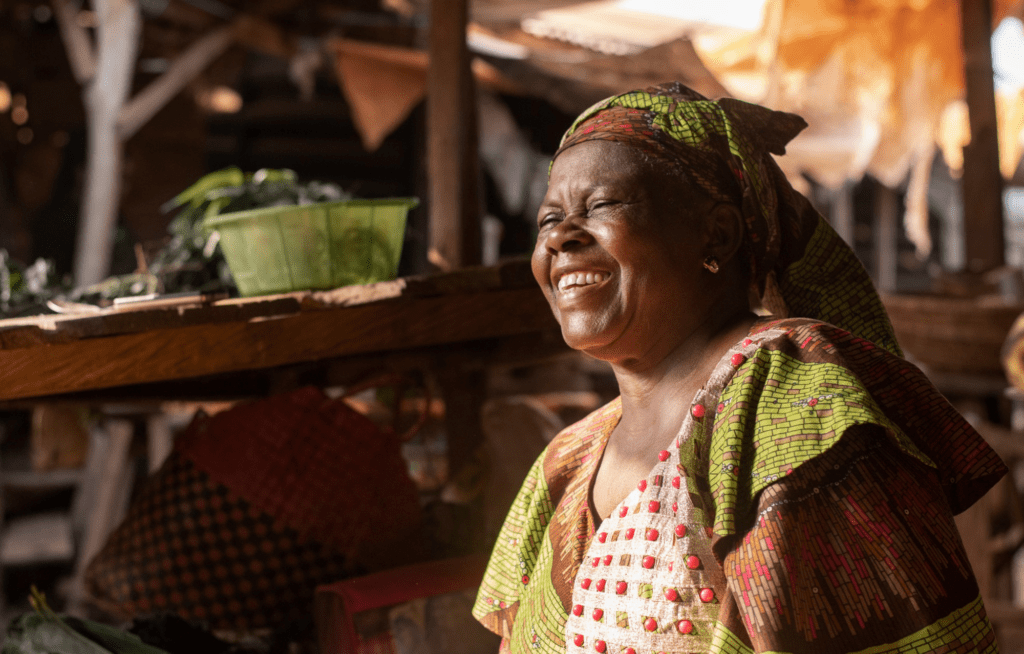
The quilombola peoples of Brazil have a great relationship with the nature around their territories and pass on their traditional and ancestral knowledge from generation to generation, which involves a rich and diverse culture. According to data from IBGE and the National Coordination of Quilombos Articulation (CONAQ), it is estimated that there are around 6 thousand quilombola locations in Brazil. Among these communities, only 5% are in officially recognized and demarcated territories. These communities suffer from the consequences of structural racism, invisibility and threats to their territories. Recently, difficulties have multiplied following the impacts caused by the Covid-19 pandemic, with the lack of access to public health services, economic difficulties and, consequently, food insecurity.
#PhilanthropyForClimate: A global space for all types of philanthropy to act on the climate agenda
By Alice Vogues
Global philanthropy has been widely asking itself what its contribution is and could be to addressing the climate emergency. Based on the study launched by the ClimateWorks Foundation in 2021, a strong call for action in this regard was consolidated in Europe and the United States: Only 2% of global philanthropy resources are directed to financing climate change mitigation projects.
Communicating Social Justice Philanthropy: Challenges, Solutions, and Opportunities

By Camila Guedes
Without a doubt, communication is a fundamental tool for expanding and strengthening the impact of the work carried out in the field of community philanthropy and social justice in favor of defending rights. In everyday communication, through the eyes of communicators from member organizations of the Philanthropy Network for Social Justice (RFJS), different challenges, solutions and opportunities stand out.
RFJS and GIFE advance in the project to strengthen community philanthropy with the ISP
By Monica C. Ribeiro
In June, several actors from society, from the field of philanthropy and Private Social Investment (ISP) met to reflect on how it is possible to strengthen community philanthropy practices in the context of programs and projects related to the social field promoted by foundations, institutes and companies Brazilians.
The initiative, the result of a partnership between the Philanthropy Network for Social Justice (RFJS) and the Group of Institutes Foundations and Companies (GIFE), seeks to reflect on the context of community philanthropy in the country and make a diagnosis of the challenges faced by organizations that work in the field of ISP in relation to this agenda, with a view to contributing to giving visibility and promoting it.
RFJS advanced in partnerships, knowledge production and collective strategies for advocacy in 2021

By Mônica Ribeiro
The 2021 Executive Report of the Philanthropy Network for Social Justice (RFJS) is now available on the institutional website.
The year was very significant in terms of collective learning with member organizations and the construction of programmatic strategies, partnerships and in the field of knowledge production in order to promote its mission of strengthening and expanding the field of community philanthropy and social justice .
Does money really buy everything? Conceptualization of resources in the new system

By Tara Rao
This article is part of a series of articles on the issue of conceptualizing resources in civil society and why it needs to be rethought – specifically in terms of a greater appreciation of the “intangible” assets of civil society. See some other related publications: Rethinking civil society resourcing and Moving from the old to the new: Why it's time to rethink civil society resourcing.
When we think about capital or resources (I will use these terms interchangeably), we automatically think about money, finances, cash availability, monetary resources. Yes, without a doubt this is a type of resource. But is it the only type of resource capable of making things viable – bringing drinking water to a community, setting up a network of health centers, installing a waste management system in an urban neighborhood?
Can money buy everything? Resourcing in the new system
This piece is part of a series of articles exploring the topic of civil society resourcing, and why this needs to be rethought – particularly in terms of placing more value on civil society's “intangible” assets. See other posts: Rethinking civil society resourcing and Moving from the old to the new: Why it's time to rethink civil society resourcing.
When we think capital or resources (I will use those terms inter-changeably) we often tend to automatically think money, finances, cash, funds. Yes, of course it is a kind of resource. But is it the only kind that makes things happen – to bring drinking water to a community, establish a network of health care posts, put together an urban neighborhood's waste management system?
Trust at the core of philanthropy: Mackenzie Scott's donation acknowledges the work done by the funds of the Brazilian Philanthropy Network for Social Justice

Mackenzie Scott's donation acknowledges the work done by the funds of the Brazilian Philanthropy Network for Social Justice
By Monica C. Ribeiro
In this third article[1] written in honor of the 10th anniversary of the Brazilian Philanthropy Network for Social Justice (RFJS), we will discuss the US$ 3.86 billion donation made by the US philanthropist Mackenzie Scott to 465 civil society organizations in several countries worldwide . Among those entities, 15 Brazilian organizations were selected, five of which are members of the Brazilian Network –Brazil Human Rights Fund, Baobá Fund, Casa Socio-Environmental Fund, Elas Social Investment Fund and Redes da Maré.
Trust at the Center of Philanthropy: Mackenzie Scott Donation Recognizes Work of RFJS Funds
By Monica C. Ribeiro
In this third article about the 10 years of the Philanthropy Network for Social Justice (RFJS), we will address the donation made by North American philanthropist Mackenzie Scott, worth U$ 3.86 billion to 465 social organizations in different countries around the world. Of these, 15 Brazilian organizations were selected to receive donations, and among them five are members of RFJS – Fundo Brasil, Fundo Baobá, Fundo Casa Socioambiental, Fundo Elas+ and Redes da Maré.
In publicizing the donation and the selected organizations, Mackenzie Scott described on her blog: “When our donor team focuses on any system where people are struggling, we don't assume that we, or any other group, can know how to fix it. . We do not advocate specific policies or reforms. Instead, we seek a portfolio of organizations that support the ability of all people to participate in solutions. This means a focus on the needs of those whose voices have been underrepresented.”