By Fábio Deboni
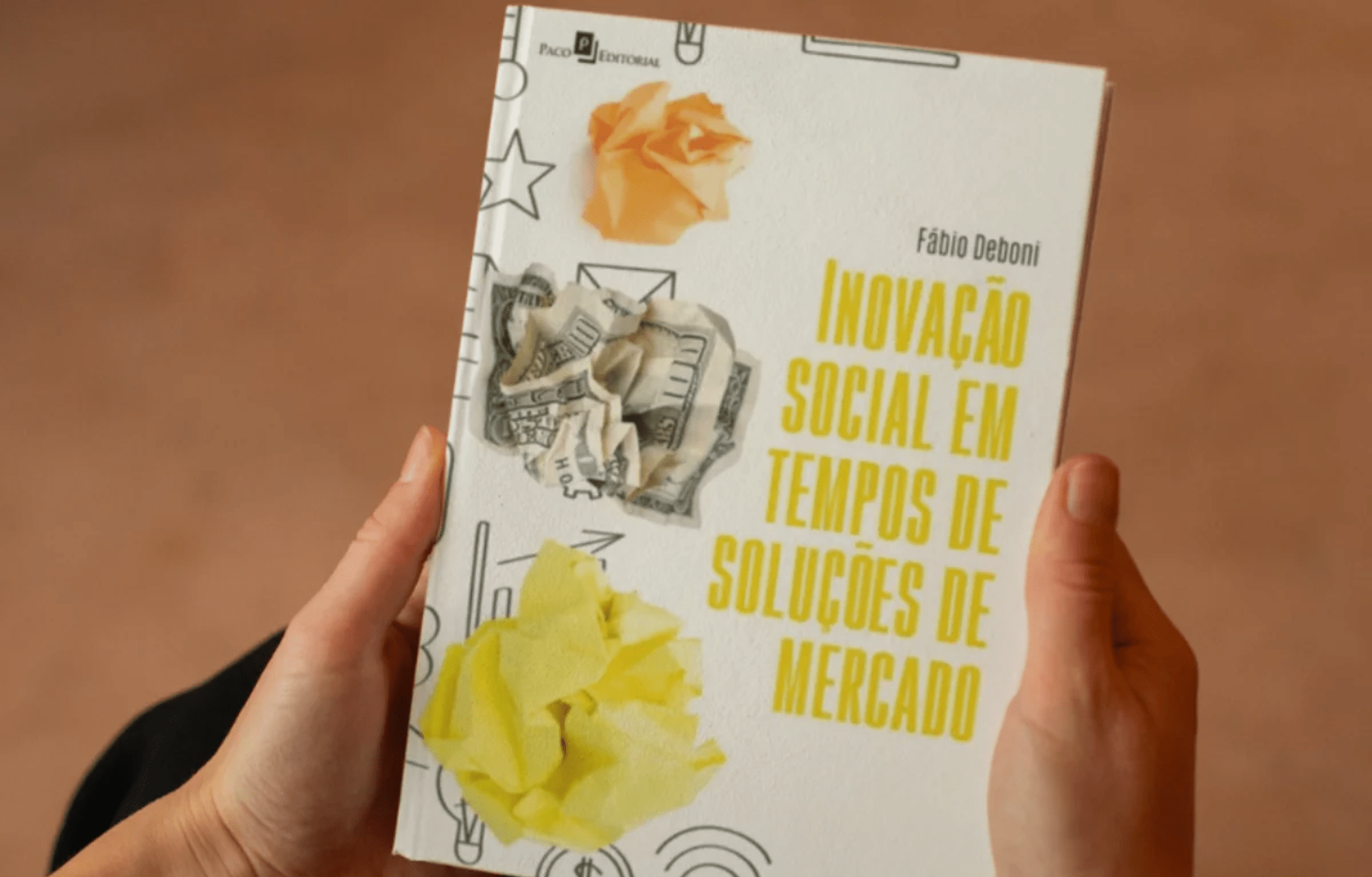
Social Innovation is on the rise. There is so much talk about the subject, but are we talking about the same thing? After all, what social innovation are we talking about? This is the starting point of my fifth book: Social Innovation in times of market solutions.
The times we are in are complex. On the one hand, the pandemic and the current political and economic crises have exposed socio-environmental problems in our country, showing that, despite the relevance of the private sector on this board, civil society and the State continue to be fundamental actors in this game.
It is necessary to recognize the excitement that so-called market solutions (to address socio-environmental issues) receive and how much they mobilize so many of us in discussions and events in the sector. It is obviously necessary to recognize the power of these solutions, but, at the same time, reflect on their contradictions and limits. After all, despite a certain narrative that surrounds us that: companies and the market came to 'solve' the socio-environmental problems that neither the State, nor philanthropy, nor civil society were able to 'solve', I understand that it is essential to have a debate much deeper than this type of speech.
In times of complex arrangements very well formulated by the SDGs, assuming that one sector will resolve this 'parade' that other sectors supposedly cannot 'resolve' is a very shallow and mistaken formulation. Obviously the relevance of the private sector on this board is quite evident today, with it even playing a central role in the field of Private Social Investment (ISP) in our country.
In the wake of these market solutions, impact businesses/social businesses present themselves as one of the spearheads of the emerging global 'impact investing' industry. Whether we like it or not, whether we agree with its premises or not, it is essential to recognize its power, its presence and its advancement, and, at the same time, understand its contradictions, especially to allow for deeper interactions with the field of philanthropy, ISP and of civil society.
After all, are we, as civil society, left to act at the service of the market? Will our role be to embrace this new agenda, seeing it as an 'evolution' of philanthropy? I have previously disagreed with this mistaken view* and I continue to view this new agenda as a new approach/tool that philanthropy/ISP/civil society may or may not use to achieve their goals. A textbook example was the CRA that the MST raised in 2021, using market mechanisms to finance agroecological production.
For some philanthropic actors this approach is already a reality, for others it is not. The central point, in my view, involves our ability as a sector to understand the many layers of complexity, power and contradictions that this agenda presents to us. I advocate that we do so from the perspective of social innovation, as we understand it as being the most appropriate to guide us along these paths.
These and other questions are presented and debated in the book. Far from exhausting a topic under construction and, therefore, in dispute, the book's proposal aimed to offer a framework where these issues could be didactically presented, from a more critical perspective.
The invitation I make is to think more deeply about the causes of socio-environmental problems and not just their effects. An invitation to value both the form (the method and tools) and the purposes of our interventions. An invitation to look beyond market solutions to address these issues. Ultimately, an invitation to double our commitment to strengthening democracy, combating social and climate injustice and the many violations and prejudices that surround us. The social innovation that inspires me follows these paths. And yours?
Publishes texts and articles daily on your blog: https://fabiodeboni.com.br/ and on your Linkedin: www.linkedin.com/in/fabiodeboni