By Mariana de Assis
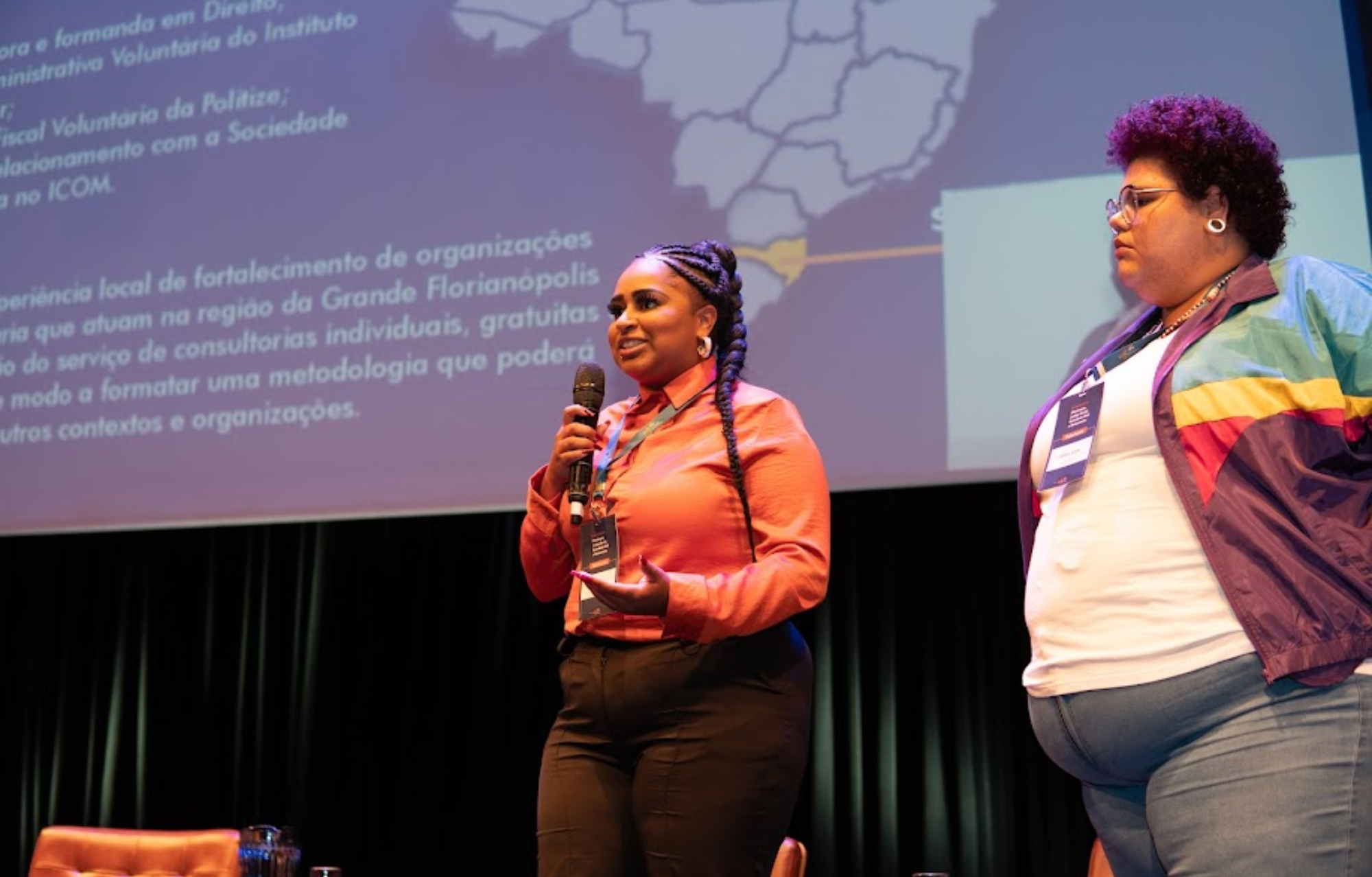
Philanthropy, Social Justice, Decolonial Philanthropy, Human Rights, Democracy. The 10-year Seminar of the Philanthropy Network for Social Justice – now titled Rede Comuá – immersed us in these themes and, in two days, brought together in a single environment the references of the national and international philanthropic system. I was there.
It's funny to note that when I started my professional work in the social field years ago, the notion of philanthropy was welfare, charity. The evolution in conversations, and cultural political moments, provoke welcome questions and reflections on the reframing of the concept.
When listening to the debates, I enthusiastically perceive a movement carrying a configuration that perceives the complex flow that makes philanthropy what it is. This is because, in my view, philanthropy only makes sense if it is understood as a process, which only happens in the plural, and belongs to a territory. I'm gonna explain:
Process because it is a constant, it has to do with development, with moving forward, advancement. It receives a set of inputs (solutions to solve the most complex social problems in Brazil), processes it (tests, experiments, verifies whether that donation actually improved or resolved the existing challenge), and results in a set of outputs, which in fact it must be just one (reduce racial and social inequalities in Brazil).
Plural because it has to do with collectivity, democracy, diversity, synergy of knowledge, respect for those who are different, because it allows a perspective that goes beyond our ignorance, experiencing a social interdependence that does not lose its essence: the human being. The pandemic only proved this.
Territory because it has to do with belonging, with proximity, with experience, it has to do with cultural, social and spiritual issues, related to the affective space that characterizes the identity of that group and values its assets. In addition to “having”, it has to do with “being”, because it starts from a transformative project from the inside out and not a reformist one from the outside in.
And that's where things get interesting, because the phenomena that are committed to this lived philanthropy are supported by important actors in their development: Community Foundations.
ICOM – Instituto Comunitário Grande Florianópolis is one of the few Community Foundations in Brazil, being the only one in the southern region of the country. Here, we breathe Philanthropy and nourish ourselves with it every day.
If you also believe in these ideas, let's go together?