By Marcelle Decote
You may have already heard or read something about the technological phenomenon of the moment: the existence of what we call the Metaverse. This is nothing more than the terminology used to indicate a type of virtual world that tries to replicate reality through digital devices. A reality shaped and controlled by a programmer, who operates through tools other possibilities for different worlds and meanings of good living.
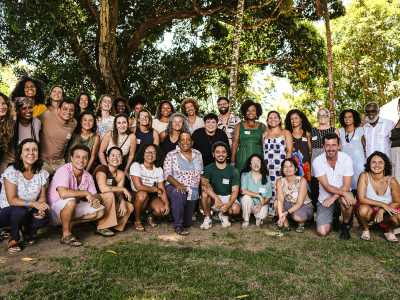
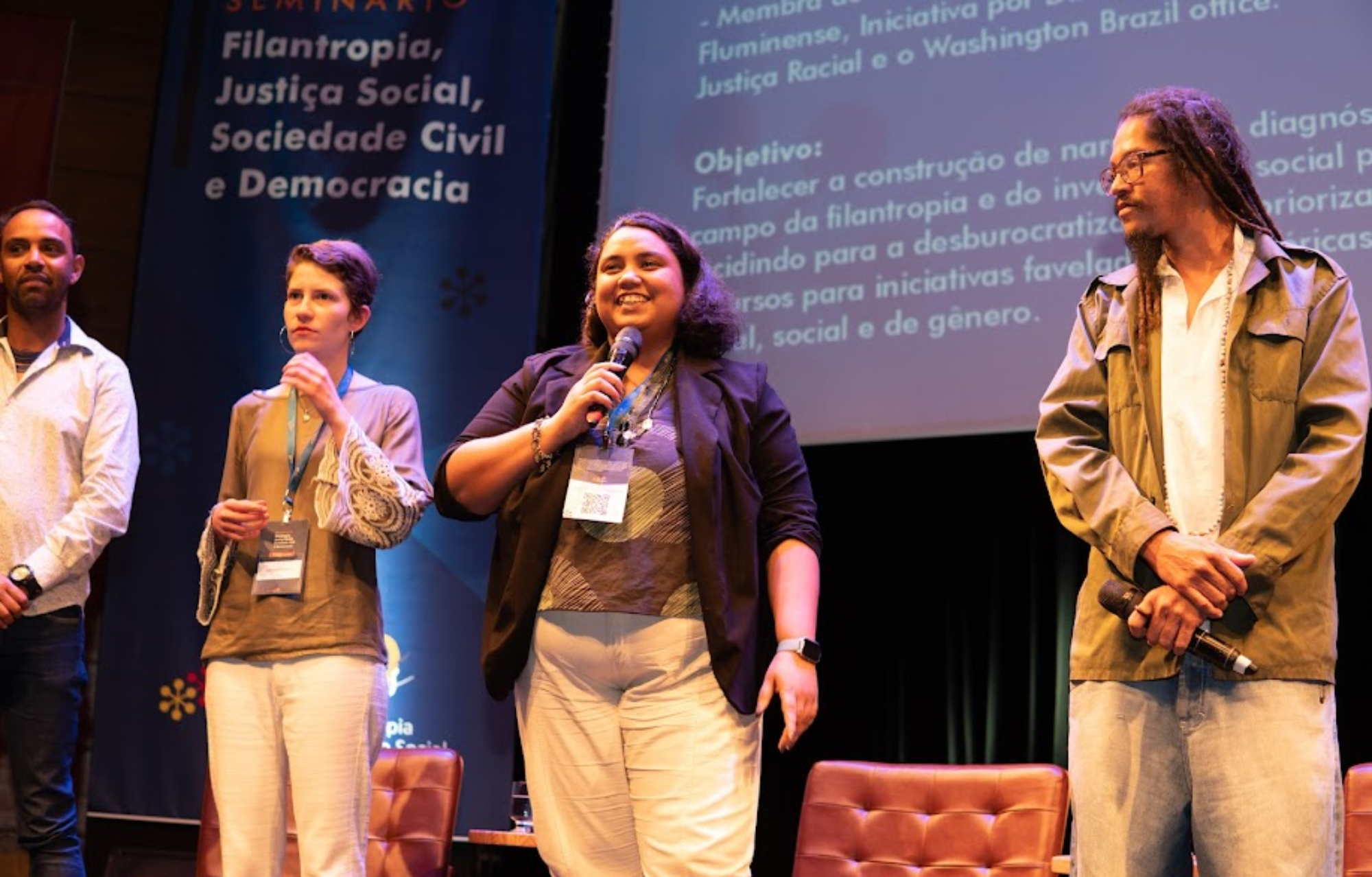
Last September, in the city of São Paulo, Brazil, the Philanthropy Network for Social Justice – now the new Rede Comuá, organized an international seminar that brought light to relational debates between democracy, community philanthropy, social justice and human rights, starring by black people, cis and trans women, by social organizations and community funds that operate significant transformations from the ground up. It is up to us to highlight that that week, our own metaverse of Social Philanthropy was created, where the reality shaped through our theory of change has at its center diversity, territory and the unbureaucratized way of doing things.
In our philanthropic Metaverse, we imagine a world where mobilized resources and the culture of grantmaking in Brazil and Latin America consider social impact strategies led by black people, women, LGBTQIA+ and peripheral people, where the promotion of movements, social organizations and collectives is guided to reduce inequalities in a collective, territorialized and less bureaucratic way. Through the meeting of the protagonists of community philanthropy, the celebration of the 10 years of Rede Comuá brought visibility to reflections on decolonial practices and strategic priorities that private social investment and philanthropy need to delve into in the next cycle.
In our metaverse reality, we believe that to achieve racial and gender equity in our society, it is necessary to share resources and power with those who make an impact on a daily basis in the most unequal territories in the country. Together, social impact investors and collectives, movements and organizations from favelas and peripheries, villages and quilombos can recreate a world where social justice and equal opportunities are the basis.
In August this year, the PIPA Initiative, an organization created by four peripheral activists in Brazil whose main mission is to contribute to democratizing access to private social investment in Brazil, helping to build a world in which philanthropic and private resources are accessible to organizations, collectives and movements based in favela and peripheral areas in a broad and equitable manner in terms of race, gender and class, launched an open letter to Brazilian philanthropy.
In it, we invite colleagues from private and family foundations, companies that drive social impact, and the community of individual donors, to rethink their internal construction policies, prioritizing the hiring of black, peripheral, LGBTQIA+ and women profiles to manage their portfolios and be in management and direction positions, to make decisions about who and how much can be invested in effective change. In addition to promoting a model of donation and transfer of resources that prioritize the promotion of black, peripheral and gender-based initiatives.
We don't need to draw a parallel reality to understand that it was us, black, indigenous and peripheral people, who ensured that favelas and peripheral areas could eat and protect themselves during the pandemic, imagine the political, economic and social transformation that we will be able to build if we receive sustainable resources , flexible and long-term, beyond the pandemic moment.
Transforming the metaverse of philanthropy for social and community justice into material and concrete reality depends on the entire ecosystem, mainly private social investors and their multiple organizations and companies, finally see the favelas and peripheries, the black, indigenous, quilombola population, rural people and the city, women, LGBTQIA+, not just as beneficiaries, but as protagonists of change. We are the programmers of good living, and to be successful in reducing inequalities, we need our reality of concrete transformation to be the rule, not the exception.
Marcelle Decothe is a researcher on gender, race and violence, co-founder of Movimento Favelas na Luta and Pipa Initiative and Program Manager at the Marielle Franco Institute. He is also a scholarship holder for the Saberes program at Rede Comuá.
*Article originally published on the Alliance digital magazine website in English and translated to the Rede Comuá blog: ,https://www.alliancemagazine.org/blog/the-metaverse-of-philanthropy/