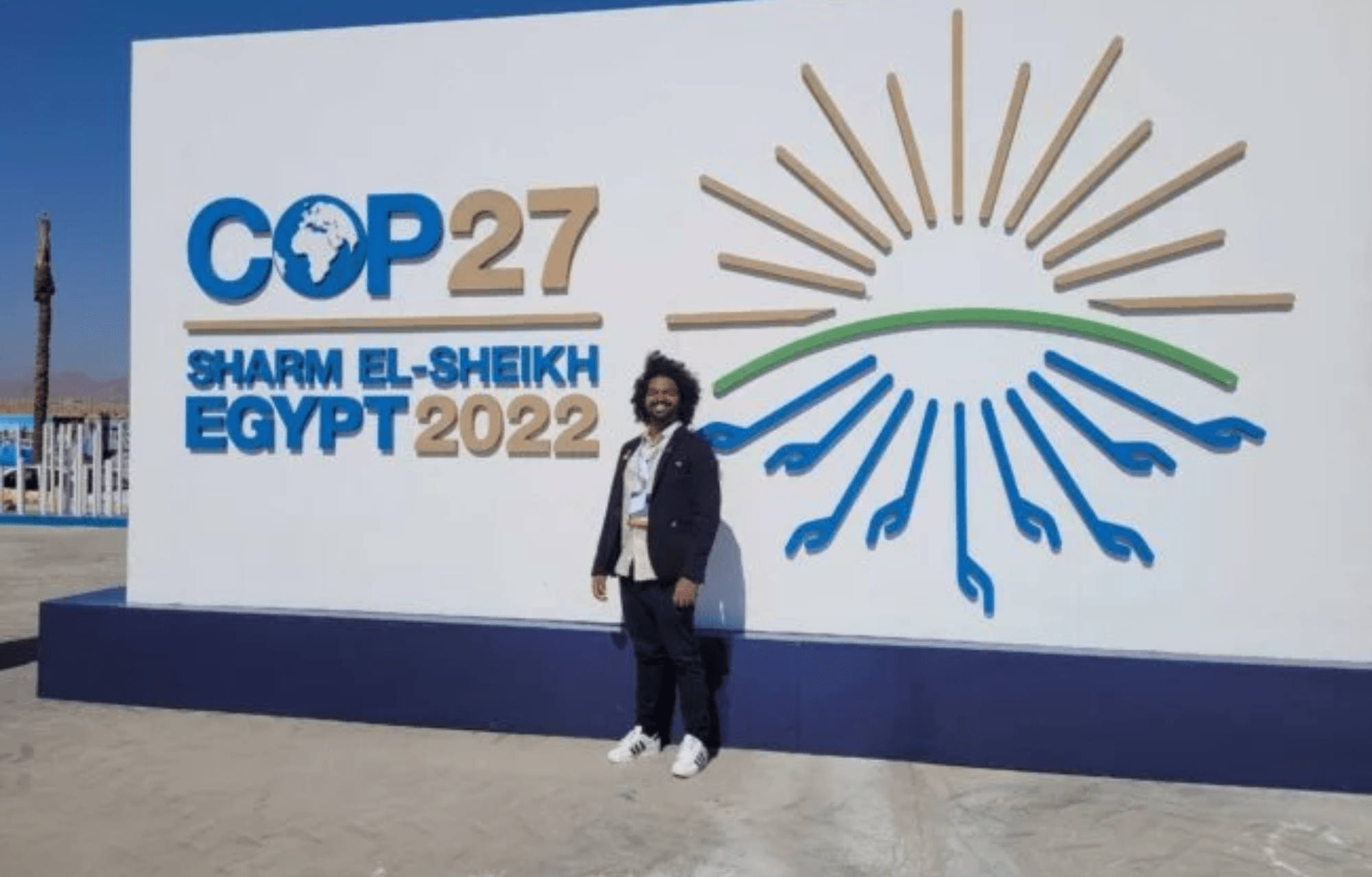
By Regilon Matos
Youth no longer want to be just a token of inclusion, they want to have a voice and a place in conferences that discuss the future of the Planet and the Climate Emergency.
Given the current economic, social and environmental situation in our country and the world, it is important that young people are now awakened, become increasingly vigilant and determined to take their place where decisions are made, enter the political arena and the spaces of civil society, for a transversal debate with diplomats, CEOS, presidents, activists and third sector coordinators. In this way, becoming multiplier agents who will positively influence other leaders with their improved vision of current actions and their determination to guarantee a better future for all.
In August 2021, the Brazilian Institute of Geography and Statistics (IBGE) announced that 23% of the national population totals around 47 million people who are between 15 and 29 years old. We, these young activists, are exponentially increasing our power by bringing plurality of participation in politics, government councils and broader political debate, such as the UN Conference of the Parties (COPs). An excellent example of this is the young indigenous activist Txai Suruí, being the only Brazilian to speak at the 26th climate conference in Glasglow, Txaí brought to light the reality of the impacts of climate change on the lands of her people in the Amazon when she said: “Today the climate is warming, animals are disappearing, rivers are dying, our crops don't flourish like they used to. The Earth is speaking, it tells us that we have no more time.”
Climate change has mercilessly reached every corner of the world, yet its impact is being felt differently in countries in the Global South, which suffer the terrible consequences of emissions from the “developed” world. The Covid-19 pandemic has amplified social inequality, making many vulnerabilities visible and burdening young people with incalculable impacts, while they find themselves in the midst of global paralysis, diminishing any positive prospects for their future and raising their levels of anxiety among other physical ailments. and emotional.
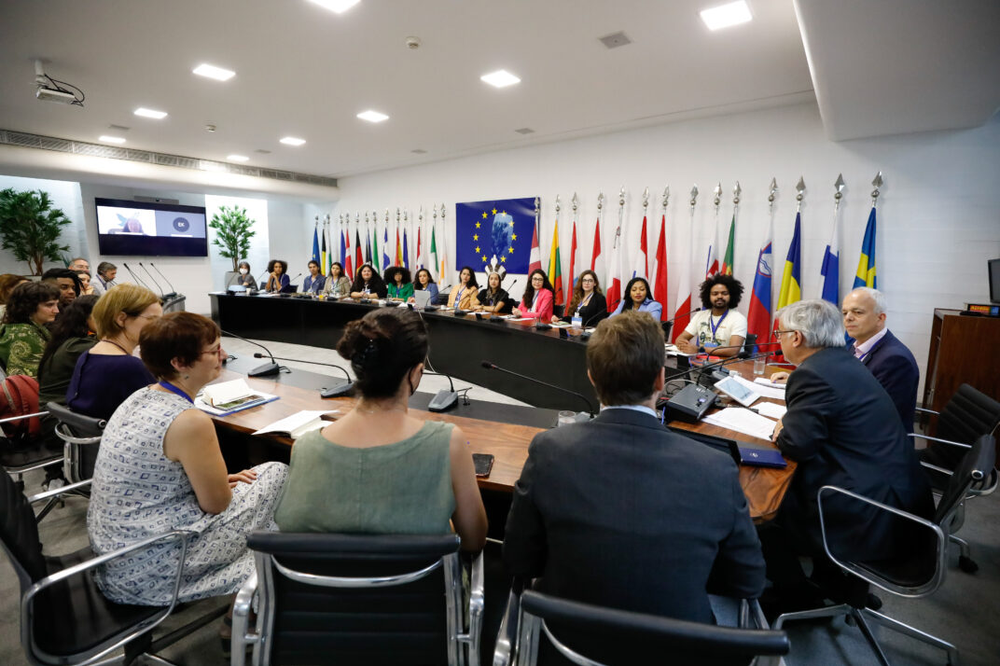
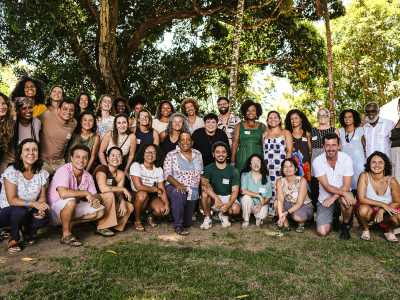
Youth Sounding Board of the European Union in Brazil aims to dialogue with youth. In the group, 15 young people represent diversity
of the country, among them is Regilon Matos, a member of the Casa Socioambiental Fund team. Photo: EU Embassy in Brazil / Reproduction of Fundo Casa website.
According to geophysicist and head of the Department of Applied Physics at the University of São Paulo (USP), Dr. Paulo Artaxo, the world faces three simultaneous emergencies, emergencies with similarities and differences, and which require immediate attention. They are: Health, Climate and Biodiversity. The key solution that all three problems share is science, but the difference that distinguishes each problem is the time it will take to solve it. Health, due to the Covid-19 pandemic, may take years to resolve; Climate change, due to a lack of action from the Global North to control greenhouse gas (GHG) emissions, could take decades or more; and biodiversity, once extinct, will be lost forever.
With the mission of bringing together the voices of the future, providing a safe space for construction and encouraging the engagement of young people, the European Union and the French Embassy in Brazil initiated projects that place youth as protagonists. The European Union has opened registrations for youth in the Youth Advisory Committee for Technical Cooperation in Brazil (Youth Sounding Board – YSB) with the aim of incorporating the perspective of young groups into the work programming, and thus, collaborating with the formulation of opportunities that include youth in the debates to prepare the work plan for the coming years.
Thanks to the cooperation of the French Embassy together with Fundo Casa Socioambiental and other Brazilian and international organizations, Lab Jovens was created, a visionary program to mobilize young people between 18 and 26 years old with the support of tools, mentoring and all necessary support to develop projects - actions in their territories, in addition to creating a large network of river and ocean activists.
In addition to the young presence in conference environments, it is necessary to get out of this paradigm where our image is as if it were a token of inclusion. Young people are in a hurry and feel the climate emergency, the increase in social inequality in the world and the difficulties in the transitions necessary to face the socio-environmental challenges of the 21st century head on.
Furthermore, the green and sustainable world requires that cooperation and trust are the lenses through which we view society, locally and globally. We, the youth, must play the role of essential partners and, in addition, the significant role of implementers of our own demands and initiatives. “We must be included, in a fully integrated way, especially in global financing structures to expand solutions”, says Domânica Facaldi, member of YSB and coordinator of the Innovation and Technology Laboratory at the Engajamundo organization.
Therefore, it is crucial that those who are at the center of the impacts of the climate crisis are also at the center of where decisions are being made. We, as agents of transformation and communication bridges, are bringing information in a democratic and easy-to-understand way to our territories, and this increasingly needs to be valued. It is necessary that international resources to combat climate emergencies also reach these initiatives. Finally, youth need to carry the message about the need to take care of the lives of traditional populations, people who have been preserving for thousands of years and, in the last 500 years, fighting to preserve our forests, rivers, oceans and all the life that lives in this world. planet.
Regilon Matos (Régis), 23 years old, works in the Casa Socioambiental Fund program area promoting conservation and sustainability, democracy and respect for socio-environmental rights close to projects linked to climate change mitigation. He is a Civil Engineer by training and fellow of the Youth Climate Leaders (YCL) network, climate reality leader for the Climate Reality Project Brasil and member of the Youth Sounding Board (YSB), the Youth Advisory Committee for European Union Cooperation in Brazil.