Welcome to the Comuá Network!

Thematic table at the Network's 10th anniversary Seminar brought together Human Rights and the Environment

By Méle Dornelas

Organized by the Society, Population and Nature Institute (ISPN), the table “Innovation, technologies and vulnerabilities: strengthening communities and the fight for socio-environmental justice” brought four technological initiatives/platforms that work with issues linked to the socio-environmental field. The projects address solutions and paths to situations of marginalization, invisibility and risk for people in vulnerable situations. The debate and reflections highlighted the synchrony between human rights and environmental protection, reaffirming that there is no way to think about philanthropic actions without these two aspects interacting with each other.

 
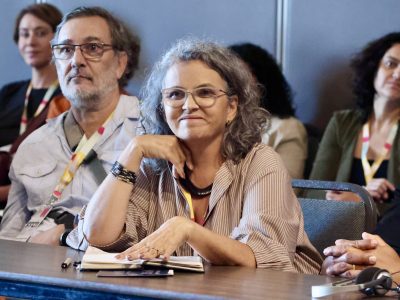
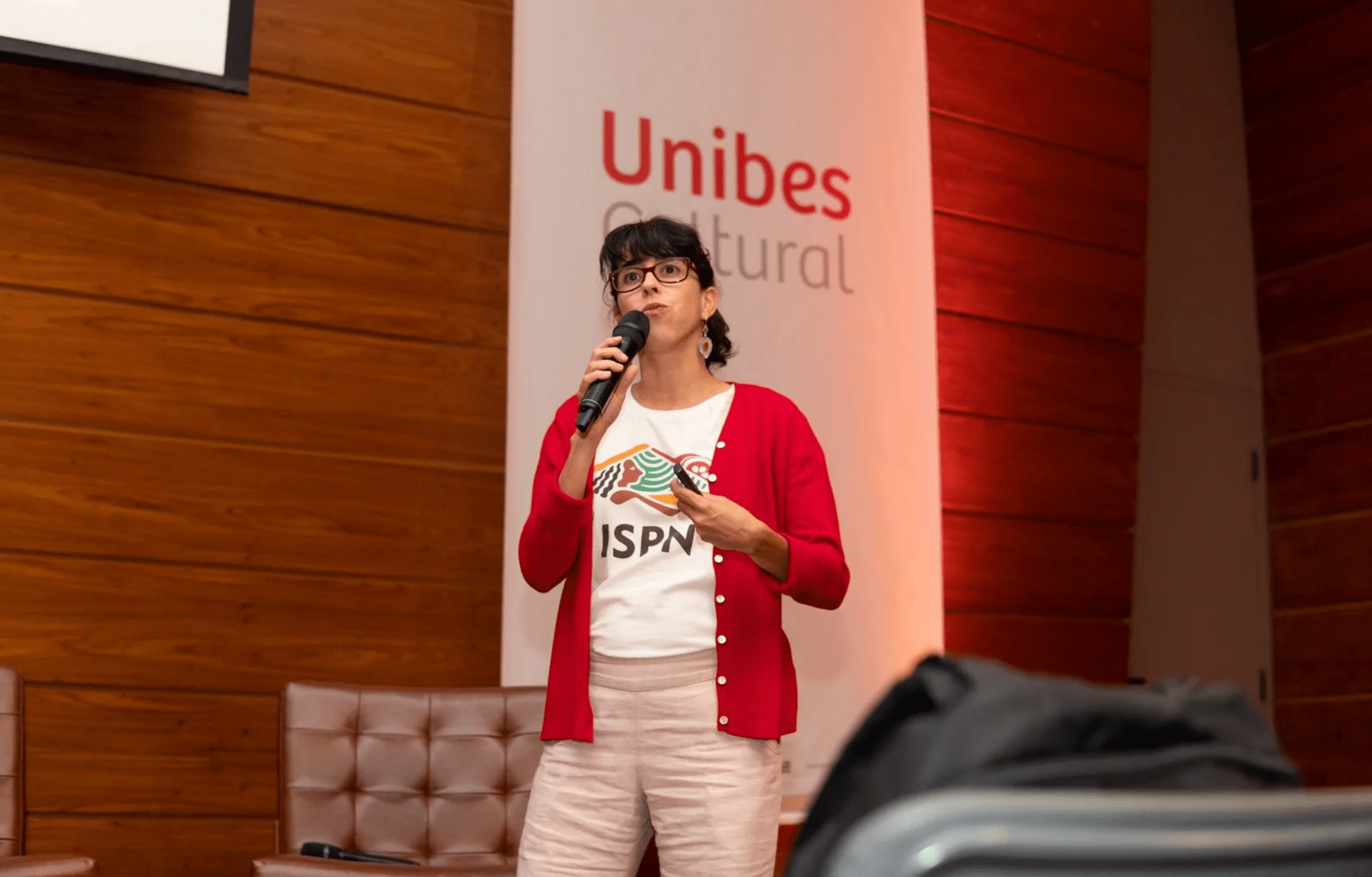
Debate at the table proposed by ISPN during the Network’s 10th anniversary Seminar

“Tô no Mapa”, an initiative by ISPN, Rede Cerrado and the Amazon Environmental Research Institute (IPAM), in partnership with the Cerrados Institute, was one of those presented at the Seminar. It provides an application so that traditional peoples and communities and family farmers from all over Brazil, commonly invisible on official maps, can automate their territories. The initiative is strategic so that these groups can be recognized politically and also to guarantee more territorial protection instruments, as these spaces are under constant threat and susceptible to situations of violence due to land disputes. There are already 162 self-mapped communities, but it is estimated that the number existing in the Cerrado is around 3 thousand. For more information, access the site: https://tonomapa.org.br/

Still within the socio-environmental agenda, the Suindara program (Burn and Deforestation Alert System), from the Cerrados Institute (IC), was another initiative exposed during the table. The application sends fire and deforestation alerts to the smartphones of managers, community members and brigade members, indicating on an interactive map the location of the alert and the information necessary for combat or prevention action. It aims to contribute to the IC's goal of protecting one million hectares of Cerrado by 2050. Suindara stands out as an important instrument to protect the Cerrado and its people, constantly threatened and invisible in environmental policies. Know more: https://cerrados.org/suindara_alert

Another initiative presented was the ICOM Community Bank, which was created within the Coronavirus Emergency Support Line, with the aim of guaranteeing access to food, hygiene and cleaning products for people in situations of social vulnerability, thus providing autonomy to these populations . Registered families receive monthly installments of social currencies, through an application, which can be used in small businesses in the neighborhoods where they live. There have already been 1,335 families that have received social currency in the city of Florianópolis. To find out more, visit: http://coronavirus.icomfloripa.org.br/

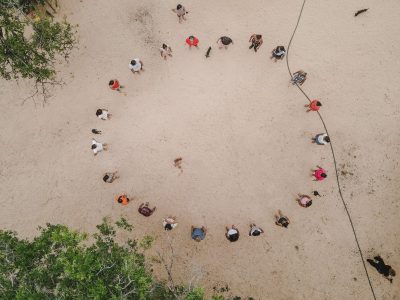
Closing the thematic table, “Tamo de Olho” demonstrated how technology can cross environmental, territorial and social data to identify emblematic cases of deforestation and violations of the rights of traditional peoples and communities. Developed by ISPN, WWF Brasil, Rede Cerrado, Instituto Cerrado and IPAM, the initiative, after identifying these cases, establishes legal-political advocacy strategies with public bodies and the justice system to protect socio-environmental rights and strengthen affected communities . With a strong presence in MATOPIBA (acronym to identify the Cerrado regions of the states of Maranhão, Tocantins, Piauí and Bahia), Tamo de Olho also establishes dialogues with the international community, aiming to draw the attention of these actors to the urgency of other countries demanding and contribute to policies for environmental conservation and the rights of rural populations in Brazil.
“The table was an important opportunity for us to bring debates about issues involving environmental and territorial protection into the Network, especially regarding the second most threatened biome in Brazil: the Cerrado. There are several communities that find themselves in vulnerable situations, whether due to the reduction of their productive areas due to accelerated deforestation, or due to the violence and threats that persecute them, mainly in situations of land grabbing. Human rights and the environment are linked, and the support actions we carry out are precisely so that these historical inequalities are repaired alongside the sustainability of our natural resources”, comments the coordinator of the Cerrado and Caatinga Program at ISPN, Isabel Figueiredo.

Méle Dornelas She is a communications advisor at the Instituto Sociedade População e Natureza (ISPN), graduated in communications with a qualification in advertising and marketing from UFPE and a specialist in communications from UFBA.
Images in the body of the text: Presentation of the ISPN table during the Network’s 10th anniversary seminar – Photos: Zoid Creative.

KEEP READING

Foto: Rebeca Roxani Binda - Volta Grande do Xingu
Territórios, clima e modos ...
28 de April de 2026
Assembleia de sócios 2026 | Divulgação: Rede Comuá (@barcelosnotbarreto)
Rede Comuá realiza assemble...
27 de March de 2026
LUCT7943
Fundo Brasil completa 20 an...
27 de March de 2026
Belém (PA), 11:11:2025 - Indígenas participam da inauguração da Aldeia COP. Foto- Bruno Peres:Agência Brasil
Visibilidade em Disputa: So...
18 de March de 2026
Loading more articles....Please wait!