By GIFE
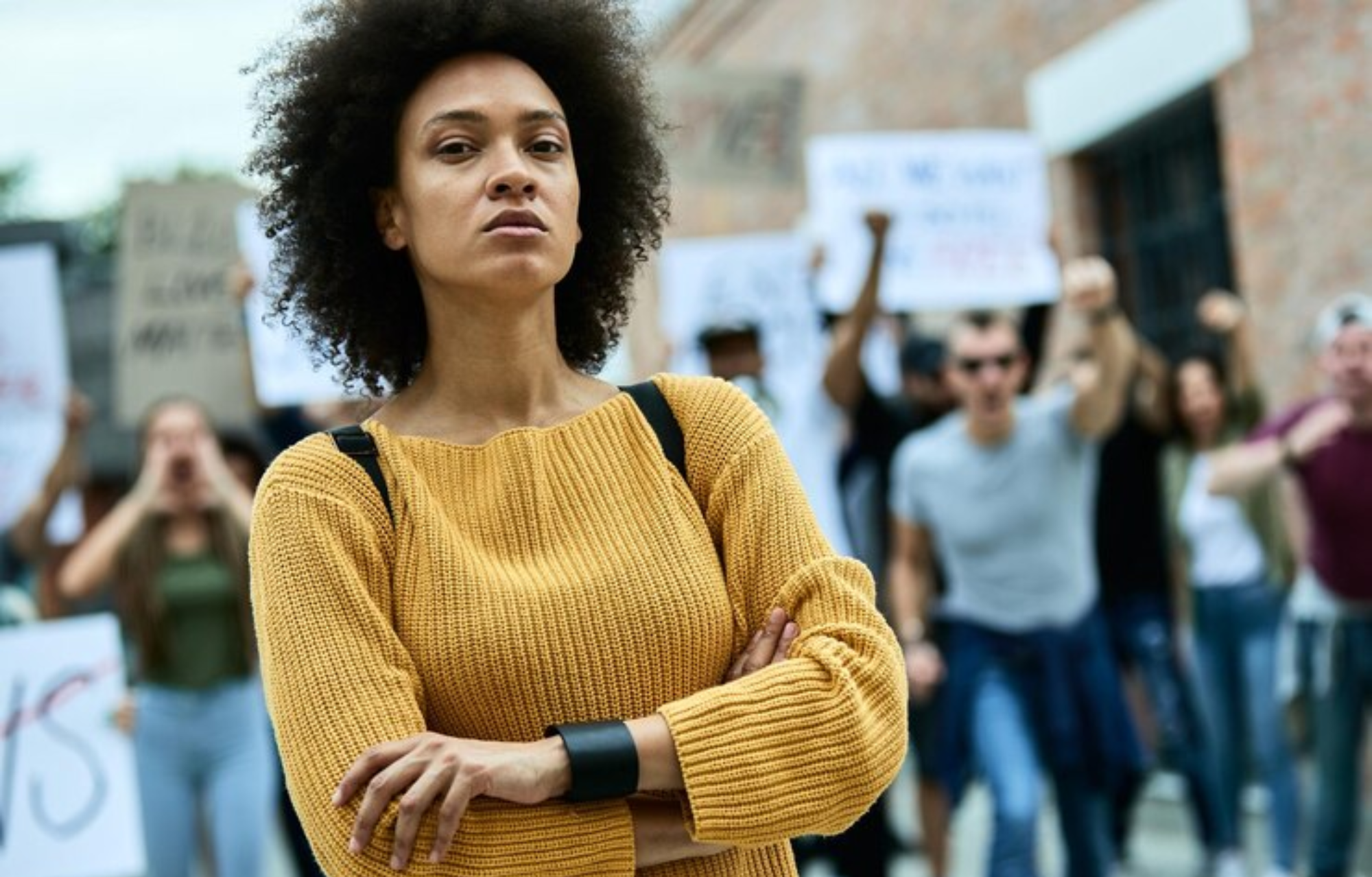
At a time of intense changes in the Brazilian and global scenario, movements of stigmatization and hostility towards the role and performance of these actors on the public scene combine with the renewed demonstration of their vitality and centrality for the promotion of collective action at key moments. such as the pandemic and to produce responses to new challenges on fronts as diverse as racial equity, women's rights, climate change, the creation of new economic opportunities, community mobilization, political innovation, and so on .
Reflection permeated a panel carried out by GIFE in the context of the Trail of its 11th Congress, which sought to explore possible ways to enhance the interaction between philanthropy and social investment and these processes.
How can these actors connect and establish new support and partnership strategies? How can new profiles, agendas and action dynamics that emerge all the time inspire new models for social investment? What challenges and opportunities are on the horizon of this interaction?
To discuss these and other issues, the redeGIFE interviewed Graciela Hopstein, executive coordinator of the Philanthropy Network for Social Justice. Book organizer Social Justice Philanthropy, Civil Society and Social Movements in Brazil (2018), the expert draws attention to the opportunity to face some of the environmental and social problems that, until recently, seemed impossible to combat.
Check out the interview below.
redeGIFE: How do you evaluate the role of social movements and organizations and their actors in promoting collective action in key moments such as the pandemic and in producing responses to social, economic and environmental challenges?
Graciela: Social movements have been occupying a prominent place on the political scene, both in Brazil and internationally, and although this protagonism was evident in the pandemic, this is an older trend that has been deepening in the context of the crisis of capitalism and representative democracy. They began to gain notoriety on the threshold of the 21st century as key actors in struggles and processes of transformation anchored in the construction of diverse agendas aimed at the recognition and achievement of rights and the affirmation of multiple and differentiated identities and new forms of life.
It is a diverse set of actors – collectives, groups, civil society organizations – capable of building agendas, creating narratives, languages and forms of production and organization based on self-management. It is for this reason that we can understand the prominent role that social movements and collectives played in confronting the pandemic. In fact, they found autonomous ways to provide innovative responses to the crisis, coordinating actors, initiatives and resources and seeking solutions to meet needs and demands, which involved everything from distributing basic food baskets to conducting information and humanitarian aid campaigns, which , certainly, also implied the installation of innovative strategies of struggle and resistance.
Understanding the actions of the movements implies an analytical process of deconstruction because, in fact, they do not seek institutionalization, but rather the questioning of established power – colonial, patriarchal, white, heterosexual –, the achievement of rights and the recognition of multiple identities. They are biopolitical struggles because they are, at the same time, economic, political and cultural, valid for deciding on different forms of life, and because they have the capacity to deeply question the current political and social system through the construction of integrated agendas, innovative, intersectional and structural processes of transformation.
redeGIFE: How do you see the risks and threats regarding the space in which these actors operate and the concrete experiences of intolerance and intimidation towards the plurality of civil society?
Graciela: Social movements and civil society organizations in Brazil have been facing several threats, the product of a process of criminalization of the sector that involves both reputational and digital attacks – specifically those who work in the area of human rights with political minorities – as well as, and concomitantly, a vacuum in financing – due to the scarcity of financial resources donated to these groups –, putting their sustainability at risk.
The relationship between organizations and social movements with public authorities has also been visibly affected, not only by the lack of dialogue to build agendas, but mainly by the shrinking and closing of spaces for civic participation, which has been visibly limiting advocacy actions and advocacy. In general, we also observe that the established conservative narratives – such as “gender ideology” and “school without parties – and the persecution of political minorities and vulnerable populations and initiatives aimed at defending the environment not only put the work movements, but also negatively impact the process of building political agendas aimed at recognizing and achieving rights.
Perhaps, in the context of the pandemic, a window of opportunity could open that allows recognition in the public sphere of the enormous contribution that community-based organizations and movements have been making in confronting the devastating impacts of Covid-19. It is up to us, actors from the philanthropic sector and civil society, to start building narratives – or counter-narratives – and reconstructing concepts and meanings, rescuing the centrality of civil society and the citizen sector in consolidating democracy.
redeGIFE: It is possible to draw an overview for this year in terms of the main challenges and also the opportunities for success and expansion of the actions of movements and organizations on agendas such as racial and gender equity, climate change and deforestation, recovery and new economy, political innovation and inequalities?
Graciela: Analyzing the actions of these political actors, it is possible to recognize old and new elements: historical demands mix with new denunciations, demands, agendas, forms of organization and fighting strategies. Occupation on the streets and online. Movements that dispute visibility, autonomy and freedom in consumption, in politics, in the recognition of diverse identities, in circulation and access to public spaces, over their bodies and their lives. They fight against femicide, sexual harassment and racism; for the end of patriarchal society and colonialism; against climate change and in favor of another development model; for the rights of migrants, women and young people and the LGBTIQ+ population; and for the defense of original peoples.
Perhaps we can identify a new cycle of struggles in the context of the pandemic where social movements and community organization dynamics were and are more important than ever. In places where social and health systems are crumbling and structural inequalities and injustices have become even more visible, the dynamics of mutual help and collaboration that have been built by movements and local actors need to be strengthened and this is where community philanthropy comes into the picture and occupies a fundamental place to support with resources the initiatives that already exist in the different territories (urban and rural) of operation. Community philanthropy not only contributes with new approaches and perspectives, but acts to enhance, through strategic donations, the promotion of collective and autonomous forms of organization, recognizing the voice power of local movements and their relevant role in choosing directions, in the search for solutions and in driving transformation processes.
redeGIFE: What formats and trends can be glimpsed in the interaction of philanthropy and social investment with these processes towards establishing new support and partnership strategies?
Graciela: There is a window of opportunity for foundations and owners of great wealth to be catalysts that help build a future capable of taking advantage of this moment to tackle some of the environmental and social problems that, until a while ago, seemed impossible to combat at a systemic level. Perhaps the pandemic shook up the overall system to allow this to happen. In this scenario, it is important that foundations, philanthropists and donors realize that this crisis will not pass just with a vaccination plan and/or the distribution of emergency aid from governments. Although it is possible to recognize positive signs from some philanthropic organizations regarding changes in their donation and investment agendas and practices – such as significant donations and the creation of emergency support lines, for example –, it is essential to make changes, incorporating long-term structural support strategies.
This is an appeal to the philanthropic sector for donor organizations to make adaptations to their strategies and portfolios, so that they can look at the social field and civil society, recognizing their demands and needs and make use of their social capital to support the variety of civil and community actions that are actually taking place. This is also the time to make unrestricted donations to trusted partners, in order to support them so they can cope with the situation together with their communities in the best way possible. In the current context, it is important to think about how to support activists and community groups, movements and people who are doing important work in places where the most vulnerable and marginalized will be hit hardest.
Listening to the movements' demands to think about how it is possible to support the efforts they are making in the face of the pandemic is a priority action. Seeking ways of articulating between different partners, especially with those who have a deep knowledge of existing networks and organizations, such as local funds that are part of the Philanthropy Network for Social Justice, is also a possible strategy, not only because they have the capacity to support civil society initiatives in an agile and assertive way, but as a way of strengthening local philanthropy and its ecosystem.
Certainly, ensuring that these resources quickly reach the grassroots, the communities, and the strategic actors working to combat Covid 19 will be of great transformative power.
Originally published in: https://gife.org.br/