Welcome to the Comuá Network!

Stay up to date with everything that happens in the comuá

Category:#EnglishVersion

#EnglishVersion
Comuá

Between the challenges and hope, philanthropies (in plural) that resist

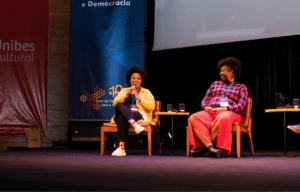
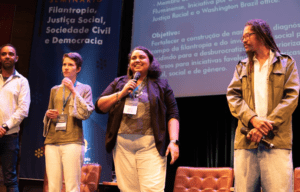
Doing advocacy work in the field of philanthropy is not an easy task. The reproduction of colonial structures, racism, misogyny, LGBTIphobia and other diverse forms of violence make philanthropy an environment that can still be very exclusionary, especially for minority groups. However, Comuá Network's 10th Anniversary Seminar “Philanthropy, Social Justice, Civil Society and Democracy”, held on the 20th and 21st of September in São Paulo, was an important reminder to all those present that philanthropy can also be a space for resistance, struggle , collaboration and, especially, hope .
Read More »
#EnglishVersion
Comuá

Perceptions on philanthropy

Philanthropy, Social Justice, Decolonial Philanthropy, Human Rights, Democracy…

The 10th Anniversary Seminar of the Brazilian Philanthropy Network for Social Justice – now Comuá Network – immersed us in these themes and, in two days, brought together in a single environment the references of the national and international philanthropic system. I was there.

It's funny to observe that when I started my professional career in the social field years ago, the notion of philanthropy was linked to assistentialism, charity. The evolution in conversations, and the cultural political moments, provoke questions and reflections on the re-signification of the concept that are welcome.

Read More »
#EnglishVersion
Comuá

The metaverse of philanthropy: Building transformative realities from social justice

You must have heard or read something about the technological phenomenon of the moment: the Metaverse. It is nothing more than the terminology used to indicate a type of virtual world that tries to replicate reality through digital devices. A reality shaped and controlled by a programmer, who operates through tools other possibilities of different worlds and senses of well-being.

Past September, in the city of São Paulo, Brazil, the Brazilian Philanthropy Network for Social Justice – now Comuá Network, organized an international seminar that shed light on relational debates between democracy, community philanthropy, social justice and human rights, by black people, cis and trans women, by social organizations and community funds that operate significant transformations in communities. It is up to us to emphasize that in that week, our own metaverse of Social Philanthropy was created, where the reality shaped through our theory of change has at its center diversity, territory and an unbureaucratic way of doing things.

Read More »
#EnglishVersion
Comuá

Building horizontal spaces to share knowledge

The title of this text is the first definition of the Comuá Network in my view. There are many ways to choose whether to define yourself as a network, but I will stick with the one that connects and extends. This text, that follows a horizontal line, intends to talk to you about how knowledge is constructed from a decolonial community philanthropy. We are not designing recipes, in fact what we aim is to build spaces with possibilities.

There are many ways to do philanthropy, and few people recognize this. Here is our first frontier. When I refer to people, I am aware of the existence of a system, an approach, an objective qualification about what philanthropy means for those who recognize it and not exactly for those who do it.

Read More »
#EnglishVersion
Comuá

Guajajara indigenous peoples promote environmental and territorial management actions in the State of Maranhão

By Andreza Andrade

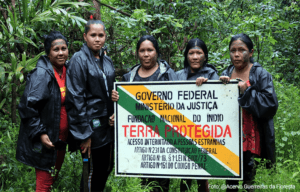
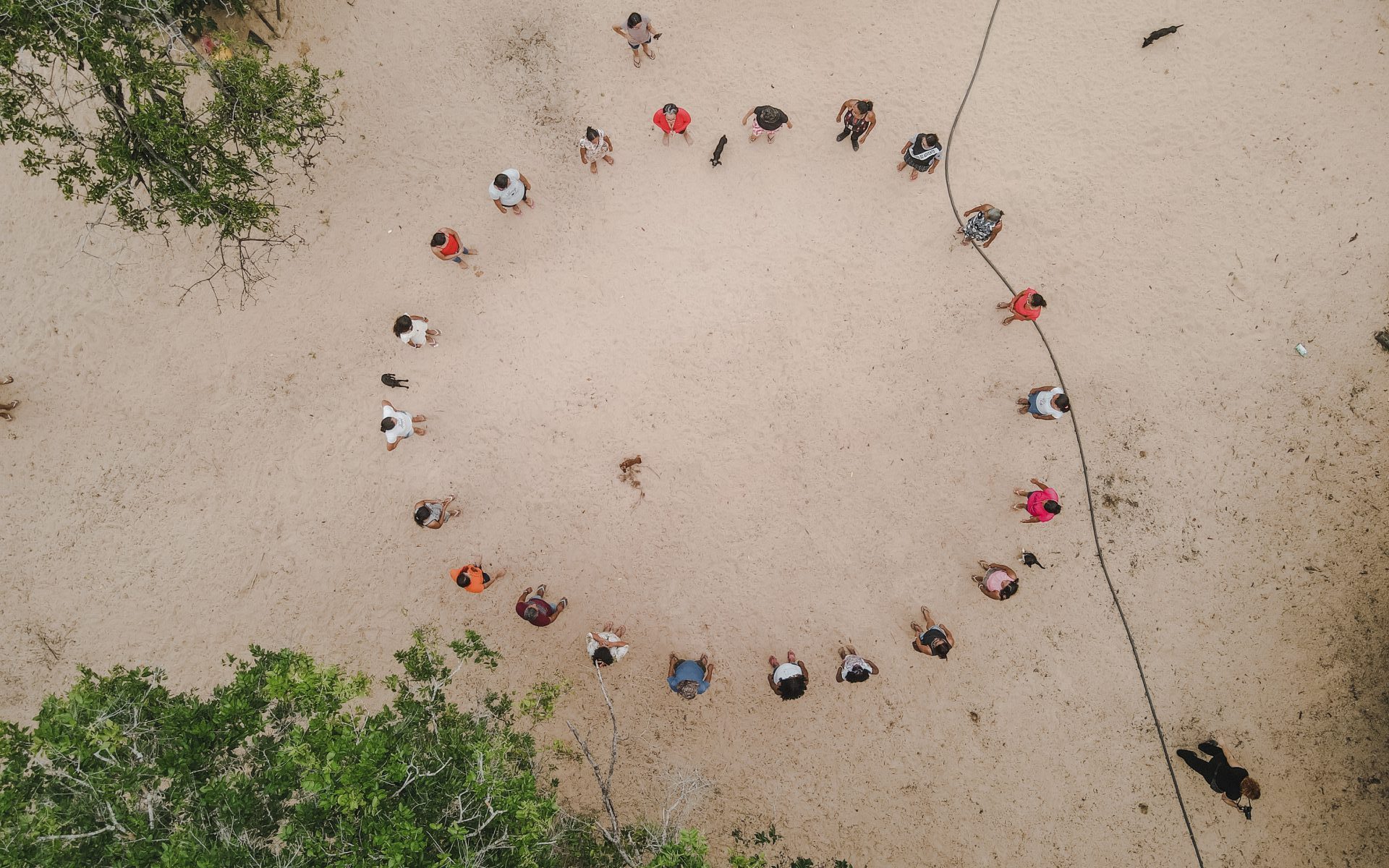
Focusing on sensitivity, solidarity and empathy, indigenous Guajajara women from the Caru Indigenous Land, located in the western region of the State of Maranhão, are taking part in environmental and territorial management actions in their ancestral lands. These women make up the Forest Warriors collective (“Guerreiras da Floresta”), which, since 2014, supports and promotes territorial protection actions alongside the Guardians of the Forest, in defense of indigenous cultures and territories.

Read More »
#EnglishVersion
Comuá

Can money buy everything? Resourcing in the new system

This piece is part of a series of articles exploring the topic of civil society resourcing, and why this needs to be rethought – particularly in terms of placing more value on civil society's “intangible” assets. See other posts: Rethinking civil society resourcing and Moving from the old to the new: Why it's time to rethink civil society resourcing.

When we think capital or resources (I will use those terms inter-changeably) we often tend to automatically think money, finances, cash, funds. Yes, of course it is a kind of resource. But is it the only kind that makes things happen – to bring drinking water to a community, establish a network of health care posts, put together an urban neighborhood's waste management system?

Read More »
#EnglishVersion
Comuá

Trust at the core of philanthropy: Mackenzie Scott's donation acknowledges the work done by the funds of the Brazilian Philanthropy Network for Social Justice

Mackenzie Scott's donation acknowledges the work done by the funds of the Brazilian Philanthropy Network for Social Justice
 
By Monica C. Ribeiro
 
In this third article[1] written in honor of the 10th anniversary of the Brazilian Philanthropy Network for Social Justice (RFJS), we will discuss the US$ 3.86 billion donation made by the US philanthropist Mackenzie Scott to 465 civil society organizations in several countries worldwide . Among those entities, 15 Brazilian organizations were selected, five of which are members of the Brazilian Network –Brazil Human Rights Fund, Baobá Fund, Casa Socio-Environmental Fund, Elas Social Investment Fund and Redes da Maré.

Read More »
Baixada Institute
Comuá

Investing in people who change realities

Author Diane Pereira Sousa
 

“Baixada Maranhense” is a region to the north of the State of Maranhão. It is an important territory for the State's development structures.

Anyone who is born or who lives in this region is called a “Baixadeiro”. This form of identification started in 2003, with the movement known as “CIP Young Citizen”, an integrated series of development projects promoted by “Formacao – Centro de Apoio à Educação Básica” in 10 cities (Arari, Cajari, Penalva, Matinha, Olinda Nova, São João Batista, São Vicente Ferrer, São Bento, Palmeirândia, Peri Mirim).

Read More »
#EnglishVersion
Comuá

OL-ECB TIG Week: Must We Call It 'Evaluation'? – How 'M&E' Language Can be a Barrier to Institutionalizing Learning by Barbara Klugman

Hello, I am Barbara Klugman (PhD), based in South Africa, once an anti-apartheid and women's rights activist, now providing freelance strategy and evaluation supports for social justice funders, networks and NGOs.

I work with groups engaged in organizing and advocating for social or environmental justice. In this process, I have come to realize that sometimes just the term 'evaluation' is enough to undermine the possibility of them initiating or further institutionalizing their information gathering, reflection, learning and adaptation processes. Their experience of 'M&E' is the requirement created by their funders that they name, in advance, what they will do and what they will influence. This might work alright for a group running an already-established service, but it is entirely guesswork and inappropriate for groups whose effectiveness requires them to shift both protest and advocacy strategies as the broader public and discourse political shifts, and as windows of opportunity for influence open and then close. Whatever they plan, they may need to shift.

Read More »
#EnglishVersion
Comuá

Covid-19 is a social justice issue: How one Brazilian community foundation is responding

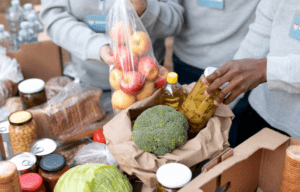
On 18th March, our government mandated the closure of public schools, non-profit organizations and other public services that provide essential services to the most vulnerable families in the region of Greater Florianópolis, Brazil. Vulnerable children in particular relied on the food that was given to them at school, or by local non-profits. At the same time, informal workers started to lose their income as they were forced into a period of isolation. It was a wave of losses that clearly showed how unequal our region is. Vulnerable people quickly started to feel fear: not only fear of the virus Covid-19, but also fear of hunger, fear of not having access to clean water, fears around not having income, etc. On the very same day, 18th March, community-based partners of ICOM – Instituto Comunitário Grande Florianópolis started mobilizing their communities and launching fundraising campaigns to ensure that food would reach the most in need.

Read More »
Jész Ipólito
28 de April de 2026

Territórios, clima e modos de vida: repensando a justiça climática a partir dos saberes tradicionais

O que muda quando a justiça climática é pensada a partir dos territórios? Este texto convida a olhar para os saberes, modos de vida e práticas de povos indígenas e comunidades tradicionais como caminhos fundamentais para imaginar respostas climáticas mais justas, coletivas e enraizadas na vida.

Know more "

Jész Ipólito
27 de March de 2026

Rede Comuá realiza assembleia em Serra Grande (BA), com encaminhamentos sobre identidade institucional, planejamento e cuidado coletivo

Encontro marcou a primeira edição da assembleia da rede no Nordeste, com acolhida da Tabôa, debates estratégicos e experiências de cuidado em diálogo com o território

Know more "

Jész Ipólito
27 de March de 2026

Fundo Brasil completa 20 anos apoiando a sociedade brasileira na luta por direitos

O Fundo Brasil de Direitos Humanos celebra o marco histórico de R$ 130 milhões doados a mais de 2.300 iniciativas

Know more "

Jész Ipólito
18 de March de 2026

Visibilidade em Disputa: Sociedade Civil na Era Algorítmica

Know more "

Jész Ipólito
5 de February de 2026

E OS QUILOMBOS, “CUMÊ QUE FICA’? A URGÊNCIA DE UMA FILANTROPIA QUE RECONHEÇA ANTES DE TUDO AS PRÁTICAS ANCESTRAIS

Know more "

Jész Ipólito
5 de February de 2026

Fundo Casa Socioambiental recebe doação de Mackenzie Scott pela segunda vez 

Em entrevista à Rede Comuá, a diretora-executiva do Fundo Casa Socioambiental destacou a importância dessa doação em um contexto onde a organização completou 20 anos

Know more "