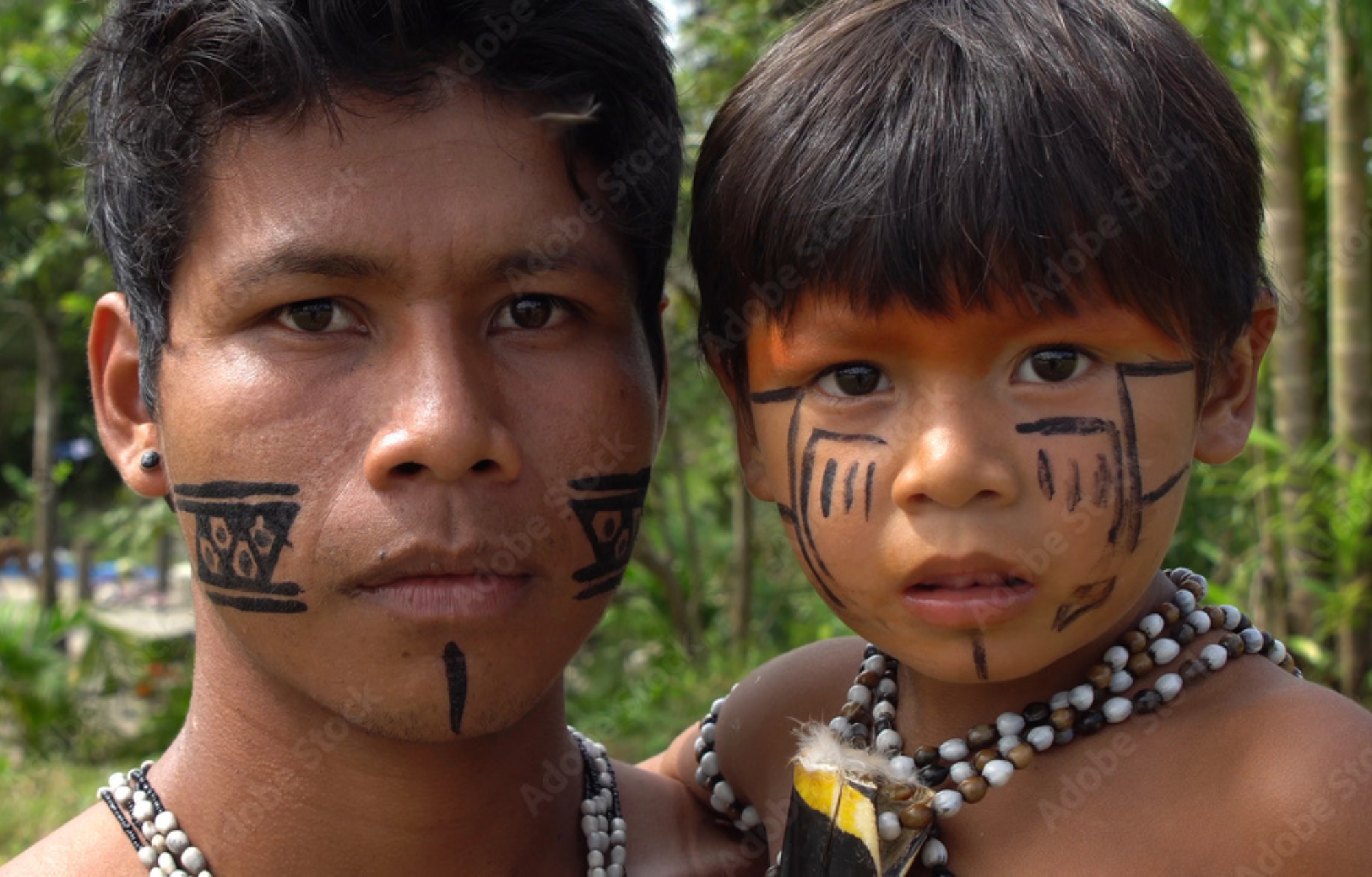
By Maíra P. Lacerda Krenak & Inimá P. Lacerda Krenak
For this article we listened to Ailton Krenak[i], important indigenous leader recognized inside and outside Brazil, coordinator of the Indigenous Culture Center and advisor to the Casa Socio-Environmental Fund, on philanthropy for indigenous peoples. Perhaps your speech could provoke reflections on the topic.
In Brazil there are no foundations with a historical tradition of donating. And the foundations that have this tradition abroad have not yet created a flow with Brazil, it is as if the country had not yet qualified for a relationship with philanthropic funds. We are still in the field of external aid, it seems like charity, which is very subordinate, without respect for the integrity of the person receiving the resource.
The case of support in the 90s, which even the Indigenous Culture Center received, was not philanthropy, it was specific forest protection programs, concerned with climate change, within Global 2000. Even so, the tendency was to submit these resources approval from the local government, so that this money could reach the communities through the government. We fought against this, so that we could have our own voice, so that the resources could go directly to the people, and this did not prevail.
The focus now is again on the Amazon, climate control. What is the real motivation of those who donate? Is there a real concern for the survival and well-being of these populations?”
For the majority of the 305 indigenous peoples recognized in Brazil, dependence on actions, technologies and goods from the consumer society is already great, even for those who still manage to live within their traditions. Fuel for vehicles and boats that allow free movement, solar panels that enable communication, energy and drinking water, clothing and utensils that have been imposed. Communities today are surrounded by monoculture farms, pastures, mining, mining, roads, hydroelectric plants, ports, waterways and railways, making access to natural food, traditional medicine, water without mercury or pesticides, hunting and to fish. People in voluntary isolation are even more threatened. Ecosystems and life subjected to a cruel and unjust war.
To face this tragic panorama, indigenous peoples organize themselves, create new structures to maintain their way of life and fight for their rights. Young people are trained, women take on responsibilities and action fronts, associations and cooperatives seek improvements for villages, income generation, education and health that are more in line with their way of life. New strategies to get back on track with your lives based on your real needs and within your worldview.
For a long time, projects were designed and developed within indigenous villages, by governments, institutions, and people of good will, mobilizing resources and energy without the involvement of these communities, producing situations that are sometimes comical, other times tragic. Such as the case of a community in Mato Grosso that received a considerable contribution to prepare a piece of its land, previously occupied by the cerrado, for rice planting. A lot of money, machinery, seeds, experts... When the plantation was finally ready to harvest, the indigenous people refused to harvest the rice and explained: we don't eat rice, the pacas and tapirs eat it, so they will feed on the rice, become fat and Then we'll hunt them down. Time and resources wasted, the savannah was felled, a series of mistakes that could have been avoided with a simple consultation. A “failure” for those who invested and still blamed the indigenous people for their inability to relate to the opportunity that had been “given” to them.
When the community diagnoses its needs, seeks resources and independently and responsibly applies the necessary contributions, the results are different, bringing satisfaction, empowerment and solutions to problems.
It is in this sense that we seek to collaborate with the Casa Socioambiental Fund, a Brazilian organization whose mission is to promote environmental conservation and sustainability, democracy and social justice by supporting and strengthening civil society capacities and initiatives in South America. .
Within this mission, we seek to provide support in order to meet the demands of grassroots communities, including that of indigenous peoples, always respecting their own forms of decision-making and strategies, strengthening their ways of being in the world, adapting to threats and seeking solutions to new reality. Between 2013 and 2020, 264 projects from indigenous communities were supported throughout the Amazon, including Brazil, Peru, Colombia, Ecuador and Bolivia, totaling an investment of 2,380,000.00 US dollars.
Each indigenous people, with their language, traditions, history, has a different way of being in the world, of relating to nature and the cosmos of which they are an inseparable part. Dreams are fundamental spaces for relationships with other dimensions, other beings, determining factors in many decisions. As well as the knowledge of elders, the needs of children, the suffering of animals or plants, the mood of mountains and rivers. All elements to take into account when thinking about a project, changing the direction of a proposal that initially seemed good, or abandoning a project that would bring a bad result for the community.
This particular vision of the world must be understood, respected, assimilated by any individual or institution that intends to carry out initiatives to support traditional peoples. The formula for measuring the results of a project is not limited to numbers, tables, or the consolidation of a budget. Dialogue, the “gathering of the collective around the fire”, evaluating possibilities and strategies until reaching consensus, this should be the way, with learning, flexibility, creativity, boldness, seeking new social and emotional technologies to face this model of management of the planet that has only been producing its spoliation, poisoning and death.
In their traditional way of life, indigenous peoples have solutions for a harmonious and respectful relationship with the web of life. Perhaps it is possible to truly approach these peoples, placing resources, investments and new technologies in partnerships that strengthen this way of being in the world. . In a movement contrary to the colonization imposed to date, that can reverse the clouds of destruction that hide true knowledge and allow the flow of life.
Maíra P. Lacerda is from the Krenak people, a historian graduated from the University of São Paulo – USP. His life story is one of permanent coexistence and work in partnership with indigenous peoples. He has worked in the Casa Socio-Environmental Fund project area since 2015, where he currently coordinates the Amazon Program.
Inimá P. Lacerda is indigenous to the Krenak people of the Rio Doce Valley. Social Scientist from PUC-SP and environmental manager, she has extensive experience in carrying out projects in partnership with indigenous communities. Organizer of the books 'Stories of the beginning and end of the world: The contact of the Paiter Suruí people' and 'Aunaki Kuwamutü: Kuwamutü who created the world and other stories of the Mehinaku people', author of the chapter: 'The Xavante people and the impacts of Jaburu Project' in the publication 'New paradigms of production and consumption' by Instituo Pólis. He currently coordinates the Indigenous Peoples Program of the Casa Socioambiental Fund.
* Written before the pandemic in Brazil.
** Originally published in English in Alliance Magazine: https://www.alliancemagazine.org/feature/what-is-the-donors-true-motivation/