At the GIFE 2023 Congress, Allyne Andrade, deputy superintendent of the Brazil Fund, participated in a debate on regulatory challenges facing civil society
By Rafael Ciscati
The covid-19 pandemic has significantly impacted the way the Brazil Human Rights Fund works. Traditionally, the foundation supports projects developed by grassroots organizations. Proposals, coming from all over the country, are selected via notice. The health emergency forced a change in the work logic. “We started thinking about how to act to keep civil society alive and active in that context”, says Allyne Andrade e Silva, deputy superintendent of the institution. “The solution we found was to offer flexible support”. In this modality, the resource received by the group does not need to be fully used to finance a project: it can also have the objective of institutional strengthening, intended to pay salaries or other expenses of the organization.
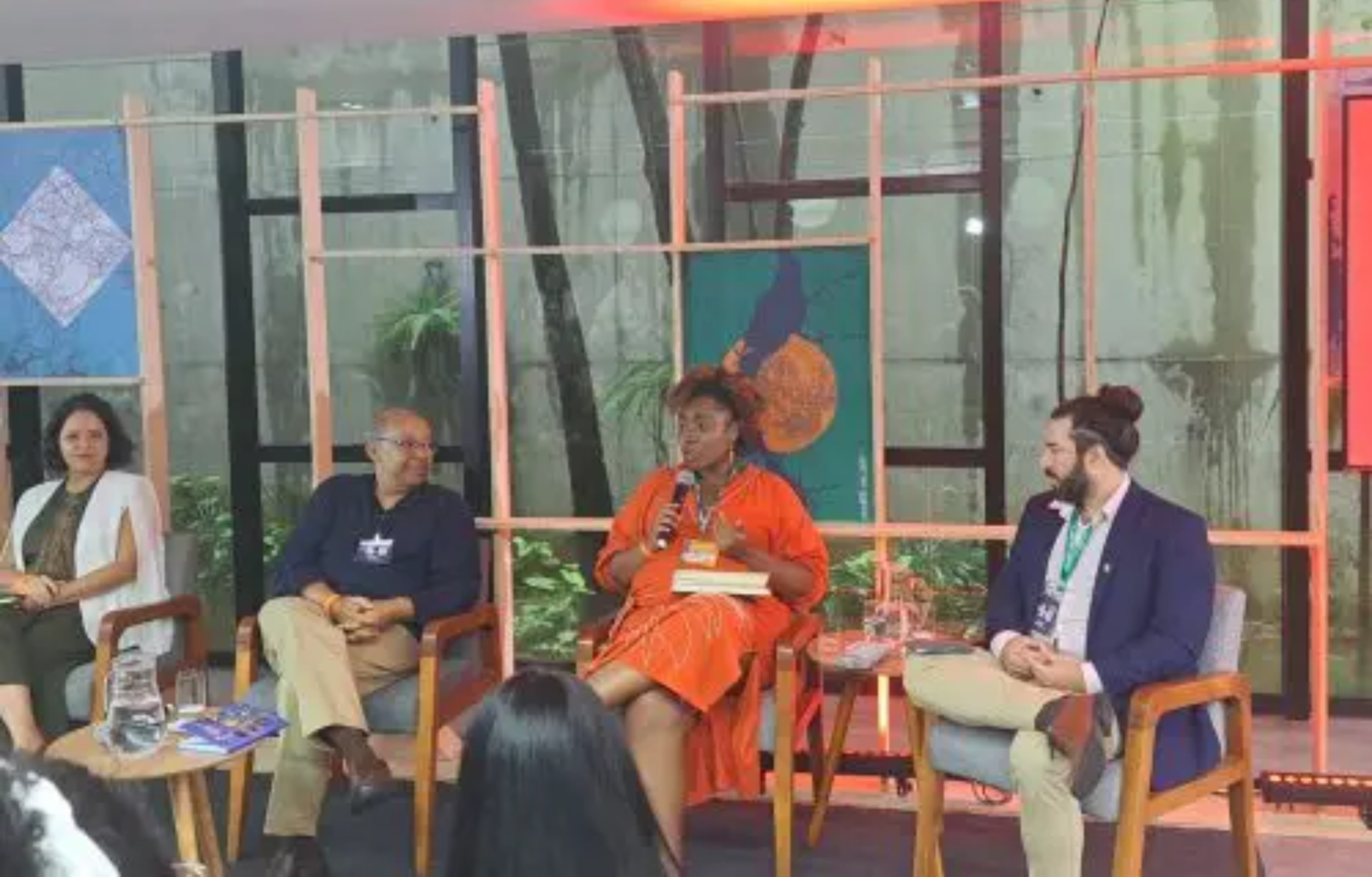
Allyne shared this experience during the panel “Regulatory challenges and civil society participation”, held on April 14th during the 12th Congress of the Group of Institutions, Foundations and Companies – Gife. In this year's edition, the event discussed the role of private social investment in combating inequalities that affect Brazilian society.
In addition to Allyne, Athayde Motta, general director at Ibase, participated in the panel; Laís de Figueirêdo Lopes, president of the Third Sector Law Commission of the OAB and Igor Ferrer, from the General Secretariat of the Presidency of the Republic. The conversation was mediated by Flávia Regina de Souza Oliveira, lawyer and partner at Mattos Filho. On the agenda were the norms and rules to which third sector organizations are subject: from the rules described by law, to those that organize relations between civil society organizations and their funders.
The subject is fundamental for the Brazil of 2023: according to Igor Ferrer, from the General Secretariat of the Presidency of the Republic, the federal government intends to strengthen spaces for dialogue with organized civil society. According to the debaters, it is up to philanthropic institutions to create mechanisms to support grassroots organizations to participate in this dialogue, so that they can influence the construction of public policies.
For Athayde Motta, from Ibase, funders must adapt their requirements to the reality of the organizations they intend to support. “We need to respect the ways in which civil society organizes itself. You can’t impose models,” he said. “From there, we can develop the rules that make the most sense for these groups. One thing that is dear to us is autonomy.”
Flexible supports, argued Allyne, can be an important instrument for maintaining this necessary autonomy. According to her, the experience accumulated by the Brazil Fund in the last two years has shown that flexibility is positive, including for the financing organization. “A more transparent relationship was established with the supported groups. We have fewer and fewer problems with accountability.”
*Cover Photo: Deputy Superintendent of the Brazil Fund, Allyne Andrade (center) during the Gife 2023 Congress – Reproduction.
*Text originally published on the Brazil Fund blog: https://www.fundobrasil.org.br/apoio-institucional-para-organizacoes-de-base-fortalece-autonomia-e-relacoes-de-confianca/