By João Paulo Vergueiro
At the foundation of Brazilian Association of Fundraisers (ABCR), in 1999, a group of professionals got together and decided that it was time for the country to have an institution that promoted the work they were doing with so much dedication: mobilizing resources for causes.
Going in a different direction from organizations that relied on international support and funding to leverage themselves, the ABCR sought his own path: he refused to be a chapter (chapter) of the North American association of fundraising professionals and sought to connect with those who were on the front lines of an activity that has not yet been fully understood or valued in the country: promoting the economic sustainability of civil society organizations.
The option defined 20 years ago of establishing ourselves and maintaining ourselves from our base had its advantages and disadvantages.
On the one hand, the institution that brings together fundraising professionals has difficulty mobilizing resources to remain active. This may seem counterintuitive, and it actually is. But it must be taken into account that we are an association of individuals and not large institutions. Furthermore, we do not focus on a single cause: our mission is to strengthen the entire sector, all organizations that work for their causes – and who supports this type of work in Brazil?
On the other hand, we seek to effectively express the will of our base, of the hundreds of professionals who are working day in and day out to engage donors and other supporters and ensure that the causes they defend advance in a sustainable and effectively transformative way.
Because we are so close to these people, we come to realize that when it comes to fundraising, it is also important for institutions to be successful that they connect with their own bases and the communities in which they operate, so that their economic sustainability also comes from there.
After all, we think, what makes a civil society organization truly legitimate? Is it the work that she carries out on her own, or the fact that she is supported by people who believe and trust in this work, even to the point of financing them?
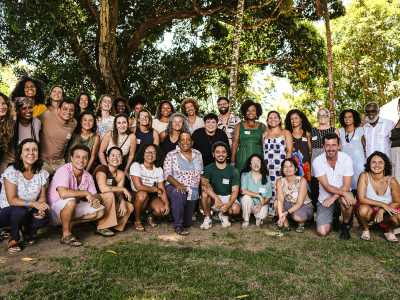
This is where the strength of communities comes in, the power that exists in communities. Organizations across the country are learning to mobilize resources in the very territory in which they have operated for decades, but where they have never had the prospect of also being financed from there.
An example of this are the community campaigns of Giving Day. A simple, decentralized initiative, community campaigns are mobilizations carried out in neighborhoods, cities or states in which people and other local actors are encouraged to donate to the region's own causes.
Many community campaigns have emerged in the country and are helping to promote philanthropy locally. #DoaSorocaba, #DiadeDoarGramado It is #DoaSergipe are just some of them, which sometimes mobilize the community throughout the year (and not just on Donation Day itself), or in a more specific way, as in the examples of #DiadeDoarShark, #DiadeDoarSalvador It is #DoaCampoGrande.
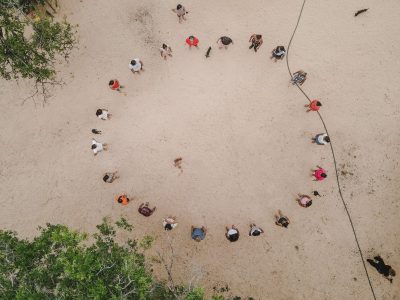
Another interesting and little-known example in Brazil are donation circles. They effectively exist and mobilize networks of people who come together to pool resources during a certain period, or the entire year, choose a cause and organizations that represent this cause, and donate.
It is the community mobilizing to donate in the community itself, even without the institutionality of an organization behind it.
These are just some of the topics we will cover in ABCR Festival 2021, the thirteenth edition of the main Brazilian meeting to mobilize resources for causes.
Online for the second year in a row, the ABCR Festival It allows people from all over the country to deepen their knowledge about fundraising and interact with others who are in different places, but who often have the same challenges.
And the ABCR Festival It is also an example of collective construction, starting from the base itself: most of the sessions offered were presented by volunteer professionals, who applied to share knowledge, and a Scientific Committee, also formed by volunteers, fills the rest of the schedule with the missing content.
Even this year we will have a specific session to present the DONATE TO TRANSFORM, that Social Justice Philanthropy Network leads in Brazil. It's worth watching!
O ABCR Festival will take place on June 28th to 30th, with more than 15 hours of live content, and at least 60 hours to be watched over the three months following the event. Find out more at www.festivalabcr.org.br and participate.