By Cleber Rodrigues – researcher at the Saberes Program
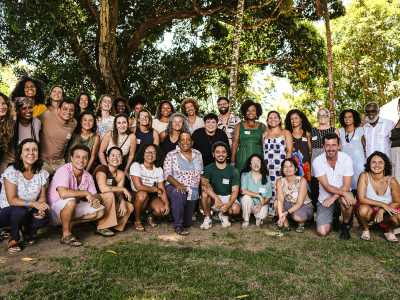
Community philanthropy represents a fertile field for social innovation, bringing together a variety of actors and organizations that come together to promote positive change in communities. The way in which the transfer of resources, whether financial, technical or intellectual, reaches the grassroots is, without a doubt, a component of great social impact. In this scenario, the strategic work of individuals and organizations, such as Associação Nossa Cidade, ICOM, FunBEA, ISPN, among others, gain prominence and connections through the Saberes Program, an initiative of Rede Comuá. These organizations, and especially these individuals, have dedicated themselves to social transformation and positive impact on their respective communities and territories.
After absorbing the inspiration and courage expressed in all this research produced for the Saberes program, I see elements that help me shape my own identity and actions in the field of philanthropy and social justice. Allow me to introduce myself: I am Cleber Rodrigues and I will be your guide on this journey through the research carried out in the first edition of the Saberes Program, promoted by Rede Comuá. But, in addition, I want to relate all this learning to my own experiences as a black man, part of the LGBTQIA+ community, resident of a resilient and very powerful peripheral community, my welcoming Nova Esperança.
My career in philanthropy is relatively recent, with just under ten years dedicated to sharing resources and skills in my territory. During this period, I worked on projects aimed at disease prevention, health education and inclusion of elderly people and members of the LGBTQIA+ community, and more recently, we are working on a very innovative social technology that is Collaborative Houses in Communities. The pilot project takes place using my own residence as a community base, which we call Casa Mirants in the community. Given this personal context and returning to Fio Condutor for the research carried out, I say that, since the beginning of the presentations, both my own research and that of the other Rede Comuá fellows, I was able to identify a series of potentialities and connections with my community and history.
A striking example of these connections is the research by Cássio de Souza, carried out at the Instituto Sociedade, População e Natureza – ISPN. His approach to evaluating socio-environmental microprojects as a philanthropy mechanism brought a crucial perspective and helped in my research. Their findings illustrate how small-scale initiatives can become powerful catalysts for social transformation, unlocking the latent potential in each community. During Cássio's presentations, held during our monthly meetings between the Comuá team and the program's scholarship holders, I was able to understand more deeply the trajectory of the institute he represents, its relations with the supported territories and the way in which the ISPN evaluates the projects it supports. This information was extremely valuable to me, as it allowed me to see how my own philanthropy can be optimized and directed to create a more significant impact in my community.
Following this path through the vast field of community philanthropy, I realize, through experiences shared in other projects, how education and environmental awareness are intrinsically linked to the success of actions developed in our communities. Within this context, Larissa Ferreira, from FunBEA, develops fundamental research by exploring how community philanthropy and environmental education intertwine, offering valuable answers to urgent humanitarian questions. His in-depth analysis of the circle of donors on the North Coast of São Paulo reflects how concern for the environment can unite communities and organizations around common goals. In examining Larissa's research findings, I see a direct relationship to the adjustments and advancements that my research proposal needs to make before effectively starting the “Seeding Community Funds” project. We are on the right path, and this interconnection of ideas and projects is paving a clear path for an even more effective and meaningful community philanthropy in Minas Gerais.
However, community philanthropy is not limited to the environmental sphere. Jész Ipólito's voice resonates in this orchestra carefully coordinated by Rede Comua. By turning our attention to Jész's research, we realize its impact in addressing black women's narratives about the field of philanthropy in Brazil. The perspective of the future that emerges, especially from the North and Northeast regions, sheds light on a path that tends to be slower in relation to equity, social justice and the transfer of financial capital. However, the research powerfully highlights the crucial role played by black women's collectives in building more robust and fair communities in these regions of the country. This perspective takes a critical look at my own community and the challenges we face in fully including women in our organizations, allowing them to not only actively participate but also occupy decision-making roles. It is a powerful reminder that the journey of community philanthropy must be inclusive, diverse and socially just.
For those of you who are following this thread drawn up by the research presented to Rede Comuá by the scholarship holders of the first edition of the Saberes Program, I invite you to a journey of self-discovery, presented by the research project of the beloved Ronaldo Eli Júnior, from Terreiro Sítio das Matas. In her research entitled “Ona Dudu, the Black Path”, community action comes to life and embraces the richness of African traditions in the southern region of Bahia. Ronaldo brilliantly highlights how connecting with cultural roots can trigger a powerful and deeply transformative impact on the community. His project, rich in spirituality and faith, not only offers a balm for the needs identified during the research, but also launches a strong appeal for religious inclusion, especially of the terreiros of African-based religions within the country's resource donor networks and beyond. . He powerfully reminds us that these spaces were already centers of community philanthropy long before the arrival of Europeans in the Americas or even before the painful period of kidnapping that our black people faced in Africa. It is a profound lesson in how cultural roots can be sources of strength and solidarity in our communities, serving as a beacon for the development of community philanthropy.
Likewise, the actions of community-based organizations are of fundamental importance in supporting the diversity that permeates all territories. Mariana Assis, from the Greater Florianópolis Community Institute – ICOM, delved into investigations into strengthening these organizations in Greater Florianópolis, through Social Impact Consultancies. Their study indisputably highlights the relevance of empowering these organizations, enabling them to play an even more effective role in promoting positive change.
I learned, throughout this journey and with the help of Mariana Assis, that we, as community-based organizations, are closer to the production of intellectual capital than financial capital, although she makes it clear that the latter is extremely necessary to maximize the impact of the actions we want to promote in the territory.
At the end of this reflection, I consider that these researches are like pieces of a puzzle. They fit together and form a bigger picture of how community philanthropy can shape our country and I am immensely happy to contribute. They inspire us to see the intrinsic potential in each community, highlight the importance of equity and diversity of approaches, and reveal the strength that emerges when we come together for a more inclusive and sustainable future. It is worth highlighting that there is no exclusivity in relating all the findings of these research to my own community and projects. The same exercise can be done from the perspective of any other research or scholarship holder represented in this first season of the Saberes Program, thanks to the very well orchestrated choices made by the Rede Comuá team.
I wish everyone lots of light and motivation in the upcoming editions. Axe!