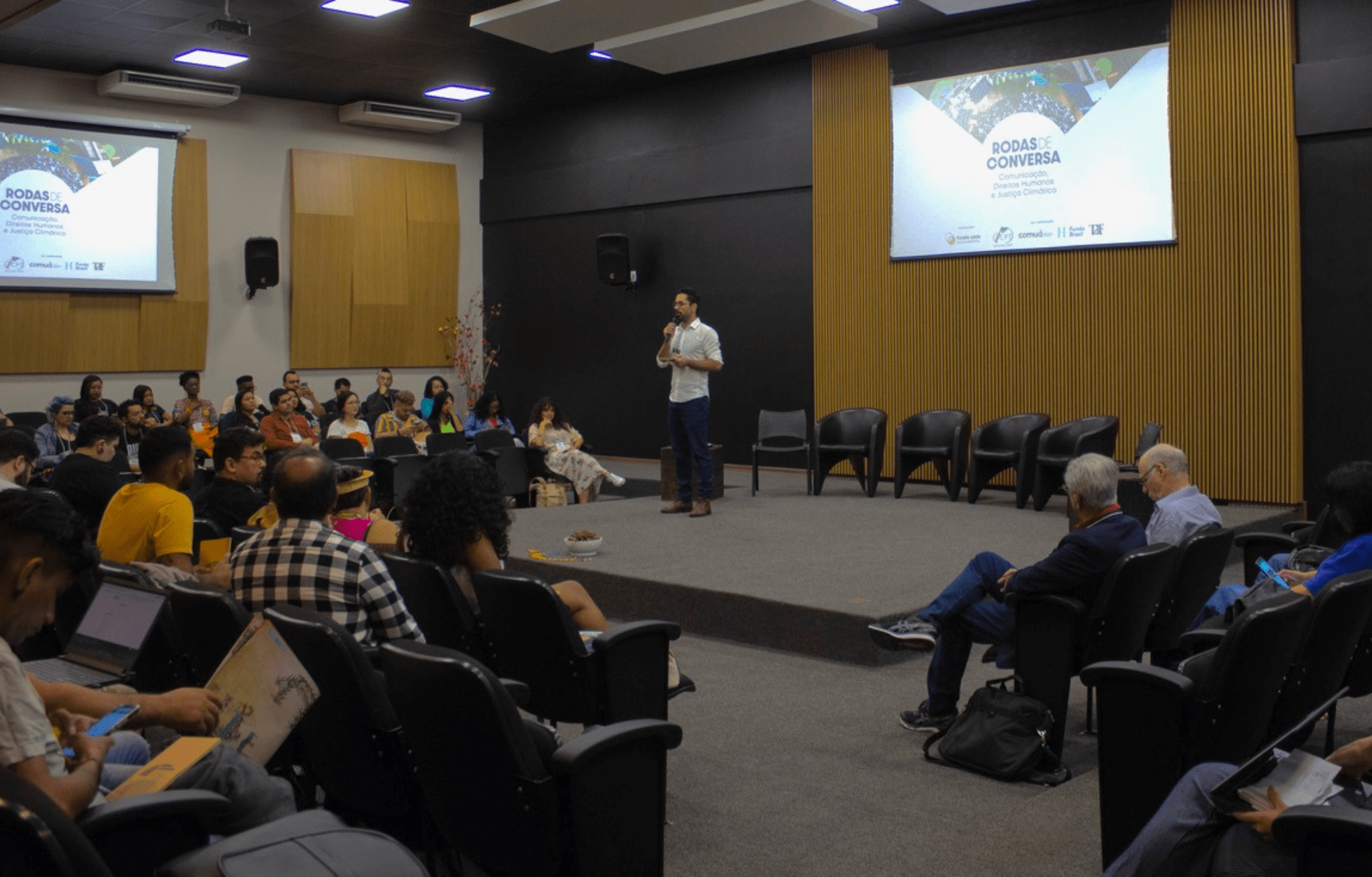
Photo: Denise Farias/Fundo Casa Socioambiental
Communication is a fundamental human right. The movement for its recognition as such took place throughout the 20th century, as the flow of information began to become greater and greater. International organizations such as Unesco, with the so-called MacBride Report (also known as One world and many voices) began to recognize this right, which means guaranteeing that people should be able and able to express themselves freely, produce and circulate information.
In guaranteeing this right, there are economic, social and political issues that impose inequality in this place as well, limiting the conditions for all, all and all, to be producers and disseminators of information by concentrating the means of communication and economic resources.
Popular and independent communicators, especially those who are defenders of rights and climate justice, face all types of restrictions in exercising their right to communication, including threats to their own lives. According to Isabelle Lima, editor-in-chief of Tapajós de Fato,
“We often end up getting lost with this need to report, and we don't worry about our safety on a daily basis. Depending on how we communicate and do this work, we put not only our lives at risk, but those of so many companions. […] Communication is a tool of struggle and resistance, that’s why we arose.”

From left to right: Rodrigo Montaldi (Fundo Casa), Marcos Wesley (Tapajós de Fato), Raione Lima (CPT – Regional Pará), Graciela Hopstein (Rede Comuá), Mônica Nóbrega (Fundo Brasil and Cristina Orpheo (Fundo Casa). Photo: Denise Farias/Fundo Casa Socioambiental.
With the understanding that communication is increasingly a strategic tool in defending rights and in the production and dissemination of information that guarantees visibility to causes and voices, the Casa Socioambiental Fund promoted, in partnership with Rede Comuá, the Brazil Fund, The Pastoral Land Commission and the Tapajós in Suit, the date "Circles of conversation: Communication, Human Rights and Climate Justice”.
Communicators who work with socio-environmental rights in the Legal Amazon and Matopiba region (an area formed mainly by Cerrado, which covers the regions of Maranhão, Tocantins, Piauí and Bahia).
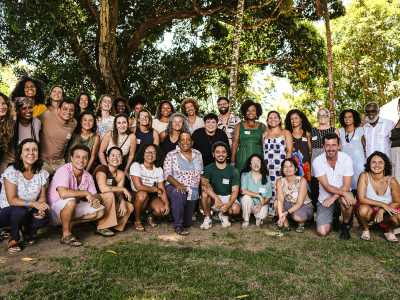
98 representatives of communication movements and collectives were present in Brasília, in August, debating the right to communication around topics such as strengthening democracy, combating disinformation, defense strategies and collective security for human rights defenders, strengthening the agenda of popular communication in the Legal Amazon and Matopiba, support and financing for collectives and communication organizations.

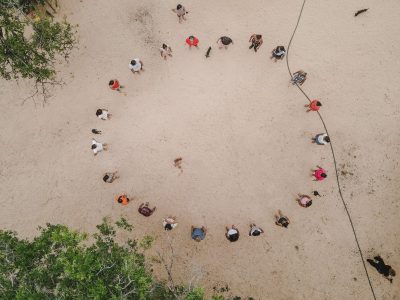
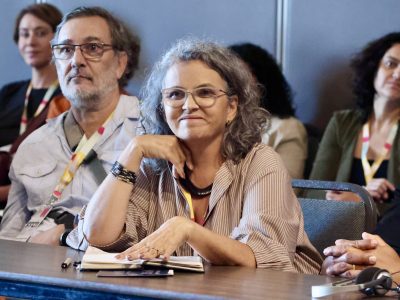
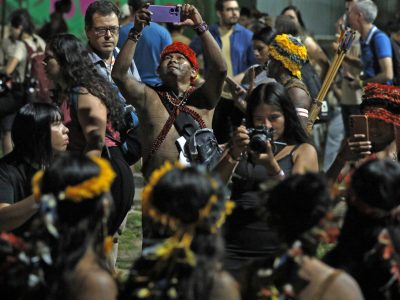
During the meeting, 4 conversation circles were held over two days. Around 100 organizations and popular and community communication professionals participated, contributing to the debate. Photo: Casa Socioambiental Fundo Archive.
There were two days of listening to the popular communication that is produced today in these two regions, aimed at defending ways of life and rights. This decentralized, autonomous and diverse communication is vital to confront the counter-narrative that violates rights in the territories. The intention of the meeting was to promote space to address issues that permeate the work of these people as communicators of collectives and movements in the Amazon and Matopiba, carrying out active listening to, in the future, study philanthropic financing mechanisms focused on communication as a human right, with a view to to promote the possibility of access to resources, in addition to enabling the strengthening of the support network between these organizations.
Present at the debate tables were members of Coletivo Tapajós de Fato, Coletivo Intervozes, Amazônia Real, Coletivo Proteja, Pastoral Land Commission, Agência Tambor, Network of Young Indigenous Communicators of COIAB, Casa Ninja Amazônica, Rede de Notícias da Amazônia, Agência Pública. , Movimento Escazú Brasil, Article 19, School of Activism, Reporters Without Borders in addition to representatives of the Ministry of Human Rights and Citizenship – Nilmário de Miranda (Special Advisory for the Defense of Democracy, Memory and Truth) and Luciana Pivatto (Coordination of the Protection Program to Human Rights Defenders, Communicators and Environmentalists), Sandra Carvalho, from the Brazilian Committee of Human Rights Defenders, financiers of the Oak Foundation, Porticus Foundation, Ford Foundation, Brazilian Human Rights Fund and members of Rede Comuá.
The voices that echoed from the audience met at common points, crucial for popular communication in their territories. Among them the need to strengthen the protagonism of the Amazon and the territories of Matopiba and Cerrado in communication, in opposition to narratives from other regions of the country, which impose themselves on these territories, disregarding their dynamics and realities.
Raione Lima, from the Pastoral Commission of the Land of Pará, highlighted that the
“Communication should not be something separate, but part of this fight. As a strategy in defense of the land, people and the environment. Philanthropy has to guide this, bring proposals in which we build new narratives, which face the communication that is on the market today, from the big centers, from the big powers. We face this scenario by building other narratives, which are also positive, which are not just to communicate what is bad happening in the territories.”
Specifically in relation to access to resources, points that emerged were the need to take into account the Amazon cost when supporting projects in the region, recognizing the long distances and the logistics challenges of capturing, producing and distributing communication. This involves rethinking the logic of financing this popular communication with regard to the way in which resources are donated, processes for monitoring results and how financial support can support initiatives that are already taking place in the territories.
Other points that emerged from the listening relate to the promotion of mental health and the inclusion of communicators in initiatives to protect rights defenders.
Now, the organizations hosting the event are preparing to continue the debate and also to guide the field of philanthropy on the need to support initiatives and these communication professionals and their important role in defending democracy, human rights and also in rights of nature. One of the products of this meeting should be materialized in a compact publication to be launched in 2023, which will highlight the main challenges, bottlenecks and opportunities for the sector.