We are living in a time of emergency unprecedented in recent decades. Our human arrogance of knowing everything is directly linked to a mistaken socioeconomic model. This society found itself walled in and cornered (literally) by a virus. The world suddenly found itself surrounded by a life-threatening threat, unexpected for many. Unfortunately, in calamity situations, the most vulnerable people are always the most affected, precisely those who have always had their rights denied, who have never been part of the benefits offered to the privileged.
The pandemic clearly shows us how far we are from achieving equality and social justice, demonstrating beyond doubt the large number of people who are invisible to public policies and also to a large part of our society. It would be hypocrisy to say that society was caught by surprise, as the condition of these populations most affected by Covid-19 has always been one of total exclusion, abandonment and neglect by public authorities. Furthermore, as if the pandemic were not enough, the risk of hunger increased exponentially for them. The precarious situation of the public health system, and even the lack of access to drinking water in a large part of the country, raised an alert and called us to act in favor of life.
At this moment, one of the biggest challenges is how to ensure that resources reach the most vulnerable communities and groups safely and quickly. It is also essential to provoke reflection on what types of resources are being raised and how much of it actually reaches these locations for direct benefit of these communities. In addition to asking ourselves what conditions and restrictions are imposed on these resources and whether this benefits or hinders the access of those most in need to them.

How can money, whether from philanthropy or various donations, quickly make a difference in this complex context where everything is compromised: logistics, communication, access to groups, mobilization in territories. What requirements, information checking and other operational procedures are necessary in such an adverse scenario?
In this situation, knowing the territories, having an established network of trust and understanding the cultural contexts are more than fundamental procedures to be able to make the resource arrive with the necessary agility to help save lives. Saving lives at its core.
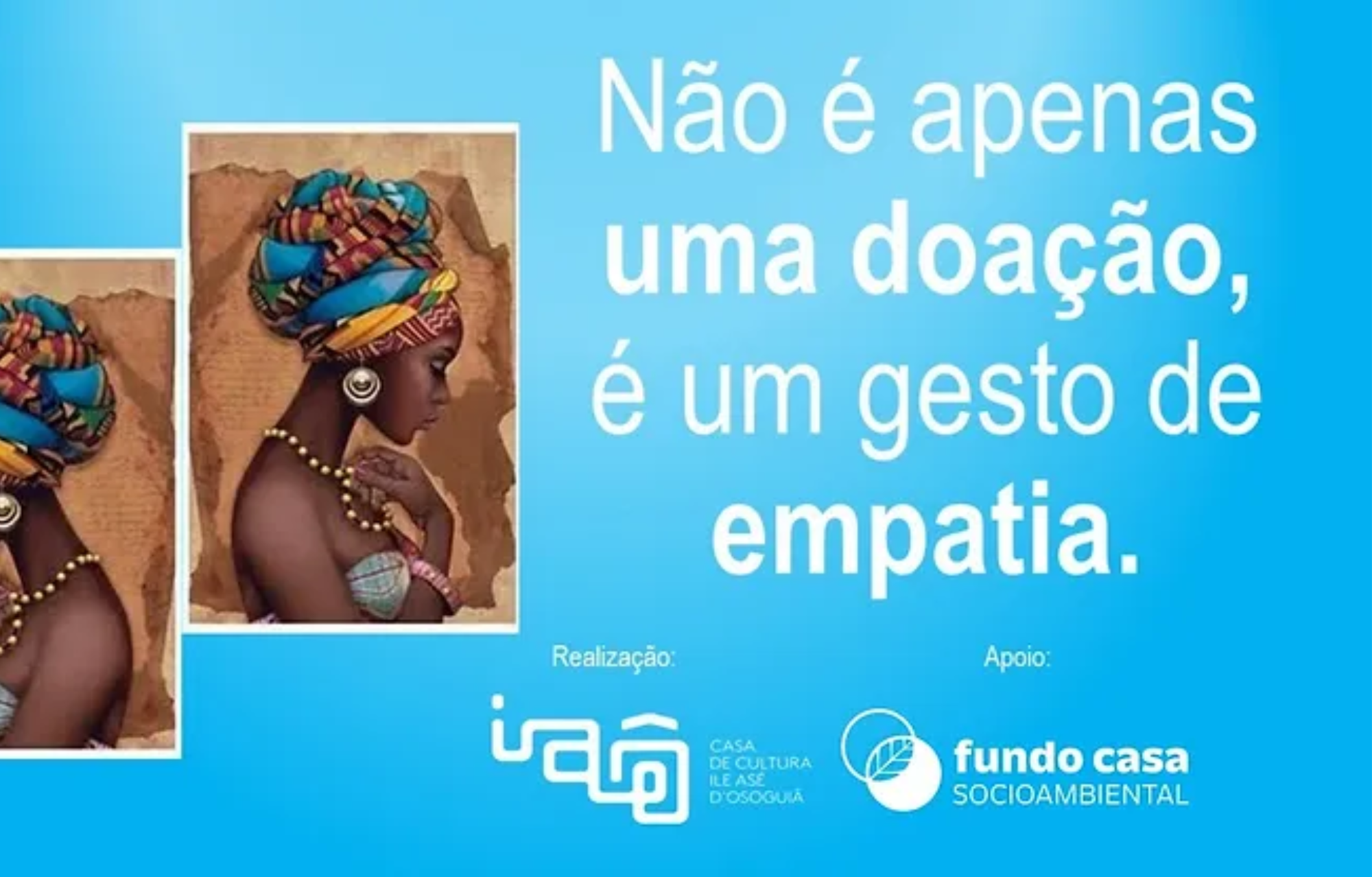
Furthermore, another feeling needs to invade our reason: empathy. Understanding the importance of humanitarian support in this situation and having the necessary flexibility is the challenge to be faced with courage, especially by the more conventional field of philanthropy, which is more resistant to flexibility.
The Casa Fund exercised all these senses when it opened the Call for Projects to Support Grassroots Groups in Tackling COVID-19: flexibility in the type of support — we don't usually provide humanitarian support, but in this case we were in an absolute strategic position to access territories and we could not avoid it due to mere inconvenience and bureaucratic difficulties. We also had the support of an immense network of trust, which led us to read and understand the context of real needs, and the most effective way to respond to them. Not forgetting also the creativity characteristic of our approaches in the field, to find solutions in an attitude of great empathy.
After a quick process of listening to community groups in our network, and also partner funds, followed by a broad discussion with our council — aware of the emergencies that the communities were facing — we opened an emergency call with sections for the North regions (Legal Amazon ) and Northeast.
We decided to prioritize these regions at this first moment for two reasons: our resources were limited, and access to resources by groups in these regions requires very special and complex logistics, which few are prepared to do.
Our objective was to carry out the entire call, analysis, and approval process, and have the resources released within 30 days. And so the call remained open for 15 days with the following support lines:
Projects and actions that enable the reduction of the socioeconomic impact generated by the COVID-19 pandemic crisis – Proposals of up to R$ 25,000.00
Support for combating, detecting and preventing the COVID-19 pandemic – Proposals of up to R$ 20,000.00
Support for guarantees of basic and emergency rights – Proposals of up to R$ 5,000.00
We received a total of 526 Projects from all states listed in the call. Of these, 56 requests were for line 3 and 470 projects for lines 1 and 2.
States Total Projects Received
Northern Region – Legal Amazon
5 acre
Amazon 34
Amapá 8
Mato Grosso 18
Maranhão 44
Para 100
Rondônia 23
Roraima 16
Tocantins 14
Total North Region: 262
Northeast Region
Alagoas 25
Bahia 94
Ceará 41
Paraíba 12
Pernambuco 40
Rio Grande do Norte 17
Sergipe 13
Piauí 22
Total Northeast Region: 264
Grand total): 526
It was a difficult selection, but according to the amount of resources available, we managed to approve 129 projects, 69 from the North region (Legal Amazon) and 60 projects from the Northeast region, totaling R$ 2,148,841.13.
For the selection we used, among others, the following criteria:
Degree of community vulnerability to the impacts caused by Covid19 – Here the attention was paid to the most vulnerable populations: indigenous people who live close to cities, in areas not yet demarcated, and in regions of conflict. We also prioritize quilombola communities that are in a highly vulnerable situation.
Covid19 Index in the State/Region – Consultation of official data, following the evolution of cases, information from the media, and also obtained through our network of supporters. Remembering that a region may be predicted to be the next source of infection and that prevention actions are as important as mitigation actions; and that a region's lack of structure to deal with the pandemic must also be considered. Official websites and civil society observatories were consulted in the analyses.
Level of tension and violence in the territory – We considered whether the organization's people were involved in conflicts, whether the territory close to the community and where the project would be developed was in tension or conflict, and how COVID-19 impacts this scenario.
Typology of Organizations
Indigenous 28
Quilombolas 20
Fishermen 14
Extractives 20
Farmers 11
Associations/NGOs 29
Collectives/Movements 7
Total: 129
Between reception of proposals, insertion into the database, analysis, contracting and payments, we had the participation of 15 people. The entire process involved a dozen meetings between the team.
We also support 4 more emergency projects upon spontaneous demand, with 132 projects supported and a total of R$ 2,232,329.00 in direct donations to civil society.
Where the resources came from – A portion of these resources came from reallocating our own ongoing budget. However, the majority came from our valued partners, six international foundations and two national organizations.
The next steps – We know that this impact will be present in the lives of communities for a long time. There is a lack of public policies to recover and adjust, systems that have been discontinued, and the socioeconomic damage caused. It will be necessary to continue supporting groups in their resilience and investing in solutions. Small and medium-sized civil society organizations that work in the territories supporting communities will be fundamental in this process and they will need to be much more strengthened. For the next few months, in the short term, our goal is to contribute an additional R$ 2 million reais to organizations focusing on food sovereignty and strengthening small and medium-sized organizations. Furthermore, the Casa Fund is preparing a series of calls for the next period, in the medium term (2020/2021), on different themes with a focus on socio-environmental justice to support around 280 projects, anticipating a much greater demand by the end of 2021 .
The Casa Fund is already preparing for this new stage, where subsistence economies, food sovereignty, and resilience will be imperative, not only for remote and isolated communities, but for all of humanity.
Below are some reports sent by some groups after receiving the resources:
Environmental Preservation Association of the Urupanã Community – APACU (Terra Santa – Pará)

The reaction of the families upon receiving the baskets was something inexplicable, it was joy, surprise and relief. Mainly because it is an action by the community association for the families of Urupanã, in the sense that people understand that the association obtained approval for a collective project from an “outside” institution (Fundo Casa). For us on the board, it is very gratifying because it strengthens us internally, the members see and value the association even more and realize that we are not standing still despite the situation and we are looking for alternatives to minimize the difficulties and protect ourselves from the pandemic.
Receipt of basic food baskets at RESEX Ituxi.
The Association's ability to aggregate partnerships quickly, carrying out campaigns using social networks. The Association of Agroextractivist Producers of the Assembly of God of Rio Ituxi – APADRIT became recognized as an articulated association in Lábrea and outside the city as well, and people became aware of our cause and the emergency of the moment. Members realized the importance of an association that represents them. “For APADRIT, the action at Resex Ituxi against COVID-19 was very gratifying as several people are isolated in the streams in fear of the disease, we found families without any food purchased from the market. They are very grateful for this great support from partners” – Silvério Barros Maciel, president of APADRIT.
Tapera and Miringaba fishing community receive basic food baskets
The project helped to strengthen the social organization with its members, as we are facing many difficulties in getting together at the moment we are living in. It also helped families with access to food and hygiene, as in the current context the territory that lives off shellfish fishing is experiencing enormous difficulty in transporting production. And with purchases made at the local market and in small businesses, it helped the economy, which has been very affected. Therefore, the project came at a difficult time and helped to strengthen the territory in small actions.
Article by Cristina Orpheo, Executive Director of the Casa Socioambiental Fund, originally published in: http://www.casa.org.br/pt/2020/07/29/doacao-e-empatia-em-situacoes-de-emergencia/