Per Charles Keidan
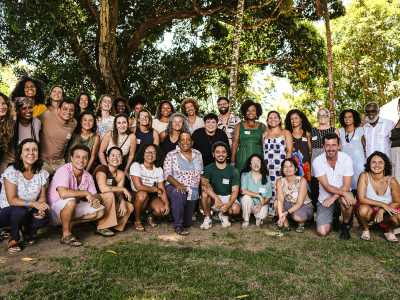
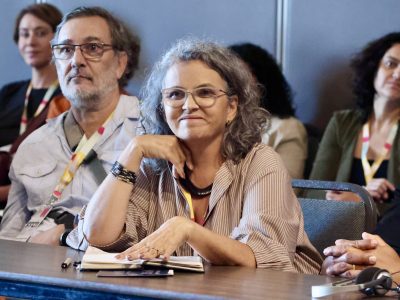
At the end of last year, I had the privilege of speaking at a panel with philanthropic colleagues from around the world organized in the context of the GIFE Congress – an association of philanthropic foundations in Brazil[1].
The panel explored the future of philanthropy. Towards the end, our moderator Naila Farouky from the Arab Foundations Forum asked us to share our personal views on philanthropy – what we would like to see happen in our field.
During the discussion, I shared five ideas that I believe our industry should consider as we think about what the future holds for philanthropy. So I wrote these ideas down in this text as part of a pan-European series to think about what’s next for philanthropy.
So here's my vision for the future of philanthropy:
1. Make a complete transformation in the way foundations evaluate and carry out their investments, as well as their investment policies
This could be considered the most urgent issue for philanthropy, the one where changes are most needed and can make a difference. The majority of philanthropic capital – US$ 1.5 trillion – is in funds whose management and investment passes through international financial markets in ways that sometimes contradict the very mission of these foundations.
Social movements of the kind we have seen emerging in recent years are – almost by definition – at the forefront of social and political change, showing us the direction. Why don't we see more of philanthropy going down the same path?
The most obvious example is the climate case: a foundation can fund efforts to combat climate change and global warming, while at the same time investing in fossil fuels. Well, a foundation can have good reasons and arguments for such. But I would like, at the very least, to see these foundations explain the justifications behind their investment policies, as well as be much more transparent about the administrators they use to manage their resources, how much they pay their managers and consultants. investments, and how they came to define the approaches they adopt for this. It is worth noting that the highest paid workers in the UK charity sector are, as far as I know, two Wellcome Trust investors, Peter Gray and Nick Moakes. According to the ThirdSector, they each received £4.5 million for their success in increasing the income of that foundation's dedicated funds. They achieved this, in part, by investing Wellcome Trust resources in fossil fuels, while the foundation was simultaneously developing plans to spend millions on combating fossil fuels. global warming. Such choices deserve scrutiny, and for good reason.
2. We need an agenda for philanthropy that is anchored in justice and social justice across race, class, climate and gender
This agenda is not only external, in the sense of where funders direct their money, but also an internal agenda, regarding the practices and composition of the foundations themselves.
This means examining the representation of people of color and people of color, as well as women, in senior career positions at foundations and their boards. Even if there is progress, why is it that in 2018 just one of the 35 biggest foundations in Germany had a female CEO?
To bring another example of how the concentration of power contradicts justice, let's think about the most powerful philanthropic foundation in the world, the Bill & Melinda Gates Foundation. This group spends more than US$$4 billion per year, but its highest level of management includes only trustees Bill Gates, Melinda Gates and Warren Buffett. Anyone who cares about justice in the philanthropic sector should feel compelled to ask questions about the composition of this board and whether such a large amount of resources should be controlled by just three people. We could argue that it's their fortune, or that it's fortunes that have been given to them, or that even larger amounts are privately controlled by them and other billionaires. But speaking in terms of fairness, something that many philanthropists would say is an important goal in their philanthropy, these are fair issues that go far beyond the Gates Foundation and its less-than-extensive board of trustees.
3. Progressive foundations need to fund and support social movements
It is often said that philanthropy is at its best when it takes risks. So why aren't more progressive philanthropic foundations supporting social movements? These correspond to less than 0.5% of total foundation spending, according to data shared by Candid in an edition of Alliance about the relationship between the philanthropic sector and social movements.
Social movements of the type we have seen emerging in recent years are – almost by definition – at the forefront of social and political change, showing us the direction of these. Why don't we see more of philanthropy going down the same path?
Of course, social movements reflect different political orientations. You might like one social movement, I might like another, and they might be doing or promoting opposite things. But if philanthropy intends to be relevant to society, to building the future, we will not be able to achieve this objective without more effective engagement with the social movements of our time.
Of course, we must recognize some obvious tensions here. The independence of foundations allows them the discretion to inject money into certain causes without further questions. In short, they are not particularly held accountable for their decisions – not in comparison to democratically elected politicians, certainly. There are also risks for social movements, which may end up finding themselves increasingly closer to functioning as NGOs, in order to ensure their funding. But this is another reason why profound transformations in financing practices are necessary.
4. Core funding must be the standard – a new orthodoxy for philanthropy
Here, the current reality should be reversed. Lenders must provide core financing (core funding) unrestricted and multi-year as standard – something most nonprofits have been asking for for a long time. When basic financing is not offered, then the norm should be for lenders to explain why another type of financing is justified given the circumstances.
This shift towards basic financing must be accompanied by a democratization of financing practices. Participatory financing – including people affected by the decision-making process regarding the granting of resources – is a promising path, but not sufficient.
While philanthropy remains a private and sometimes opaque endeavor, albeit carried out for the public benefit, we need to invest more in the capacity of our media to understand and provide coverage of its power – in a way that is constructive, attentive to nuances and guided by evidence.
I would go further by asking funders to include their grantees not only on expert panels but also on their foundation boards themselves. This would change the power dynamics in philanthropy significantly, by breaking down the barriers between funder and beneficiary, placing the latter at the heart of the decision-making process.
I would take this revolution in funding practices even further by creating a criterion that formal funding contracts and related correspondence (not just funding amounts) should be publicly accessible – a freedom of information principle for philanthropy , in order to shed light on the true nature of contracts and financing relationships.
Publicizing funding contracts and correspondence between philanthropists and the arts and higher education sector could be particularly helpful in opening up the elite and rarefied world of major giving. Having to rely on leaked correspondence from extraordinary cases carries the risk of threatening trust in philanthropy by making these examples seem like the norm rather than the exception.
5. Create more spaces to confront power with truth
While philanthropy remains a private and sometimes opaque endeavor, albeit carried out for the public benefit, we need to invest more in the capacity of our media to understand and provide coverage of its power – in a way that is constructive, attentive to nuances and guided by evidence.
And that’s where communication infrastructure for philanthropy comes in. Not just for us in Alliance, but in publications, magazines and philanthropic journalism around the world, we need to invest in editorial capacity to keep asking questions. The mechanisms of feedback necessary for the good health of the sector need to be built, rather than assuming that they will just happen.
My concern is that the distribution of philanthropy infrastructure is very imbalanced – 80% of infrastructure funding is in the United States, according to a WINGS estimate. Of course, this alone is a good reason for funders outside the US to build a global philanthropic infrastructure. But US funders focused on the international context also have an obligation to pay attention to the gaps. The development of media focused on philanthropy is a relevant case. Financiers in the United States gave a great stimulus to these spaces by financing the US Chronicle of Philanthropy in a way that other outlets in the rest of the world could only dream of, and that's a good thing. But imbalances between the United States and elsewhere make it difficult for a more balanced philanthropic playing field to emerge.
Ultimately, we all have the opportunity – and some would say the responsibility – to question ourselves and our commitment to fulfilling the promise of philanthropy. We can all be that critical friend to our industry, holding up a mirror to our field while avoiding the twin pitfalls of unnecessary cynicism or uncritical celebration.
As Brad Smith commented on the GIFE panel, “very few foundations meet the standards outlined in these five points.” But he also noted that governments and the market are not perfect either. The bottom line is that these imperfections are incentives to improve, not reasons to abandon hope. Imperfections can be overcome and I hope these radical measures don't seem so radical in the years to come.
The complete discussion at the GIFE Congress table can be watched here. To learn more about the Next Philanthropy series, Click here.
Originally published in: https://www.alliancemagazine.org/blog/a-mirror-to-our-field-my-five-point-plan-for-the-future-of-philanthropy/
[1] Also participating in the conversation were the president of Candid, Brad Smith, the CEO of the East Africa Philanthropy Network, Evans Okinyi, and Naina Batra, CEO and director of the Asian Venture Philanthropy Network, who recorded her answers to some questions as a way of overcoming differences in time zones.