By Camila Guedes
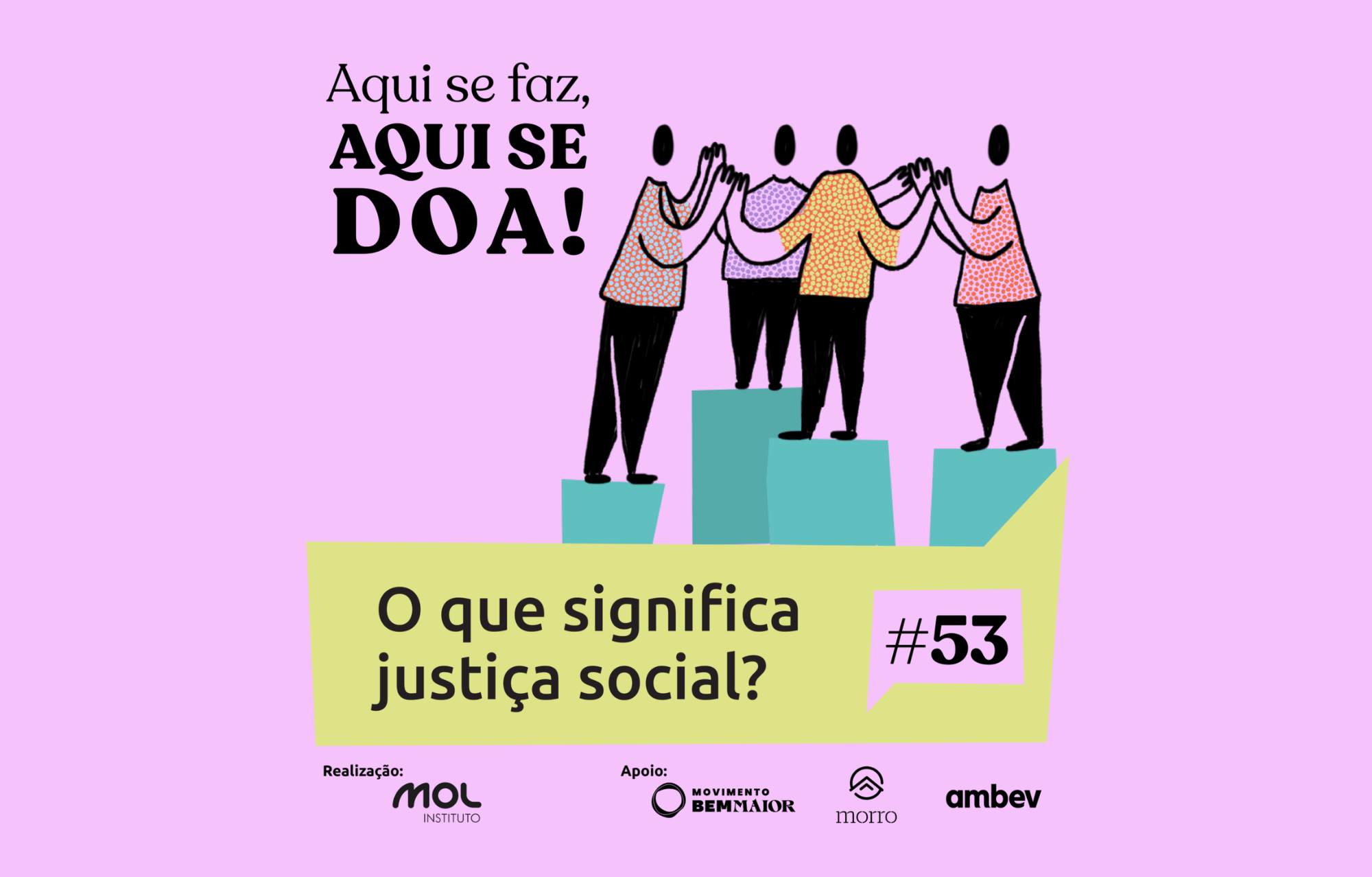
This Tuesday, February 1st, the 53rd episode from the podcast Here it is done, HERE IT DOES! from the MOL Institute. Starting the celebration of World Social Justice Day, celebrated on February 20, the program addressed the topic in the Brazilian context and featured the participation of Graciela Hopstein, executive coordinator of the Network. The date was established by the United Nations (UN) in 2015 and aims to reflect and remember the topic.
In her participation, Graciela gave an overview of Social Justice in Brazil, which has been advancing in a relevant way in several agendas related to human rights and political minorities, with the contribution of donations from different sectors and actors to civil society organizations and collectives. However, the coordinator highlighted a significant setback in public policies in this area, not only in Brazil, but internationally.
“We are experiencing a significant setback in the scope of public policies in the social field in the context of this government. (…) We have a double movement: the installation of these agendas (of human rights) and a significant threat to the populations involved, such as indigenous populations, quilombolas, civil society as a whole, issues linked to climate change, etc. (…) we see this movement all over the world, but I believe this is a response to the conservative wave we are experiencing (…)”, says Graciela.
The debate raised the point about the development of the national donation culture. During the first phase of the pandemic, there was a sharp increase in the number of donations, but since the second year of the crisis, there has been a significant drop that has continued to this day.
For Graciela, this is still a major challenge: “The donation profile of Brazilian society is to mobilize, in general, in the face of catastrophes. I see that we are actually taking small, big steps. Some of the donations made at the beginning of the pandemic tried to create an idea of continuity, such as the experience of Itaú Unibanco, which created an endowment fund of 1 (one) Billion, which has the idea of remaining. Any transformation process does not happen overnight. Today, in the field of philanthropy and civil society, there are movements working to develop and strengthen the culture of donation (…) Donating Day (Giving Tuesday), which has been growing quite significantly, the Movement for the Culture of Donation, the Network itself and GIFE are embracing the cause of donation on a permanent basis (…) But we are still in our infancy, considering the potential that Brazil has.

“The black and indigenous movements, for example, have been able to create donation dynamics for years to boost their own activities (…) There are many initiatives in Brazil, which are from small communities, such as quilombolas, indigenous people and family farming, which have all a collaborative work of donating time, goods, putting money from their own pockets to buy materials (…) black communities were already organizing themselves years ago to buy “manumissions” for enslaved people.”
(…) we need to take a look at these initiatives, which were even leveraged with the solidarity economy, a very relevant public policy implemented between 2003 and 2016 that contributed to the creation of revolving funds and community banks. We need to look at these experiences.”, says the coordinator.
The episode also talked about the participation of the younger generation who, to a large extent, are engaged in defending social causes, especially with the existence of digital tools that help bring movements together.
“(…) we have all these movements that are on the agenda, that are on the political scene, that are on the streets and that are led mainly by young people. They are those who really have the ability to drive transformation processes. Social media has opened several doors (…) It is impossible today to think about the protagonism of social movements without considering the engagement of young people, because they are the ones who constantly recreate the agendas and dynamics of movements. The youth we have today is very interesting, because it brings new elements, where communication is an absolutely relevant strategy and social media facilitates this (…) It is a youth that has a connection with the region, Latin America and the world.”, points out the coordinator.
Listen to the full episode now, available on platforms Spotify It is YouTube of the podcast.
Access: