By Monica C. Ribeiro
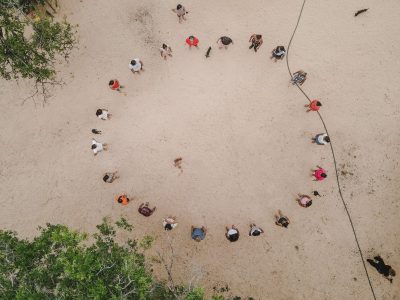
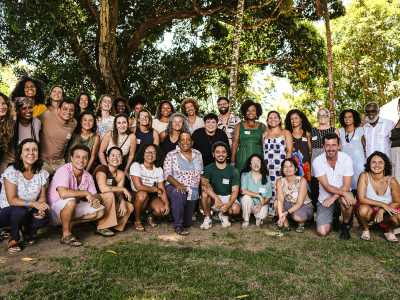
In June, several actors from society, from the field of philanthropy and Private Social Investment (ISP) met to reflect on how it is possible to strengthen community philanthropy practices in the context of programs and projects related to the social field promoted by foundations, institutes and companies Brazilians.
The initiative, the result of a partnership between the Philanthropy Network for Social Justice (RFJS) and the Group of Institutes Foundations and Companies (GIFE), seeks to reflect on the context of community philanthropy in the country and make a diagnosis of the challenges faced by organizations that work in the field of ISP in relation to this agenda, with a view to contributing to giving visibility and promoting it.
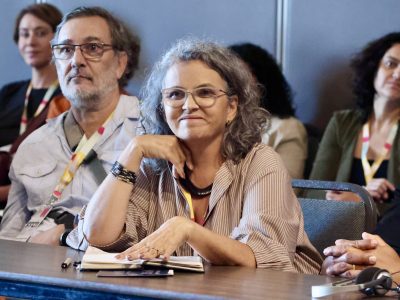
At the meeting, led by facilitators Luciana Martinelli and Rafael Oliva, responsible for preparing the diagnosis, the main findings obtained from a series of interviews with eight ISP and community philanthropy organizations were presented. The meeting saw the participation and engagement of more than 40 participants, and sought to gather information to deepen the diagnosis.
During the meeting, Cássio França, general secretary of GIFE, stated that “it is essential, in the GIFE project, to provoke or invite members to develop a more democratic philanthropy. Community philanthropy is understood as one of the fundamental strategies for deepening democracy in the Brazil." Cássio also highlighted the importance of the work of the Philanthropy Network for Social Justice, which he considers one of the main actors in the field of community philanthropy, and pointed out the synergy between the Network and the current moment of GIFE.
The executive coordinator of the Philanthropy Network for Social Justice, Graciela Hopstein, stated that the relationship with GIFE has been growing over time and came to this partnership to work on the community philanthropy agenda, seeking to better understand the concept. “There is an alignment of perceptions between both organizations, and this can be observed through the creation of narratives committed to strengthening civil society and strengthening democracy in the country.”
Graciela also highlighted that “community philanthropy is a way of doing philanthropy articulated with the grassroots, working with communities and organizations, based on a recognition of the powers and assets that communities already have. When we talk about philanthropy, we talk about power relations; and when we talk about democracy, we talk about access to rights. The way the members who make up the Network work is to ensure that resources reach those who need them most, so that grassroots groups and movements maintain their struggles and demands in the field of rights.”
Ways to do it
Among the initial highlights presented as a result of the interviews, in relation to the references that organizations have on community philanthropy and understanding, the lack of explicit mention of the expression in the GIFE Census is revealed; different levels of familiarity in relation to elements usually associated with the concept and practices of community philanthropy; and the association of concepts such as collaborative philanthropy and culture of giving.
Data were also presented on the alignment of the interviewed organizations with community philanthropy practices and aspects that favor and hinder these practices. The approach to the interviewees in this sense brought up ten points that, in principle, would encompass the ways of doing community philanthropy, although they are not exhaustive in themselves nor do they encompass the processes:
Valuing the assets of supported organizations
Recognition of the autonomy of organizations supported in the design and definition of project directions
Promoting the autonomy of organizations supported in resource management
Promotion of projects that value participatory management involving local and community networks
Development of actions aimed at strengthening local and community leaders
Investment in institutional strengthening of supported organizations
Prioritization of themes and audiences associated with historically minoritized groups and with a history of rights violations
Adoption of processes and mechanisms that facilitate access to resources and accountability by supported organizations
Promotion of participation of representatives of supported organizations in decision-making processes/instances internal to the Institute/Foundation
Adoption of policies to promote diversity in the internal composition of the Institute/Foundation
Advancing towards the construction of the agenda
Based on the data presented, Diane Pereira Souza, from the Baixada Maranhense Community Institute, and Fábio Deboni, from CIAT, commented on the diagnosis presented and left provocations for the participants of the meeting Diane highlighted the importance of replacing the view on meeting needs with that of strengthening potential of territories and listening more carefully: “This can only be understood when listening to the community, with the concern to understand what it means to live within the territory. Listening means revealing the sound behind, with greater precision, managing to cross the border.” He also pointed out the importance of reflecting on the type of monitoring of community philanthropy, linked more to progress and development of people than to quantitative indicators.
Fábio reinforced the need to promote debate and dissemination of the concept of community philanthropy, and also on the importance of better defining terms such as strengthening democracy and civil society in the context of philanthropy. “Qualifying these terms and stating them more clearly provides greater substance to the concept. There is a political-pedagogical space for this, showing how it is strengthened and how, and equally how it is not done.”
Fábio also highlighted the fact that institutional strengthening is not a practice commonly adopted by the ISP, and that it would be important to understand why this happens, which could contribute to promoting ways of working on this issue. Funds and companies often highlight that civil society organizations are not prepared to provide good accountability, suggesting, in this case, that they reflect on whether the type of requirement would really be appropriate to the type of action that these organizations promote in their territories.
At the end of the presentations and comments, the organizations met in groups to reflect and debate, based on their experiences, about what was presented, based on two lines of discussion: what stood out most as a striking aspect of the diagnosis presented; and which aspects were not covered by the diagnosis. The conclusions were presented in plenary and will be very useful for validating the diagnosis.
The next steps of the project in partnership with RFJS and GIFE include the co-creation of the agenda to strengthen community philanthropy, through a workshop to discuss in more depth how to advance the debate based on everything that has been built so far and, finally, sharing the findings through a publication.