By Luisa Hernandez and Jonathas Azevedo
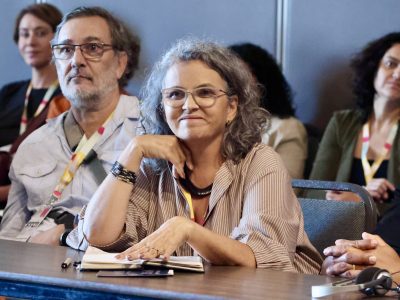
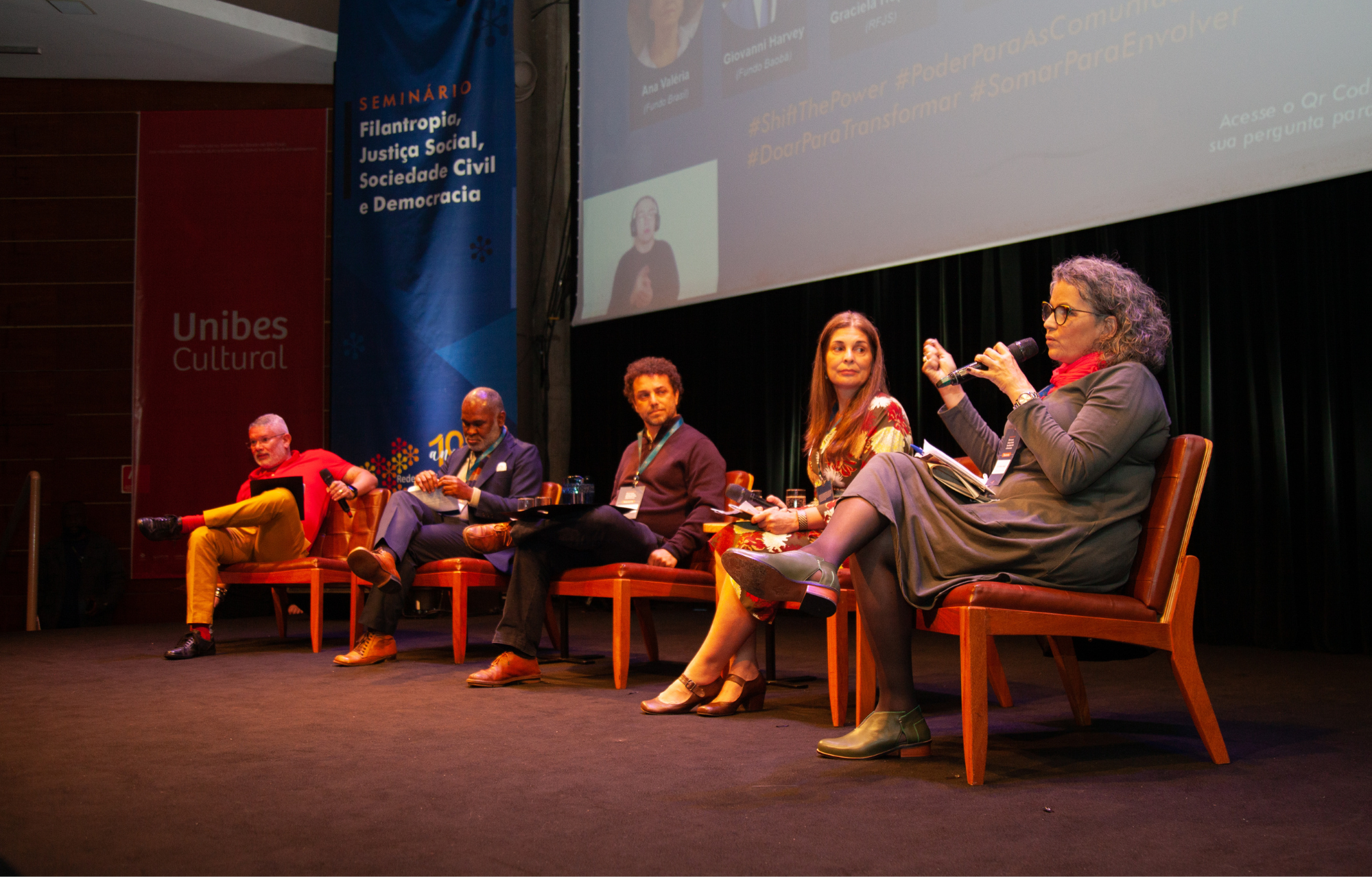
Influencing the field of philanthropy is not an easy task. The reproduction of colonial structures, racism, misogyny, LGBTIphobia and other forms of violence make philanthropy an environment that can still be very exclusionary, especially for political minorities. The Philanthropy, Social Justice, Civil Society and Democracy Seminar of Rede Comuá, held on the 20th and 21st of September in São Paulo, was an important reminder to everyone present, however, that philanthropy can also be a space of resistance , struggle, collaboration and, especially, hope.
The Seminar was a vibrant space, filled with diverse actors from the field of national and international philanthropy and civil society movements and organizations, who responded to the Network's call to reflect on the challenges of civil society in guaranteeing and expanding the rights of political minorities . The meeting also reinforced a call, especially to Brazilian philanthropy, represented mainly by private social investment, to strengthen its commitment to support the strengthening of the struggles of civil society movements and organizations, social justice agendas and the democratization of philanthropy. Because, in the current context, the omission of traditional philanthropic actors from these agendas can no longer be normalized.
While there were many reflections on the challenges of promoting community philanthropy and social justice agendas in the countryside, the Seminar was also a unique opportunity to feed hope, consolidate learning and recognize the strength of the collective in promoting of a key change in the field of philanthropy. Or rather, philanthropyS, with an “s”, as highlighted by Graciela Hopstein, executive coordinator of Rede Comuá, in her opening speech. Based on reflections and debates on the practices and approaches of institutions, funds and community foundations, from members to partners of the Network, the Seminar highlighted the philanthropies that build in their actions, alongside territories, democratic processes, which occupy and re-discuss relationships of power and who assume their leading role and power in the production of knowledge and narratives from their own voices.
Certainly, the Seminar made it clear that there are other possible paths. And the connection with communities and territories, a pillar of community philanthropy and social justice, is precisely the compass that will guide this journey. The call to provide spaces and resources to expand the participation of communities in the construction of agendas and narratives produced in these fields makes perfect sense, then.
The invitation to the field of philanthropy, then, is made: it is necessary to expand the capacity and reach of the voices of the grassroots, peripheries and communities, which have historically organized and led practices of collaboration, exchange and mutual help in the search for the common good. Recognizing and valuing the local and ancestral knowledge and knowledge of these philanthropic practices and encouraging the production of narratives, constructed by and for them, is what truly demonstrates the transformative potential of these philanthropies – decolonial, collaborative and community – to promote new practices and point out paths for social investment.