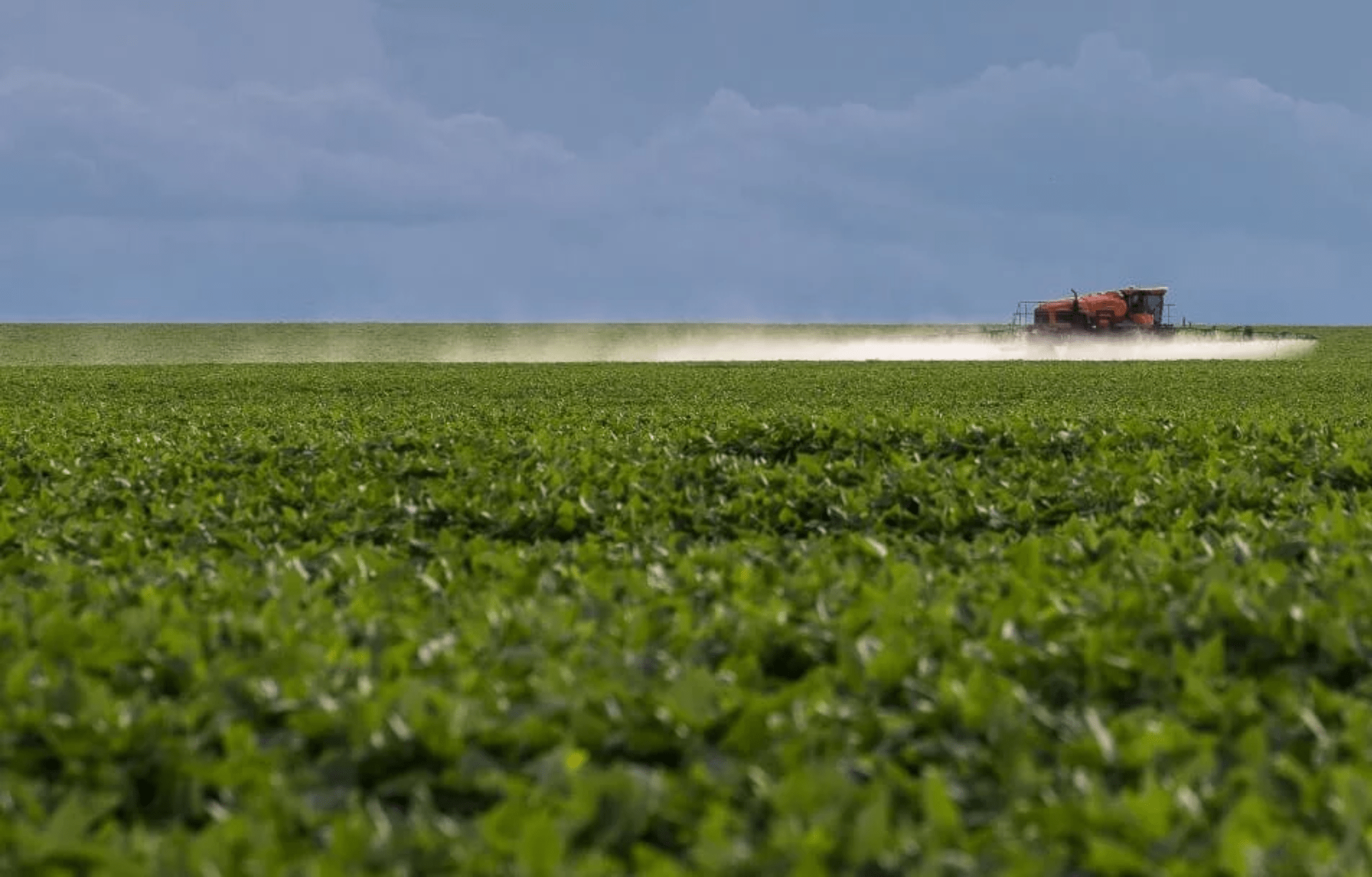
Deforestation for monoculture and pasture is mainly responsible for the 34% decrease in river flow by 2050
In the Cerrado, 93% of the basins may have a reduction in water availability, this is what the study points out The heavy impact of deforestation and climate change on the streamflows of the Brazilian Cerrado biome and a worrying future, supported by ISPN. According to research, the biome could lose 34% of its water flow over the next 28 years. The study under review by the scientific journal Sustainability, concluded that deforestation is the main cause of this decrease, responsible for 56% of the impact. 23,653 m³/s could be lost by 2050, in the rivers analyzed in the study alone, this loss is equivalent to the flow of eight Nile rivers.
The situation is a cause for local, national and global concern. The biome's water resources are increasingly scarce locally and already present a loss of 15.4% of river flow. Even so, water continues to be exported to China, the European Union and the United States in the form of “virtual water”, that is, water consumed in the production of grains and meat (commodities).
The research analyzed the behavior of 81 river basins in the Cerrado, in a period between 1985 and 2022. Of these, 88% already show a decrease in flow due to intense changes in land use in the area covered by the river basin. The high number indicates a systemic trend towards water scarcity and an increase in water stress until 2050, especially caused by large-scale agricultural occupation, agribusiness.
The study draws attention to changes in land use due to the expansion of agriculture and pastures, responsible for around 46% of the country's greenhouse gas (GHG) emissions, which is one of the factors impacting agribusiness on climate change. . This impact returns, intensifying droughts and impacting agriculture itself and increasing conflicts over water.
Change in water governance
The main conclusion of the analysis is that the expansion of agriculture to commodities and water scarcity are intrinsically linked. Yuri Salmona, geographer, PhD in Forestry Sciences from the University of Brasília and responsible for the research, comments that the increase in exports of commodities that consume water has changed water governance.
“Local, regional and national controls over Cerrado waters have been replaced by actors that dominate the global chain of agricultural products”, says the expert. This means that the river's water, instead of benefiting local communities or the Brazilian population, is being controlled by agribusiness companies that divert the water flow for irrigation and send water to importers in the form of commodities. Salmona indicates that the use of water for agricultural production in Brazil must be rigorously monitored and evaluated by government bodies that guarantee the collective interest to the detriment of private interests.
Climate changes
Although changes in climate also interfere with the reduction in river flow, research shows that deforestation is the single biggest factor that interferes with water security. Through statistical tests, validated modeling and repeated checks to map the oscillation of river flows over time, Salmona and his colleagues were able to establish projections for the coming decades and analyze them by isolating the effects of deforestation and changes climate. The result showed that climate change contributed to 43% of the reduction in flow, less than deforestation, responsible for 56% of the negative impact on water. And future modeling produced by the study indicates that the role of land use in reducing the flow of rivers in the Cerrado should have even greater weight.
This conclusion was reached from the observation of the increase in potential transpiration evapo, associated with the increase in temperature and radiation. Although climate changes were felt more intensely during the dry period, it was possible to verify that changes in the rainfall regime are not protagonists in the reduction of flows.
Yuri Salmona comments that the improper use of land for agricultural exploitation intensifies the negative consequences of climate change. “We are superimposing negative effects on climate change, through the expansion of deforestation and the use of water to irrigate large-scale plantations, we are playing against ourselves. We are losing the chance to mitigate the effects of climate imbalance and we are increasing concerns about water availability”, he laments.
According to National Water Agency, based on the situation of water resources in Brazil in 2018, 68% of water consumption is made by agriculture. In addition to livestock farming, 80% of water is committed to agribusiness, which in itself, according to the Mapbiomas, is responsible for 97% of deforestation in the Cerrado, the main carbon emitter in the country.
Socio-environmental conflicts and water monopoly
Of the basins analyzed, three rivers present emblematic cases whose flow pattern changed since 1997. They are Rio Arrojado (BA), Rio de Ondas (BA) and Rio Corda (MA). The latter, whose situation is the worst of all, could become intermittent in the coming years if the pace of deforestation continues at the current pace. The three rivers supply traditional communities in the region, but also the agribusiness that occupies immense areas in these territories of MATOPIBA, an acronym that defines the Cerrado portion of the states of Maranhão, Tocantins, Piauí and Bahia. There, the number of conflicts over water continues to increase.
In western Bahia, for example, since 2012 the agribusiness industry has had unrestricted access to water, in a region of increasing scarcity and worsening social conflicts due to water insecurity. There, the sector has advanced over rivers that supply water and territories that are home to pasture closure communities, geraizeiros, family farmers and fishermen with the aim of expanding plantations, generating revolts and protests from the population.
According to one Public Agency investigation, in western Bahia, agribusiness captures 1.8 billion liters of water per day for free. This volume of water is enough to supply around 11.8 million Brazilians, a population larger than that of 22 Brazilian states and the Federal District. Part of this water is captured through dams in streams and paths, direct capture from rivers and through wells that access groundwater that make up the Urucuia aquifer.
Water and energy importance of the Cerrado
Known as the “cradle of waters”, the biome is home to springs from 8 of the 12 most important river basins in the country and the second largest underground water reservoir in the world, which are the Guarani and Urucuia aquifers. In addition, it supplies 70% of water from the São Francisco River, which supplies the Brazilian Northeast region, and 47% of water from the Paraná River, which supplies the Itaipu hydroelectric plant. Its waters are also important for Bolivia, Paraguay, Argentina and Uruguay.
In addition to quenching thirst, the absence of water directly interferes with the availability of electrical energy in Brazil, whose energy matrix is based on hydroelectric plants. For Yuri Salmona, the future is worrying. “Our analysis indicates that we are embracing a future of uncertainty regarding water availability in the Cerrado biome. The data allows us to predict a critical decrease in water availability and, consequently, an increase in conflicts over water”, he states. For the researcher, those most affected will be traditional local communities, but also agribusiness itself and a large part of the Brazilian population, which depends on the waters of the Cerrado.
Need for conservation
A supporter of research, ISPN highlights the need to implement specific public policies for the Cerrado biome, which guarantee environmental conservation and the protection of guardian peoples. The Institute's public policy advisor, Guilherme Eidt, highlights that the Cerrado is at risk and needs attention as much as the Amazon.
“Standing Cerrado is fundamental to ensuring food security, water security, energy security, global climate security and maintaining socio-biodiversity. The people, traditional communities and family farmers are essential for environmental conservation and climate balance”, he points out.
For Eidt, it is necessary to value non-forest biomes and encourage a policy of transparency in the supply chain. commodities, which allows products to be traced back to their origin. The lawyer also adds that importing countries and international legislation are as important and responsible as Brazil in this task.
“It is important that European regulations guarantee the inclusion of other natural ecosystems in their scope. The European Parliament approved an ambitious text that must be guaranteed in dialogue with other European institutions. We believe in another development model, which generates income with environmental conservation”, concludes Eidt.
* Text originally published on the website of the Society, Population and Nature Institute (ISPN): https://ispn.org.br/cerrado-pode-perder-um-terco-da-agua-aponta-estudo/
Cover Photo: ISPN Collection/Thomas Bauer