
Welcome to the Comuá Network!

The last few years has brought to the fore the fact that some of the most transformational and ground-breaking social justice changes are happening through the efforts of people and platforms that are not part of the standard aid architecture or the formalised civil society system. These are coming from alternative spaces of people-led organizing – collective, grassroots action rooted in relationships, solidarity, and lived experience, and deeply political in nature – and from social movements – sustained, people-led efforts to achieve systemic change.

In the Global South, there have been crucial efforts to amplify these voices and examine the power imbalances that shape the relationship between philanthropy and social movements. These efforts have been led by organizations and spaces committed to exploring how institutional philanthropy can engage with, support, and nurture collective solidarity spaces for social movements, including – but not limited to – Comuá, Philanthropy for Social Justice and Peace (PSJP), Thousand Currents, and TrustAfrica. Three key studies – conducted in Africa (2020), Asia-Pacific (2023), and Brazil (2024) – reveal striking commonalities in this relationship. Across all three regions, social movements are driving transformative, deeply political change, deeply anchored in local communities and struggles for justice. Yet they remain largely invisible to, or unsupported by, mainstream philanthropic funding. Movements face systemic barriers, including bureaucratic requirements, rigid funding models, and language or legal obstacles, which often exclude them from resources designed for more formal, NGO-style organisations.

Despite regional differences, these movements share a unified message: philanthropy must interrogate its ideological foundations, grapple with its role in sustaining inequality, and reflect on how its own origins and power dynamics shape notions of impact and accountability. They call for dismantling rigid, bureaucratic processes and for imagining relationships grounded in solidarity, reciprocity, mutuality, and respect.

These studies are important because they shine a light on the urgent need for philanthropy to shift- not merely to do better, but to fundamentally transform – working alongside movements as genuine partners in the pursuit of justice and systemic change.

Building on these insights, we want to move this work forward by highlighting the different possibilities of grantmaking and existing funding mechanisms – especially those in the Global South – that are enabling resources to reach new, emergent forms of organizing and claiming rights. These practices reflect a different kind of giving: more flexible, trust-based, and rooted in a commitment to the political and relational nature of movements, as well as to the creation of funding ecosystems that sustain – rather than dilute – movements’ power and autonomy.

About the Report

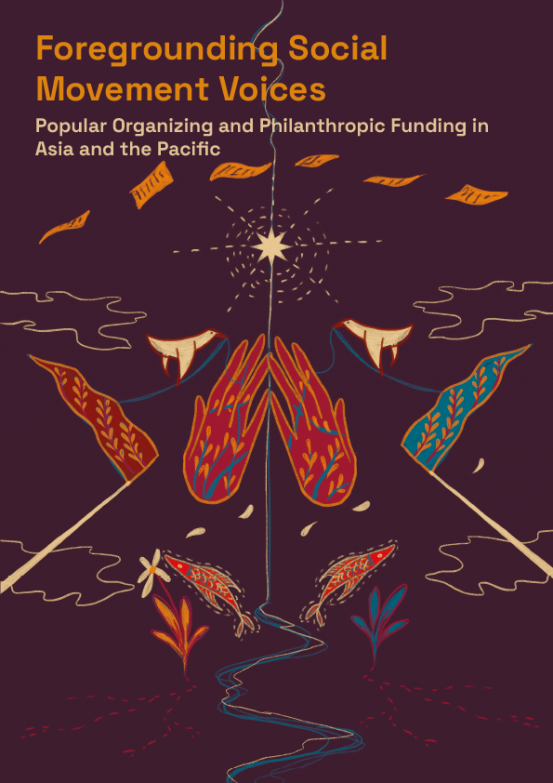
This study explores the relationship between institutional philanthropy and social movements across Asia and the Pacific. Based on 20 in-depth interviews with activists and funders across 12 countries, the report centers the voices and experiences of those working in popular movements — collective efforts led by marginalized communities to bring about systemic social change.

Key Findings

Movements Matter:

Social movements play a critical role in driving justice and change, yet remain underfunded, misunderstood, and often excluded from mainstream philanthropy.

Philanthropy’s Limitations:

Institutional funding tends to favour NGOs with formal structures, sidelining grassroots groups and pushing movements toward bureaucratic norms (“NGOization”).

Barriers to Access:

Language, registration, rigid funding models, and technical reporting requirements create obstacles for movements to access resources.

Donor-Movement Tensions:

Mismatches in values, priorities, and decision-making power reinforce inequalities between funders and movements.

What Movements Need from Funders

Be flexible:

On fund use, timelines, and requirements.

Rethink reporting:

Shift away from English-only, paperwork-heavy processes.

Go beyond projects:

Provide long-term, core support to sustain movements.

Build trust and mutuality:

Engage with humility, transparency, and shared values.

Resource the new:

Fund youth, women, queer-led, and emerging formations.

Do the homework:

Invest in understanding local contexts and movement ecologies.

Ask bigger questions:

about power, philanthropy’s role, and systems change.

Support local intermediaries

Especially where movements can’t safely register.

This Report challenges philanthropy to move from charity to solidarity, from control to trust, and from projects to people-led change. It calls on funders to reimagine how they engage with movements – not just to do better, but to be different.

The study was researched and authored by Poorva Rajaram (Consultant) and Ashlesha Khadse (Thousand Currents), with contributions from Chandrika Sahai (Philanthropy for Social Justice and Peace, PSJP), Halima Mahomed (TrustAfrica), and Luam Kidane (Thousand Currents). The cover image and artwork are by Ayan A (ayanbythesea.com). The report was published in June 2023 by Thousand Currents and Philanthropy for Social Justice and Peace (PSJP).

About the Report

Across Africa, new waves of grassroots movements are demanding social, political, and economic justice. Yet despite their critical role, these movements often operate outside the radar of institutional philanthropy – which tends to focus on NGOs with formal structures rather than more fluid, community-led organising.

Halima Mahomed’s report shines a light on how African social movements perceive – and experience – engagement with philanthropy. Drawing from interviews with activists involved in movements across eight African countries, the report surfaces urgent questions about power, solidarity, and the future of social change on the continent.

Key FINDINGS

Movements Are Not NGOs:

African social movements work differently from NGOs. They are often informal, fluid, and deeply rooted in community agency, resisting formal registration and bureaucratic requirements that clash with their ethos.

Philanthropy’s Blind Spots:

Institutional funders largely overlook or avoid direct support to movements, especially those pushing political change. Where funding exists, it is usually tied to heavy reporting requirements, undermining activists’ ability to focus on community organising.

Funding Without Strings:

Activists welcome external support—but only if it respects movement autonomy, avoids imposing agendas, and is rooted in shared values and solidarity.

Internal Resourcing Matters:

Many movements sustain themselves through local contributions of money, time, skills, and solidarity. This “internal philanthropy” is often their primary resource base and a key expression of community ownership.

The Power Question:

A core concern is: who sets the agenda? Movements resist funders dictating priorities or transforming radical grassroots action into professionalized, donor-friendly projects.

What Movements need from funders

Respect Movement Autonomy:

Funders should support movements on the movements’ own terms, not impose external priorities.

Simplify Processes:

Reduce paperwork, rigid requirements, and bureaucratic barriers to funding.

Invest in Relationships, Not Just Projects:

Build trust and long-term partnerships rooted in mutual respect and solidarity.

Support Ecosystems:

Help movements connect across countries and causes, strengthening African-led solidarity networks.

Recognize Internal Giving:

Value the local resources and contributions that sustain movements.

This Report is a powerful reminder that real change happens when people organise collectively. For philanthropy to be relevant and effective in Africa, it must move beyond funding NGOs alone – and engage genuinely, flexibly, and humbly with popular movements shaping the continent’s future.

The study was authored by Halima Mahomed and published in the International Review of Philanthropy and Social Investment Journal (Volume 1, Issue 1, pages 17–30) on 1 September 2020. It was supported by the African Centre for Philanthropy and Social Investment (ACPSI), Philanthropy for Social Justice and Peace (PSJP), and Thiqa Consulting.

A follow-up paper, Beyond Us and Them January 2021), by Hope Chigudu – commissioned by Philanthropy for Social Justice and Peace – reflects on the findings of the study Institutional Philanthropy and Popular Organising in Africa by Halima Mahomed, from the perspective of a practitioner and activist. Building on Halima’s analysis, Hope deepens the case for reimagining philanthropy and challenges the sector to be revolutionized: to work in conscious, empathetic, and transformative ways.

About the Report

This report explores the relationship between social movements and philanthropy in Brazil. Drawing on research, interviews, and focus groups, it highlights the vital role social movements play in defending democracy, advancing rights, and resisting authoritarianism—and examines how philanthropy can (and often fails to) support this work.

Key Findings

Movements Drive Change:

Social movements have been at the forefront of democratization in Brazil, defending rights, challenging authoritarianism, and shaping public policies like the public health system.

A Dangerous Landscape:

Activists face increasing violence, threats, and criminalization - especially Black activists, Indigenous leaders, women, LGBTQIAPN+ communities, and environmental defenders. Brazil remains one of the most dangerous countries in the world for human rights defenders.

Funding Gaps and Barriers

• Most philanthropic resources go to NGOs and formal projects, not grassroots
• Bureaucratic requirements, language barriers, and formal registration rules exclude many movements from accessing funds.
• Only a small fraction of philanthropy’s resources flow directly to social movements.

Self-Financing as Survival:

Many movements rely on community self-financing - mobilizing local assets, mutual aid, and in-kind contributions - to sustain their work and maintain autonomy from external funder agendas.

Trust Deficit in Philanthropy:

There’s widespread distrust between philanthropy and movements, fueled by differences in political agendas, rigid funding models, and a lack of genuine partnership.

What Movements Need from Funders

Fund Autonomy, Not Control:

Support movements on their own terms, without imposing external agendas.

Simplify Access:

Reduce bureaucracy, complex applications, and reporting burdens.

Invest Long-Term:

Offer core, flexible funding rather than only project-based grants.

Bridge Gaps with Local Philanthropy:

Community and independent funds, like those in the Comuá Network, show how trust-based, solidarity-driven philanthropy can work.

Shift Power:

Bring movement leaders into philanthropic decision-making spaces to co-create funding strategies.

Social movements are not only resisting injustice – they’re building alternative futures rooted in democracy, equity, and collective care. Philanthropy must move beyond charity and embrace true solidarity to help sustain these critical struggles in Brazil.

This study was coordinated and curated by Graciela Hopstein, with bibliographic research, fieldwork, and production led by Jonathas Azevedo. The research was conducted by Gelson Henrique and translated into English by Dayse Boechat. It was published in December 2024 by Comuá Network.

We extend our special thanks to Ana Valéria Araújo for establishing the connection with PSJP, which was essential to the realization of this research.

publications

Artwork by Ayan A (ayanbythesea.com

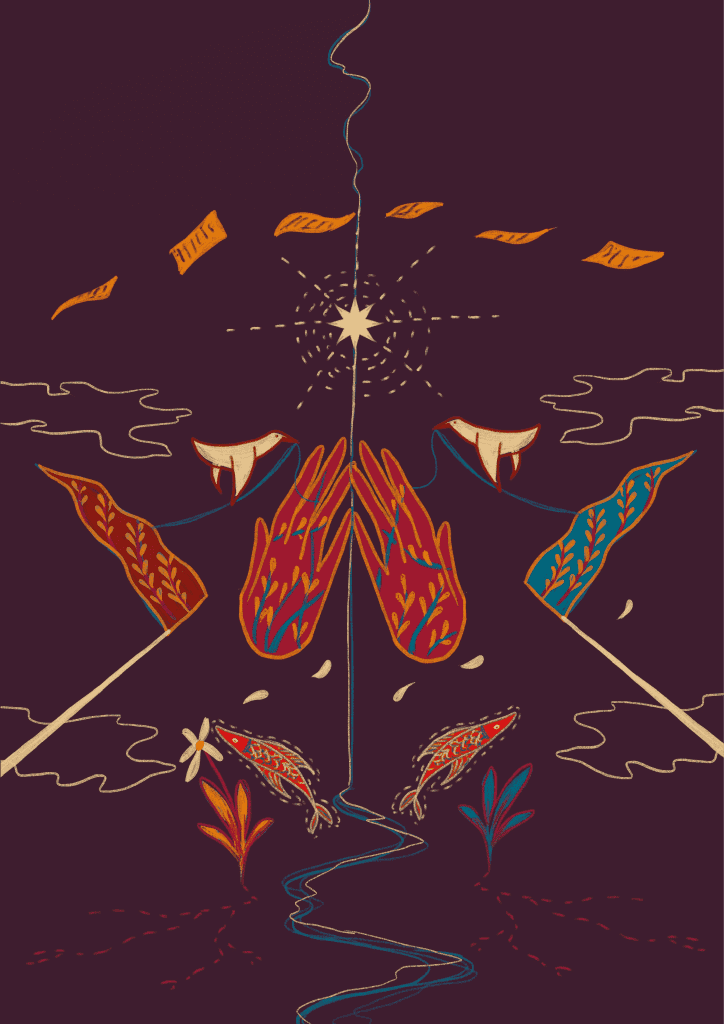
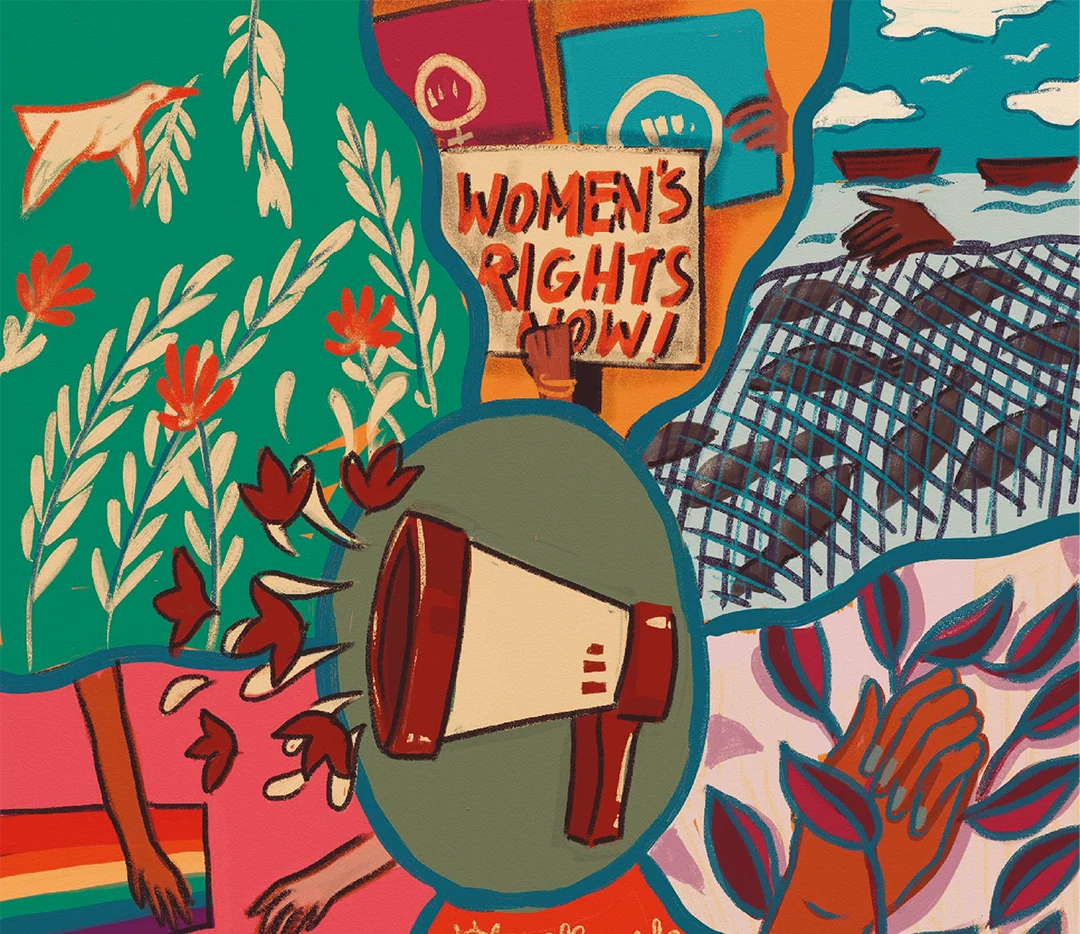
The images on this webpage were originally featured in the report ‘Foregrounding Social Movement Voices, Popular Organizing and Philanthropic Funding in Asia and the Pacific’, published June 2023 by Thousand Currents and PSJP. The artwork is a portrayal of the complex, trust based relationships that movements share with some of the donors that support them. The design and images also seek to portray that in the creative space that is people’s movements, everyone is a weaver and they improvise as they adapt and evolve to ever shifting socio political realities.